|



|
Reproduced with the kind permission of Alderton Parochial Church Council
This Scrap Book has been
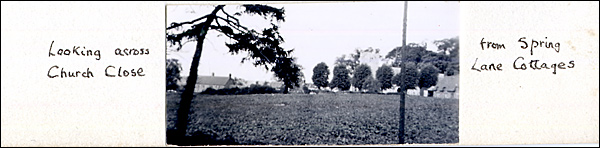
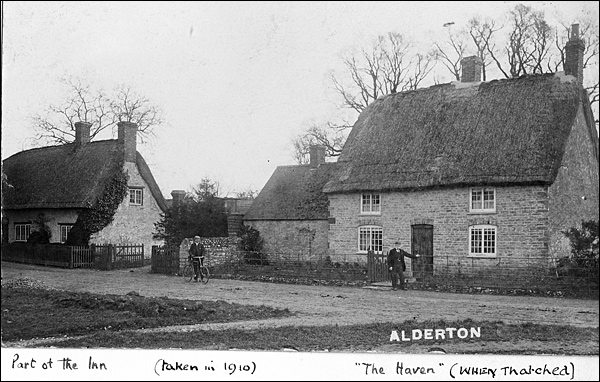
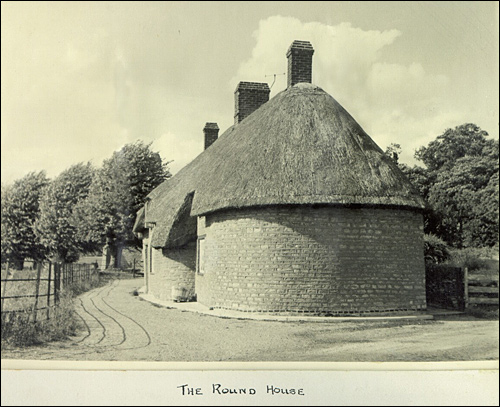
Alderton Alderton is a small village. A visitor walking through it seems no sooner to have entered the village than he finds himself out at the other side, walking between hedges again. The houses, of which a large portion are thatched-roofed, are - roughly speaking - grouped around a triangle which extends from the main road, on high ground, to a point about 500 yards downhill; to the sloping sides of the triangle are formed by two lanes which fork downhill from the main road at each end of the village, and, meeting at the bottom, continue as one lane into fields in the valley of the Tove. The Church, stone built and square-towered, stands inside the higher of the two upper corners of the triangle at the northern end of the village. Near it, end on to the road, there is one thatched cottage with an unusual rounded end, (which gives it it's name, the Round House). Below the Church on the other side, and bordering the lane inside the triangle, a line of four cottages clings to the steep bank, ending in a pair of brick council houses, where Alley Lane begins to bend round to join Spring Lane at the bottom of the hill. The rest of the central triangle consists of one big field, known as Church Close.
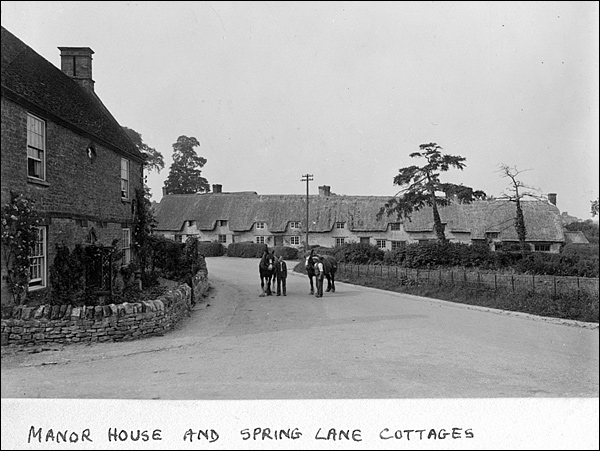
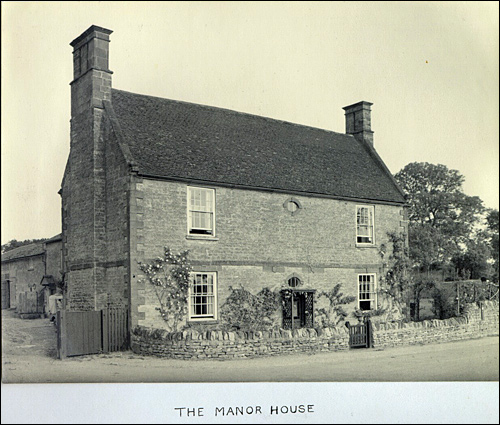
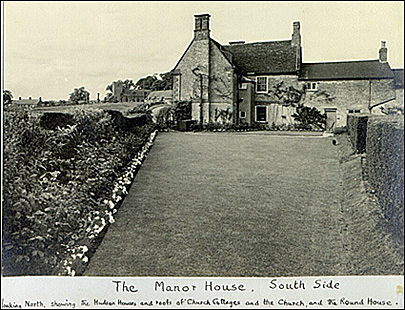
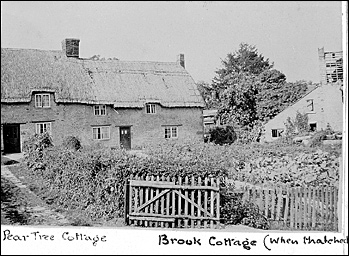
Here begins the old part of the village, consisting for the most part of houses built about 300 years ago. On the left is a curving row of thatched cottages, standing along the left side of Spring Lane, which here branches off downhill from the main road. On the right the hedge-topped wall gives place to the front of the beautiful stone Manor House, with a narrow front garden full of roses, looking across the road and down the hill. The Manor House faces west, and has a long and beautiful view: down over sloping Church Close to where cottages and barns come together in the hollow in a collection of thatched or tiled roofs; over these roofs and some trees to the levels beside the river Tove; and then away, on the further side to where the ground rises again - with fields and trees and the criss-cross of hedges, to form the ridge behind which lies Towcester. The Manor House (which is described in detail elsewhere) is tall, built of mellowed grey-brown stone, with a steep roof of weathered tiles and tall square corniced chimneys at each gable end. A wing of the house extends backwards from the road, forming one side of the yard which is surrounded by barns and outbuildings, and entered by a big gate immediately beyond the house. Onwards from this gate the road rises a little, still with the field on the left, and on the right are more barns which end in a lovely thatched cottage - (Orchard Cottage) standing on a high green bank looking down the way we have come. Opposite this cottage, across the road, is the Round House (already mentioned) its round end abutting on the road. And here, passing Haven Cottage on the right, we are coming to the next corner of the triangle where Alley Lane (or Church Lane, as it is sometimes called) runs back down the hill to the left.
Across the road from The Mount is the Plough Inn, a thatched, white painted house standing flush with the road, and next to it is the Glebe Farm House, a long stone building end on to the road, recently roofed with tiles. That is the last house in the village at this end: (beyond this the road continues, between hedges and fields, till it joins the Northampton road, over half a mile away). So we must turn and leave the Mount on our right, walk down steep Alley Lane, below the Church - which stands high above the bank on the left, and past a small thatched cottage on the right under the lee of the Mount. We go past the row of 4 cottages below the Church, on the left, and then, opposite the pair of Council Houses, there is a white painted thatched cottage (The Nook) at the bottom of a pleasant garden and orchard sloping up towards the Mount. Here the lane bends to the left, and after another 150 yards is joined by Spring Lane. Down here, on the lower ground, are barns and cattle yards and the dairy on the right, and two cottages behind bright gardens on the left beyond the big dutch barn: then the high roofless walls of a derelict farm house. Below that, again, behind an immense chestnut tree, is the small Methodist Chapel with a tiny cottage beyond it. Last of all is a longer thatched house, ( Longcroft) standing end on to the road - the last building at this end of the village.
Alderton Of the dim and distant Past of Alderton's History we know little. But may we glimpse into the little we do know for a few moments and note a few things that have not been recorded. We wish we knew more of the very ancient structure which is an enclosure of 2 acres, now thickly covered by trees and undergrowth and a haven for birds especially rooks, it is indeed a mysterious relic of the past. It is surrounded by a deep moat, and in the middle of it, it is shaped rather like a basin. Here was the site of a Castle, but no visible signs remain. It is called The Mount and is now a scheduled as an Ancient Monument. When one climbs to the top of this mound one obtains a beautiful view overlooking the Tove valley and the surrounding district. We are told that a Manor House, which was supposed to have been a large mansion built by William Gorges in the reign of Henry VIII was situated at the N.W. extremity of the village. Mr. Baker tells us that during the Royal Progress in 1605, Queen Anne of Denmark was entertained for four nights at Alderton (Aug. 16-20th). The King being at Grafton Regis at the same time. King James was here in 1608 (Aug. 4th) and knighted Sir Henry Anderson of London and just before that bestowed the same honour at Grafton on his host Thomas Hazlerigg Esq. He lived at the Manor at that time and would possibly have entertained the King at Alderton. Mrs. Wood who died recently and whose ancestors have lived here for centuries said the house was destroyed by fire many years ago and the Manor Farm buildings now in existence were built on part of the site, she also said that the old baking Pear Tree which blew down in a gale in 1938 was in the original Manor House garden, and would be the last remaining link of those days of great importance to the village. In the reign of Edward I we are told that a weekly market was held at Alderton on Thursdays. Buildings
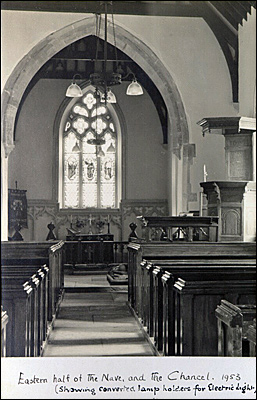
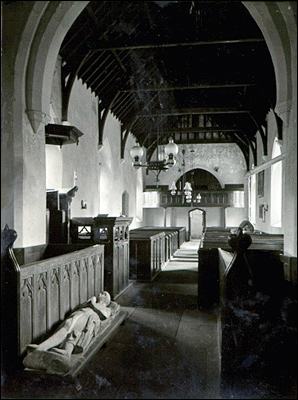
The Church dedicated to St. Margaret is 14th century but it was restored (except the tower) in 1847-8 and many features must have been lost at that time, including we are told a very ancient Altar Tomb, containing the stone coffin of William Gorges who resided it is supposed at the old Manor House, described previously. On the floor of the Chancel is a wooden effigy of a crusader, one of less that a hundred of these wooden figures left in the country. It is thought to represent Sir William Combemartyn who died in 1318. This figure, until just before the First World War was hidden away in the Belfry loft, and the late Mr. Fountaine who was a Churchwarden at that time, had it brought down, and mounted on the present oak board. It was with great difficulty that it was carried down the narrow steps in the tower. Before the Church was restored in 1847 it had another Aisle, which was pulled down. Mr. William Rogers, who died a few years ago, and who was clerk for many years, related how his father remembered when it was done. The cost of restoration was £500 and at the re-opening of the Church at that time, the collection amounted to £8 13s 0d and a levy on the Parishioners for the year 1848 amounted to £39 7s 7d but how the rest of the money was found it is difficult to imagine, as the population even then was a small one. The American Organ was given to the Church by the then Rector, the Rev. C. Blundell at a cost of £33. This is still used and is in excellent order. Before this a small harmonium was used and previously to this a Trombone was used for music, but no one seems to have heard or remembered who was last player of that instrument. In 1887 a new Bible, Prayer Book and Altar were given to the Church by the Parishioners of Alderton in Commemoration of the Jubilee of H. M. Queen Victoria, and a new Altar Cloth was also given by the Rev. C. Blundell in 1888, a red one, which is still in use. On the 25th October 1891 new oil lamps were used in the Church for the first time, previously to which, it was lighted by candles (the holes which held the candle holders can still be seen at the end of each pew). The lamps were purchased for the sum £25 13s 6d ten pounds of which was given by the Duke of Grafton £8 7s 0d was collected in Alderton, and the rest was given by Mr. Henry Smith who was then a churchwarden. Mr. Wood remembers when the Choir was a big feature of the Church service. The Gallery which was erected in 1837 has always been used, as it was first intended for the singers and the organ. There has never been a surpliced choir. To the Glory of God and in grateful memory of the men of this Parish who fell in the Great War There are five Bells, these used to be hung on a wooden frame, in a different order to the present time, and they had no stays, but they were re-hung in 1935, when the Bishop of Peterborough ( the late Dr. Blagden) came and took a service of Dedication in July of that year. The Bells were re-hung on an iron frame by Messrs John Taylor and Co. of Loughborough. The cost of the work was £196, and was raised by the people of Alderton by donations, individual efforts, and two Fetes, one being held at the Rectory at Grafton in the summer of 1933, when it was a pouring wet day, and the other Fete was held at Alderton also it was a pouring wet day then,and instead of holding it out of doors we had to resort to the Barn. We had engaged the Yardley Gobion Brass Band, and they played under the Dutch Barn adjoining, and one remembers so well how loudly it sounded under the galvanized roof! In spite of the weather, and how it rained, we had a good attendance including the late Lady Penrhyn, who remarked that she had never been to a Fete in a manure yard! However the cost of the bells was finished that day in spite of the rain and the mud! There is a great interest taken in Bell Ringing. The team is a joint one with Grafton Regis, and the ringing is done alternately at both Churches. The Ringers from Alderton are Messrs. George Webb and Sydney Hall with Mr. Norton as Captain. The Misses Mary & Joy Cook & Pat Bishop are also learning the art. The Ringers belong to the Peterborough Diocesan Guild. A Peal of Doubles was rung on Feb. 24th 1950. Quarterly meetings are sometimes held at Alderton. The Gates at the Entrance of the Churchyard were bequeathed by the late Sylvester Blunt Esq. Who was born in Alderton and was buried here. They were erected and Dedicated in 1948. The Wesleyan Methodist Chapel The Wesleyan Methodist Chapel, which is quite hard to find, even in little Alderton was first a bungalow of two rooms, one room with a fireplace. Services were first held here. It was built for Mr. Wood's uncle, by his grandfather Mr. Jelley on the Duke of Grafton's land. Then it was re-built as a Chapel in 1890. The Duke of Grafton gave most of the building material on the understanding that the services were never held at the same time as the Church services. This rule was always strictly adhered to until quite recently. It was owned by the Duke until Mr. Wood purchased it in 1921 and then he made it over to the Wesleyan Circuit. At the time of the opening of the Chapel in 1890 the Service was jointly taken by the Anglican Clergyman and by the Wesleyan Minister. Houses
The Manor House, as it has been known for many years, was once called Horton House and the Ordnance Maps, it is still called by that name. It was built by the Horton Family. The Rev. Thomas Horton was Rector here (1646-84) and several of the family are buried in the Church. There is a Stone bearing the date 1695 and J. H. on it, this is placed on the wall of the house, near the back entrance. Until 1938, it belonged to the Duke of Grafton, but from whom they acquired it, is not known. The present Duke of Grafton sold the remaining portion of the Wakefield Estate, of which this house and land was part, to the late Lord Hesketh, and it is still owned by his son, the present Lord Hesketh. It is at present occupied by Mr. J.R. Fountaine, who was born in the house. His father, the late Mr. Robert Fountaine took over the Alderton farms, about 70 years ago, at the same time farming Pury Lodge Farms where he had been living, later he also farmed the Grafton Manor farms, he farmed at that time about 1,200 acres. The Manor House is a plain but pleasing built house of stone.
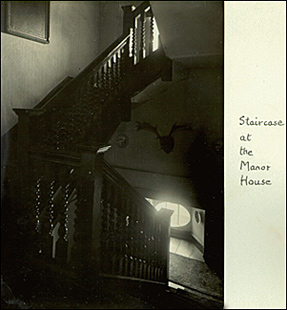
From outside it's chief feature would be the two oval windows in the front, which light the staircase. Inside it has a fine Jacobean oak Staircase, which from the ground floor rises to two flights above. It is in good repair, thanks to the careful attention it has received down the years. It has a very unique wood burning cooking stove, in the kitchen, but owing to the cost and difficulty of labour in collecting and sawing wood during the War Years, a modern one was installed, but the old one was not removed and serves as a reminder of a less modern way of cooking. It was a marvelous cooker, everything cooked so beautifully even and on the top, in spite of the pots and pans getting very black, nothing ever tasted smoky. Only wood could be used. The oven is in the middle, with the wood burning on the top and a large iron stand to hold the kettles and saucepans over it. When the baking in the oven was needed, embers from the top, were put underneath. About twice in the morning, was all that was needed to retain a perfect temperature for baking. There was also a huge kitchen range with two ovens on each side, in the room, which is now the breakfast room, this was taken out during the last War, because of the difficulty and expense of coal for such a large fire. When it was taken out, the open fireplace was found and the beam uncovered. Until 1952, when Electric Light came, lamps and candles were always used in the house. In the kitchen, it has a very interesting oval wooden bar, for bolting the door, this is built to slide right into the wall, it is used every night still and would be impossible to force open. The garden has altered considerable and is a great hobby of the present occupiers. The house is now included as a building of Architectural and Historic interest under the Town and Country Planning Act. As there is no public room or School in the Village, the Manor House is used for various functions and meetings connected with the Church and Village and has always been so for many years. The other house in Alderton, which is included as a building of Architectural and Historic Interest is the Round House.
Just before the 2nd. World War the Duke of Grafton put this Round House (which was then 3 cottages) up for Auction. They made £18. A house breaker from Luton bought them (they had at that time been scheduled for demolition). Going by train to London later in the week, he travelled with a Miss Dumbleton who lived at Dunstable and who bought the cottages and restored them. She was told about them and came over and bought the cottages for £45. At that time Mr. & Mrs. Fred Webb lived in the two nearest the road the other one was in bad repair and empty. When the new houses were built in Alley Lane or Church Lane as it is also called. Mr. & Mrs. Webb moved into one and Miss Dumbleton came over and stayed for about 4 months, and with some help from a firm of builders from Northampton, did some decorating and renovating. It was then made into one house, and some people from London, who came away from the "Blitz", Mr. & Mrs. Welham by name bought it for £1,000. It has changed hands twice since then and now belongs to Lt. Colonel Fyson, who at the present time has let it furnished.
Old Houses that have disappeared and other features of the
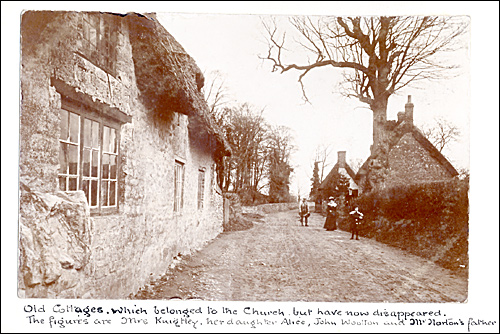
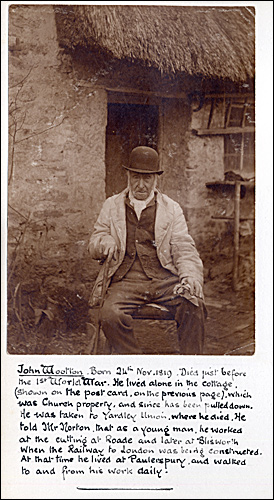
Two thatched cottages (photograph shown) used to be on the side of the road in the garden of the Round House. These belonged to the Church, except one room, which the then Duke of Grafton had built for a tenant: to make more room for the family living in it at the time. These cottages were pulled down before the 1st. World War and the garden, which is still Church property is let to the present owner of the Round House for 5/- a year. John Wootton (photograph on next page) was the last tenant. There was an old Black Smith's Shop and Forge opposite the Church, but lower down the Alley Lane in the garden of the cottage, at present occupied by Miss Jackson.
It is generally considered that the Cotswolds end at Alderton. At one time, there were stone walls everywhere, which unfortunately have fallen down and owing to the heavy cost of maintenance, have not been repaired. But there is still evidence of much stone walling. The Mount has been described elsewhere. The Farm House at the Lower End of the village is now a ruin, and has not been occupied since about 1910 In the Horse Yard at the Manor Farm buildings, there is a most interesting Water Trough, which is of great antiquity. It is a large one of solid stone and it is thought to be Roman. Above the dairy and barn, there are two small carved stone heads, which seem to represent a King and a Queen, probably these were from the old Manor House.
There used to be a Village Pound just opposite the Church Gates, and inside the Mount. There is an opening, still to be seen, where two gates used to be, and farther inside, there was an Enclosure of Stone. Cattle and sheep etc. that were found straying used to be put in there until claimed, when a fine was imposed. Mr. Wood remembers it being pulled down by Charlie Swan, brother of Martha Swan, who was a well known laundress in the district and who died several years ago. May Day
May Day was eagerly looked forward to by the girls, but it is several years since it was kept. The custom used to be for the children to bring a wonderfully dressed Garland which was on a frame. It had a doll in the middle to represent the Queen and more dolls all round, and the whole decorated with flowers and ribbons. It had curtains also, which the children kept drawn until they got to the houses and then they would draw them open and start to sing the following. A branch of May, we have brought you Also Cuckoo! Cuckoo! Bravo. How Clear The children used to start about 8-30 a.m. going down to the Manor House first and then on to Paulerspury, back to Alderton, round the village and then to Grafton Rectory where they were given tea. The four eldest girls used to carry the Garland and when the money was counted at the end, they always received 2d each more than the other. Village Feasts Our Feast Day - the 20th of July is dedicated to St. Margaret. But it was On August Monday that all kinds of shows, such as swings, shooting at glass bottles, coconut shies, stall etc. used to be held in the Plough Inn paddock, by the traveling showmen, and this used to be the big holidays of the year. People from surrounding villages used to come, especially from Shutlanger, as it was easy to walk across the fields. They usually used to arrange a Cricket Match that day to play Alderton, in the field known as Bridge Gap. Valentine's Day Many years ago, Mr. Wood remembers when the boys used to go round the village and sing on Valentine's Day. They sang. Good morning Mr. Valentine Guy Fawkes Day This has always been remembered by the children, and still is at the present time. They usually make a bonfire, by collecting material for it round the village, and have fireworks. Mummering Mr. Fred. Webb remembers going round the village with the Mummers in his youth. He thinks these were usually 10 players, but has forgotten much of the play. They dressed up with all kinds of clothes, wore feathers, and blacked their faces, and acted the "fool", one of the Mummers usually had a mouth organ, and others would dance about to the tune. Mr. Webb took the part of the Doctor, and his words were. In comes I, Dr. Brown Another called Beelzebub said. In I come I Beelzebub Another player took the part of the 'Mother', but Mr. Webb, could not remember the words. Shutlanger Mummers always paid Alderton a visit on Boxing Day. There was also a man called Sam Foster from Paulerspury, who sometimes came by himself or would join in with the others. He specialized in Whistling, and making a noise like bells through his hands. Games Quoits was a favorite game with the men in the village. Mr. Norton remembers when they used to play on the strip of grass in front of The Nook at the entrance to Buckgrove field. Harvest Home Mr. Fred. Webb, who has lived in Alderton all his life, and is now 69, remembers an old Harvest Custom which was always kept, until he thinks the 1st World War. We have Ploughed If this happened in the middle of the day, or any time, however early. Work finished for the day. Gleaning Gleaning used to be a big annual event in the village, old and young taking part. Each parishioner kept to his or her own parish to glean and many a feud was caused in the gleaning filed if the rules were not carried out. The custom of gleaning varied in different districts and has been described as "A Law not written, but established by our Ancestors". At Alderton, as in many other parishes in the district. If a stook or shock of corn was left in the middle of the field, it was a sign that it must not be gleaned, while it remained there. The gleaners took their food and stayed all day, and the men folk helped to carry the corn home at night, after they had finished work. The grain used to be tied in bundles and the gleaners carried them home on their heads. Often they would glean 3 to 4 bushels of wheat per family. Miss Florence Eales remembers gleaning one year, as a child, and after the corn was thrashed, there were 5 bushels, her grandmother Mrs. Rogers, had no need to buy flour for the whole of that winter. A well known in habitant of Alderton, by the name of Mrs. Betsy Swan, mother of Martha Swan, the laundress, was well known in the gleaning field., and her word was an unwritten law, to all the others of her generation. Mr. Fred Webb says she was the ' Captain of the Gleaners' at that time, and everybody did as she said, the others even had to stop at the gate until she arrived to open it first. There used to be a Thrashing Day, when all the Allotment holders and the Gleaners would bring their grain to be thrashed, usually in the Allotment field and afterwards a horse and cart would take it back to each house, and the straw for bedding for the pig. Beating the Bounds Mr. Wood remembers his father telling him that in his young days, the Beating of the Village Boundaries always took place every year, and they always took some young boys with them, and when they got to a certain place, they would pretend to knock a boy into a post, so that the event should be remembered by them. Traveling Dancing Bears Mrs. Fred. Webb, who as a child, lived at Pury Lodge, and went to school at Potterspury for a time, often used to see the traveling Dancing Bears on the Watling Street, or in those days better known as the Turnpike. The Bears were hooked to a long pole, which the men who were with them, unhooked, when the Bears performed their dancing. Mr. Fred Webb also remembers one morning, opening the door of Gray's Barn, to fetch a fork, as he was shepherding, and as he opened the door a Bear sat up, and a man was asleep beside it. These men always slept out, and were of a rough foreign type. Tinkers Gipsies etc. There was an old man called Loveridge from Towcester, who used to come over to Alderton and put up a tent in the Mount, and stay for tow or three days at a time, and make meat skewers and clothes pegs from elder wood, which grows in such quantities in and around the village. There were no metal skewers at that time. He would sell to local butchers and the pegs to the housewives. Clothing Club There were formerly Clothing Clubs. The people paid so much each month. The Duke of Grafton always added some money to the total, and then it was divided out at the end of the year. The shop keepers also gave so much discount on the Club Ticket when they were handed in. It is many years since this functioned The Duke of Grafton always gave 4 or 5cwts of coal at Christmas to all the tenants living in the cottages. Sparrow Club There was formerly a Sparrow Club. This functioned until about 1908. The men and boys used to go round at night and catch the sparrows in a net, which was held by two long poles (this sparrow net can still be seen). They were paid 3d a dozen and 1d for sparrow's eggs. Sparrow pie was very popular, the breasts of the birds were used for it. The Parish Overseers used to pay out the money for the Sparrows. Allotments At the present time, there are no Allotments in Alderton. The field known as Cave's Piece (14 acres) where the Council Houses now stand, and the Allotment Field (5 acres) were all under cultivation until less than 20 years ago. The crops produced by the Allotments consisted mainly of barley for the pig and vegetables for the house. In the old days, but still remembered by the older generation there was a rule on the Wakefield Estate, that all Allotment holders must be out of the Allotments by 10 o.c. on Sunday morning. This of course was so that they should not miss Sunday morning worship. Overseers, Board of Guardians The first meeting under the Local Government Act was held at the Manor House on December 4th 1894. There were 23 electors present. The purpose of the Meeting was to appoint Overseers and the Parish Constable. The last recorded Meeting was in 1926. From 1896 to 1922 Mr. R. Fountaine was Chairman, an Overseer & Parish Constable & also a District Councilor , and his son Mr J. Fountaine succeeded him in these offices. The Potterspury Board of Guardians used to meet at Yardley Gobion Union, then at the Memorial Hall at Old Stratford, & later at a House, rented at Stony Stratford. When the centralization of the Parishes took place and the Potterspury R.D.C. was amalgamated with Towcester R.D.C. the meetings were first held at the Towcester Union. They are now held in the Towcester Town Hall. Mr J. Fountaine represents both Grafton Regis and Alderton as one Parish. When he was appointed a Councilor in 1922 he was the youngest representative in England. Schools The children from Alderton always attended School at Grafton Regis. About 20 years ago, the School was closed, and the children were transferred. The Grafton children to Yardley Gobion School, and the Alderton children to Paulerpury. Mrs. J. Webb remembers as a child, that 1d a week was charged for schooling. There was a brick wall in those days, which divided the boy's playground from the girls. The School Managers were the Rector and the Church Wardens of both Grafton and Alderton. In 1893 H.M. Inspectors examined the School and reported as follows. The children are well behaved, orderly and industrious and their attainments are satisfactory. They read with fluency and accuracy, write carefully with good spelling, and work plain sums with creditable accuracy. English has been taught successfully in the lower Standards, but the passing of the 4th. Standard may improve. The needlework and recitation are good and the infants receive suitable instruction. Mrs. Brayfield was the School Mistress at the time. Her Salary was then £59 a year. It was raised to £65 in 1898 and the Monitress' fees from 3/- per week to £10 a year. Dialect Alderton is often called 'Ollerton' by some of the older residents, also 'Thecking' for 'Thatching' is very often heard. Another word quite commonly used is 'Bout', so many 'Bouts' meaning so many times ploughing up and down a field or round it, half a 'bout' would be either up or down. Village Charties The only Charity in Alderton is the Jane Leeson Charity of 8 half crowns a year to the 8 oldest inhabitants. There is a field of 1 acres and 2 cottages belonging to the Church. Nursing The midwifery and general Nursing in Alderton used to be done by a Mrs Betsy Jelly many years ago. She attended Mrs J Webb's mother Mrs Rogers - when she was born, which would be over 70 years ago. She was followed by a Mrs Tite, a widow from Paulerspury, who did much of the midwifery and nursing in Alderton, before the coming of the Nursing Association. There was a box of clothes kept at the Rectory at Grafton Regis in those days, sheets, night dresses, and baby clothes for the use in confinements. These were kept and used by the women for a given time. Later the Potterspury & District Nursing Associations was formed and Alderton was one of the villages in that area. Each member paid not less than 6/- each year, and each village raised extra money yearly, according to its population. There were 22 members who belonged to the Association in Alderton, until the National Health Service took the Nursing Association over. Nurse Bracken is the present District Nurse. Hospital Patients needing treatment have always attended Northampton General Hospital. Formerly money was raised by subscription & always the collection at the Harvest Festival, was given to the Hospital. In those days admission was available by means of Hospital letters, an allocation being given for In and Out patients. Later a Contributory Scheme was started, members paying 2d each week - which included treatment for husband, wife & children under 16 years of age & single persons over 16. The collectors in Alderton were Mrs. W. Webb. Mrs. S. Hall & Miss A. Rogers. In 1945 a Hospital War Memorial Appeal was launched & each village had its own Target, according to its size. Alderton was asked to raise £70. Most of the money was raised by a Christmas Bazaar in Dec. 1945 & with other efforts the sum of £90 was handed over for the Appeal. And when H.M. the Queen, then Princess Elizabeth visited the Hospital, she presented Miss Agnes Rogers (who represented Alderton) with a memento of Alderton having reached its Hospital War Memorial Appeal Target. Miss Rogers was the first of the Village representatives to be presented. This took place in 1946. When the National Health Service took over the Hospitals. The Northampton Hospital Guild Scheme then came into being. This provides extra benefits not covered by the Health Service, also a cash grant of 28/- per week while in Hospital up to 13 weeks. Most of the people in the Village are members. Mrs. W. Webb & Miss Rogers are the collectors & Mrs Fourtaine (Secretary) & Mrs Connor (treasurer) Mothers Union The Alderton and Grafton Regis Branch of the Mother's Union was first formed by Mrs Annand the then Rector's wife, about 1912. It fell into abeyance for a few years, and was started again in 1938 by Mrs. J. Fountaine as Enrolling Member. The Branch has 23 members at the present time, and meetings and services are held alternatively at the two villages. A feature of this Mother's Union, is in fact, that Meetings are attended by old and young mothers alike, with equal enthusiasm. In so many villages now, the old and young do not mix, and young wives' meetings have to be started. In May 1941, the M.U. Banner was presented to the Branch by Mrs. A. Annand (a sister-in-law of the founder) which she embroidered. It is shared jointly by the Branch for six months each. Sunday School There has been a Sunday School for many years in Alderton. It is at present taken jointly by Mrs. Harris and Mrs Fountaine. Carrier's Cart
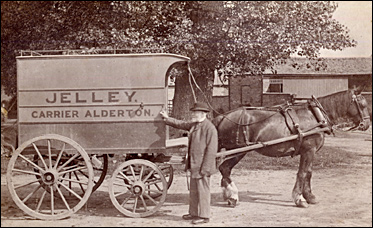
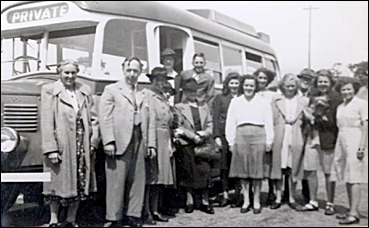
Mr. Jelley, who was the village Carrier, was very well known, and a great favorite with everyone in Alderton, where he lived, and in the surrounding district. He used to go to Northampton, twice a week, on Wednesdays and Saturdays. On Tuesdays, he went to Towcester, and on Fridays, he would go to Stony Stratford and Wolverton. This was the only means of transport for many and Mr. Jelley would take passengers with him and bring back anyone's shopping, or go to the bank and bring back weekly wages for the farmers, in fact nothing would be too much trouble for him. The Carrier's Cart used to stand in John's Street, when they went to Northampton, and the horses were stabled on some stables there. When at Stony Stratford, the cart was put under the old tree I the market Square (where John Wesley preached once) and the horses used to be taken right through the front door of the public house just near, through the passage to the stables beyond. At Towcester the cart used to be put on the left side of the street near the Talbot Hotel, and the horses at a public house in Park street. Mr. Adams from Paulerspury carried on for several years with the Carrier's Cart after Mr. Jelley died. He was the last Carrier. Bus Transport The Carrier's Cart transport, was followed by the first Bus Service, which was started by Mr Leonard Edwards from Paulerspury (after coming out of the Army) on August 1st 1919 This had a Daimler C.C. Type Chassis with solid tyres and a 4 cylinder sleeve valve engine. It had originally been a London bus, but was commandeered by the Navy during the War, and used as a lorry. A new bus body was built for Mr Edwards by Mr Lepper, the village carpenter. This was-like construction fitted with forms to seat 26 persons. With this bus, the service started from Paulerspury, coming through Alderton to Northampton on Saturdays, Sundays and Wednesdays. Mr Wills who lives at Alderton was a passenger on the 1st trip. At first Mr Edward's mother was the conductress, but for the past 25 years his wife performed this task, until it was taken over. The terminus at Northampton was in the Bull and Butcher yard at the bottom of Bridge Street. Other vehicles used in later years included a E.M.C. and a Morris Commercial, the latter licenced as a 20 seater. Mr Edwards' last vehicle purchased in 1935 was a 20 seater Dennis Ace, with a front entrance. It was nicknamed 'Edwards' Flying Pig.' This was painted in a livery of grey and white, with a green waistband and roof. This very familiar 'friend' is now on the retired list and the business has been taken over by Basford's Coaches on the same days & at the same time as Mr Edwards. The last trip taken by the bus was in March 1952
Farming Past and Present The Parish of Alderton consists of 881 acres. Mr. J.R. Fountaine farms the Horton and Manor Farms, which are 480 acres, and owned by the Hesketh Estate. Mr. R. Whitlock, (who came from Grimscote in 1943) farms the Glebe Farm, which is owned by Mr. Wood, this is 110 acres, also 5 acres owned by Mrs. Christie in Moor Lane, Mr. Higgins of Ivy Cottage rents 8½ acres, also owned by Mr. T. Wood. Mrs. Jones of the Plough Inn rents 16½ acres owned by Phipps Brewery Northampton. Part of Grafton Lodge farm, a small portion of Pury Hill farm and Pury Lodge farm are situated in Alderton (see map).
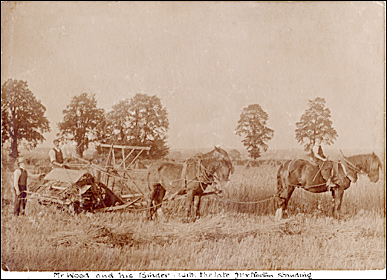
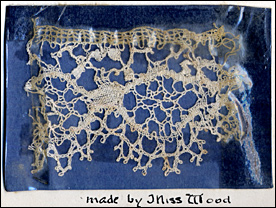
The old Reaper then appeared, which cut the corn, but did not bind. The Binder followed, which is still used, but the last machine for the corn harvest is the Combine Harvester. Mr. Fountaine was the first to have a binder in the village. Both he and Mr. Wood kept many horses. Mr. Fountaine always had about 20 for work and 3 horse teams were always kept in during the winter months, which meant work for the carters and stable boys. The Seasonal work on the farms was all done by, "piece work." Beer was given and the quality according to the work done, varying from 4 pints to 8 pints each day per man. The hours at that period were from 6a.m. to 6p.m. for a six day week. There was always the 'Harvest Month' , which meant 5a.m. till dark, and then a set extra sum per man or boy for the 'Harvest Month' was paid. The system followed today is Ley Farming, which means several years pasture , then ploughed for cereal growing. Before this permanent pasture followed by a 4 course rotation of cereals was the general method of farming . Today of course, farming has the benefit of scientific research for controlling and preventing disease, weeds and pests, both in cereals and animals, and also the benefits from balanced fertilizers and soil analysis. This also applies to balanced rations for animal feeding. During the 1st. World War, boys of 12 years old, were to obtain permits to work for the farmers and leave school. They were paid 10/- a week. Mr. F. Webb often heard his father talk of the days when the corn was thrashed by the 'Flail' ( Mr. Wood still has one).It was thrashed during the winter months, and the floor in many of the barns can still be seen where this was done. Miss Violet Newberry (now Mrs. George Atkins, who lives at Grafton Lodge) and Miss Agnes Rogers, worked on Mr. Wood's farm during the 1st. World War. The photograph shows them both wearing the uniform and armbands of the Land Army. There are a few of the older farm implements still used, such as a horse hoe, which is used for cultivation for small roots and potatoes, and a horse drill, used for drilling roots. Horse and carts are still used at Alderton for carting manure, roots and winter foddering. The reason they are still used here, being because they are found to more economical and do less damage to the land, than a tractor in Winter. But there are many farms, with no horses kept at all for farm work in this district. Mr. Fountaine still keeps 4 farm horses, and Mr. Whitlock has one. There are five tractors kept in the village. There are seven men working at the Manor and Horton farms and three on the Glebe Farm, but a lot of the seasonal work is contracted out. During the 2nd. World War - first the men of the Pioneer Corps. were employed, followed by members of the Women's Land Army, who did a wonderful job, all through the War years, gangs of gypsies also helped with seasonal work at one period, then followed Austrian and German prisoners. Who came out usually in gangs of eight and helped to do the extra work, which was required for the increased food production. A Ploughing Match in aid of the Red Cross took place at Park Farm, Paulerspury on Oct: 18th 1942, and Mr George Webb, who has worked on the Manor Farm all his life, won the silver cup, he used a Fordson Tractor, with a Cockshott 2 furrow plough. He also won 2nd prize in a hedge cutting competition at Hartwell, also arranged soon afterwards. Lace Making Most of the womenfolk in Alderton could make Lace in the past and the girls learned to make it, at a very early age. Today, Pillow Lace is almost a lost art. There are only two people in the village today, who know how to make it - Miss Wood and Mrs Christie.
The 1914 - 1918 War
The Coronation of H.M. King George VI and H.M. Queen Elizabeth A Celebration took place on Coronation Day, commencing with a united Service in Church, taken by the then Rector, the Rev. G. A. James, assisted by the Rev. Jonathan Brown (who was at that time second minister of the Wesleyan Circuit and lived at Alderton at that time). What a wonderful service it was, attended by everyone almost without exception in the village. One remembers so well, Mr James, who was so very thin and Mr Brown, who was very stout occupying the very small space in our two decker reading desk. Mr Brown wearing a very full black gown. We had a Luncheon in the big Barn later on, and what a spread we had. This was provided chiefly by Mr T. Wood. We had cold pork and beef, salads etc. and followed by hot plum puddings, which were cooked in the big copper at the Manor House kitchen. We had the usual sports in the afternoon, followed by tea, and then in the evening a Whist Drive was arranged, one remembers how we all went home and fetched every available lamp to light up the big Barn, and it must have made a good picture, with us peering over our cards in this dim light. We had our Bonfire the following night, as it turned out to be very wet. Mr Brown was in charge of the fireworks, and a wonderful collection we had. We took the remains of our feast of the day before in hampers and ate it round the Bonfire, which was built in Snap Acre. The children were all given a Coronation mug as a Souvenir to mark the occasion by Mrs Fountaine. During the 2nd World War During the 2nd World War Alderton like other villages of the County, did what if could to help in the War effort. The Air Raid Wardens were Messrs J.R. Fountaine and G. Webb. The First Aid Post was at the Manor House, where all the emergency equipment was kept. Mrs Fountaine was in charge of the post and also W.V.S representative for the village she & Mesdames Christie Scott Whitlock and Miss A. Rogers had all attended Gas Lectures & First Aid classes previously, to be ready if an emergency arose, but we were very fortunate in not having any Air Raid casualties. In the early part of the War during the Battle of Britain, and when the Coventry Blitzes were taking place, we experienced many anxious moments, when we heard the German bombers 'zooming' overhead and saw the huge blaze in the sky from fires at Coventry, and we could hear the distant firing of the Ack Ack guns, but we were very fortunate at Alderton in having only one Bomb, which fell in White's Barn field, and it did no damage, except to make a huge crater. The following men from Alderton served in the Home Guard, and joined as soon as it was formed - Messrs S. Hall, S. Markham, F. Scott, W. Webb, B. Allard, F. Webb, J. Ellis, B. Cook and F. Webb (for a short time until he joined the Army). They did their training twice a week, on Sunday mornings and Thursday evenings at Grafton. (the Headquarters were at the School) Mr A. Holloway from Grafton was the Platoon Commander, and Mr. S. Hall was the Sergeant, Mr Frank Webb joined the 7th Leicestershire Regt in 1940, & was transferred to the 1st North Staffordshire Regt in 1942, in which he served, in India and Burma until 1945. Two Council Houses called The Hudson Houses were built in 1943 in Church Lane and these were the first houses to be built in Alderton for about 300 years. To mark the occasion an official opening was arranged and Lord Henley performed the opening ceremony. Officials and members of the Rural District Councils of Towcester and Northampton attended and were afterwards entertained to tea at the Manor House. The next houses to be built were 2 pairs of 'Airey Type' houses (after the War) in 1947. These were followed by 2 pairs of permanent brick houses in the following year.These are situated in Pury Road. Old Herbal Remedies Eyebright. It grows in meadows and grassy places. The juice of this herb, taken in White Wine or broth, or droped into eyes for several days together, helpeth all the infimities of them. Some make a conserve of the flowers for the aforesaid purpose. Each of these has the same effect to help restore the loss of light through age.This has been used in the village in the past. Mallows and Marsh mallows. The juice of mallow, boiled in Olive Oil, is excellent for all kinds of sores, inflammation, cut and bruises and has been used for man & beast for years. In the Recipe, it also says The flowers boiled in oil or water (as every one is disposed) with a little alum and honey put thereto, is an excellent gargle to wash clean and heal any sore mouth in a short space. The green leaves beaten with nitre, and applied to the part, draw out thorns and prickles in the flesh, and in short, there is no wound, external or internal, for which this is not a Sovereign Remedy. Sloe Bush Blackthorn. All the parts of the Sloe Bush are binding, cooling & effectual to stay the bleeding of the nose and mouth and other places, and to ease the pain in the side or bowels, by drinking the decoetion of the berries, either fresh or dried. The conserve is also of very much use. The leaves are also good for lotions, to gargle, and to ease pains in the head by bathing the forehead and temple. The simple diluted water of the flowers is very effectual for the purpose. Natural History Wild Fruits. Elderberries (Sambucus niger) Blackberries (Rubus Protocous) Crabs (Pryus Malus) flourish abundantly in Alderton. The Elderberries are not only found in large numbers along the hedgerows, but the berries are particularly large and juicy. Many districts claim the best blackberries in the county, but I have found very few equal and none to beat Alderton both for quality and quantity. With regard to crab apples, although the trees are not nearly so plentiful , as the other wild frits, those that are there , are wonderfully large. One tree in Mr Fountaine's filed (known as Buckruff) is 30 ft high and this year (1953) is carrying a crop of at least 10 bushels - possibly more. It is the largest and most productive crab tree, that I have ever observed in a life time spent in Nature Study, as a hobby. The Wild Flowers of the district, although somewhat depleted by the intensive cultivation of the land for food production, are still to be found in abundance and are chiefly characteristic of the flora of clay soils. Until the roadman comes with his scythe. The lanes are gay and resplendent with the Wild Parsleys in the Summer. A trip, down one of these lanes in a car at night, with the head lights shining on the Wild Parsleys and Fairyland becomes a reality. The Roman Nettle, although not indigenous, is encountered in every field and lane. And when the proximity to Towcester (Roman castra or camp on the Tow) is taken into account, it is not to be wondered at (the Romansare said to have imported this plant, as they used the young shoots as a vegetable and the seeds as a medicine) Note. This is not the Great Nettle (Urtica dioica) with which it is often confused but (Urtica pitulifera). Both have heart shaped leaves, but the upper leaves of the Great Nettle are narrower, wherasthose of the Roman Nettle keep the same shape throughout. The Great Nettle also grows taller. TheTeazles found along some of the hedgerows, grow to a height of 6ft (Generic, name Dipsacus sylvestris) A patch of Soapwort (Saponaria officenalis) was discovered growing by the wayside. This is a very rare wild flower, in the district. Its name is derived from the soapy nature of the sap. Another very, rare wild flower was found on a piece of waste ground, in Moor Lane, namely the Thorn Apple (Datura Stramonium) in July 1953. This is an annual which is rarely found. Having lamented earlier on the decrease in the number of Wild Flowers, owing to the intensive cultivation which the nation demands, I must mention the family of Orchids (Orchidacea) which has suffered most. Since the Duke of Grafton died, Wakefield Lodge, with its surrounding woodlands has had several owners, and each in turn has cut down large portions of the forest, with the result that the Butterfly Orchis (Habenaria bifolia) which was found in abundance on the borders of the wood originally, now is scarcely seen, and will, I fear soon be lost entirely to us and to future generations. This orchid is a beautiful wild flower about 1ft high, with two broad leaves just above the ground and a slender angular stem bearing a loose cluster of white flowers slightly tinted with green, which are said to resemble the butterfly. These flowers are remarkable for the length of spur - like the long spurred Aquilegia of our gardens - and the strap shaped lower lip of the corolla. Another feature of the Butterfly Orchis is its fragrance, especially in the evening. I have discribed this Orcid in detail for the sake of those, who may read these notes in years to come, for if the destruction of the forests is continued for a few more years, the Butterfly Orchis will become extinct in the district, as its natural habitat is on the fringe of a wood. Note Alderton, Paulerspury, Potterspury and all the other villages in the district where once part of the Great Whittlewood Forest. It was round about here that Queen Boadicea is thought by some, to have committed suicide after the crushing defeat by the Romans under Suetonius Paulinus (A.D. 60) which ended in the forest. The Romans claimed that 80,000 Britons were slaughtered. Other Orchids found round about Alderton are the Bee Orchis (Ophays apifera). This is a lime lover, but as the nature of all the soil is clay on limestone, naturally there are outcrops of lime stone, whichwhendecomposed form a natural habitat for Bee Orchis. The name is most appropriate. It is seldom found with more than 3 flowers on a stem, whereas the stem of the Butterfly Orchis often caries 20 or more flowers. The Spotted Orchis (Orchis masculata) and the Pyamidal Orchid (Orchis pyramidalis) both can be found growing in the grass fields in July, and they are much alike. The flowers of each grow on a somewhat slender stem in a dense cluster at the top. The Orchid Pyramidal has deep rose coloured flowers forming a pyramid shaped spike, and has narrow pointed leaves, but the Spotted Orchid has a somewhat longer cluster of light purple flowers, curiously marked with dark lines and spots. The leaves are also spotted. One other Orchid - the commonest is the early Purple Orchis (Orchis mascula) abounding in pastures wherever the Wild Hyacinth (Scilla nutana) or Bluebell flourishes. It flowers in May or June, has beautiful rich purple flowers mottled with lighter and darker shades, and an odour which is strong and offensive, especially in the evening. Recent Events 1952 - 1953 A Memorable date in the history of Alderton is September 1952 when Electricity finally reached us, and our homes were flooded with light as we pressed down the switches. The cost of putting Electricity into the Church (£110) was paid for by money raised by some small Sales of Work, and a Service of Music held in the Church in May 1952 when the choir from Whittlebury Church and friends from Hanslope added items of Singing and Instrumental Music to our worship. Maxted I think it's important to say a word or two first about the setting in which I found Mrs. Christie. Alderton is about ten or twelve miles from Northampton. I never did find out exactly how far, because that's a thing they argue about down there - but 10 or 12 is near enough. The village lies about a mile off Watling Street, the old Roman road from London up through to the North of England. A very ancient village, Alderton. One that you might think had been forgotten about several centuries ago, when you first glance over it. Well, you can take my word for it - and you'll hear from Mrs. Christie too - that it may be old, but it's very much alive. I went around the boundaries, through the fields and along the triangle of roads that provide Alderton's framework. Only about 80 people live there, in little groups of cottages that are scattered in twos and threes about this undulating land on the edge of the Cotswold range. For a long time I didn't see anyone at all as I wandered around in the bright sunshine of an April afternoon. Along a track that was well kept but didn't seem to lead anywhere some guinea - fowl let out that peculiar alarm signal they have: twenty yards further on a blackbird flew shrieking out of a hedge as I approached: in her nest were 4 eggs, and I hurried on so she could resume her domestic duties. The village dipped below me and rose to a crest on the other side, topped by the Church. As I walked along three great round - flanked Shire horses stared at me over a fence,- a white, a chestnut, and a dappled gray. Under a tree I saw the first bluebells coming out - the first for me, anyway, - and a wood pigeon flew out of the tree with a great whirring and flapping and made me jump. No doubt all the inhabitants were busy about their work at that time of the afternoon - anyway. I still didn't meet anyone. I had a feeling of being watched as I roamed about, but perhaps that was just fancy…. At the bottom end of the village is Mrs. Christie's house. It's called Longcroft, and that's a fair mane for it because it is just that - a long croft. Built of Cotswold stone it has a bit of land around it - some grass, some fruit trees, half a dozen beehives at the back. And flowers - lots of flowers. About now I guess, the May trees and the Apple trees and the Lilac are all bursting into bloom… (End of the descriptive part of the Broadcast. Later on Mr. Maxted meets Mr. Wood. Maxted Is your water from a well, or laid on by the Council?
After talking of many other things Maxted and Mrs. Christie come to discussing the village. Maxted It seems to me, Mrs. Christie, that the life of this village is held together, as it were, by the people at the Manor Farm, Mr. & Mrs. Fountaine - They are the main reason why the village is such a happy family. And so it was! The repairs to the Church cost £309, and there was only £70 in the bank towards it. All the rest of the money was raised this year by:- a collection at another Service of Music, when the same friends from Whittlebury and Hanslope came to help; by several Whist Drives held at the Manor, and finally by a Fete held in the lovely garden of the Manor on September 5th. Everyone in the village worked very hard; there was a Work Stall, Produce Stall, Jumble Sale, Shilling (Tombola) Stall, Bran Tub, Treasure Hunt, Fortune-telling (Mrs. Christie) Darts Table Skittles, and very dainty, delicious Teas were served on the lawn or indoors, and (a big attraction) Bowling for a Pig- (won by the Rector, after playing off a tie with two other men) The day was sunny, and many people came, and the splendid sum of £113 was raised, which finally put "Paid" to the bill for repairs. One other event, which happened after the Coronation Celebrations (described opposite) was when Mr. Gorse of Northampton came and gave us a Film Show in the still-decorated Barn. He showed us a film that he had taken in Alderton at harvest time ( and how each person was greeted as he or she appeared on the screen!), a travel film and finally a film of the Coronation itself. This was very much appreciated by everyone. The Coronation of H.M. Queen Elizabeth II June 2nd. 1953 Throughout the Country plans for Coronation Celebrations were laid early, and preparations began in good time and went steadily on: and then, about a fortnight before the great Day itself a spirit of excitement suddenly blazed up and took possession of the whole population, carrying the Nation through that day on a wave of intense feeling, that gave to the whole country a spirit of unity under our beloved Queen that was remarkable for it's reality and depth. Here in Alderton a meeting of the village (at the Manor House) was held early on, and a programme for the day thought out, each member of the community being allotted to various tasks. Food was planned and ordered by Mrs. Fountaine and Mrs. Will Webb and their helpers: a big task, this, as the plan was for the whole village to sit down together to mid-day dinner in the big Barn behind the Manor. The decoration of the Barn was undertaken by Mrs. Christie and Miss Barbara Cook. Sports were arranged by a Men's Committee, and a subscription of 1/- a week from each adult was collect by Mrs. Fred Scott and Mrs. Christie during the 3 months before the great day. A new feature of the entertainment, differing from previous "occasions" in Alderton was the production of a play - (with an all female cast) - which was under the direction of Mrs. Harris. The play chosen was one written for Women's Institutes by N.M. Hill called "The Rummage Sale Surprise". At a final meeting at the Manor it was decided that a permanent memorial of this year should be the placing of two oaks seats in the village, at the places where the bus stops - one outside the Council Houses and one on the tiny triangular "green" opposite the Plough, and that each of these should be backed by a flowering cherry tree. On the principle of holding their fire till the last possible moment, Alderton was slow to put out it's decorations. We knew what we were going to do, but wanted to do it at a proper time. However, in reply to a taunt from a visiting tradesman that of all the villages he went to Alderton was the only one with no flags, a preliminary flourish was made by Mrs. George Webb, whose cottage suddenly became alive with Union Jacks and national emblems and pictures of the Queen: then Mr. Fountaine put out huge Red Ensigns, which strained in the strong wind from the gateposts of the field opposite the Manor, and a string of bunting that waved frenziedly over the entrance to the yard; and Mrs. Harris tied a string of flags of the Commonwealth to the wire at the edge of the thatch of her house, where the wind blew it into strange attitudes as it caught and stuck. During the weekend before June 2nd. The men worked hard to clear and clean the barn and set up trestle tables on trusses of straw. Mr. Grose came and fixed up a lighting system for the play and for the cinema show that he had kindly offered to give; and Mrs. Christie and Miss. Cook covered themselves in gold paint, and wound themselves in streamers of ivy, and exhausted themselves with climbing up and down fixing everything. On the day before, there should have been a delicious smell of roasting mutton in the village, where many ovens held their succulent joints, (of real "home fed" Alderton mutton!) but the high wind carried it away! Jellies and trifles were made, salads washed and put ready. On the evening of June 1st. each household retired to arrange and put out the decorations on their houses, in which they were to compete for a prize, to be awarded by Mrs. Marshall, the Rector's wife. The weather forecast that evening was not good. The morning of June 2nd. Was cloudy and chilly, with a promise - not to say threat- of rain. But the village was astir early; and appeared to have undergone a transformation overnight. The Council Houses were bright with fluttering flags, and flags, and glinting gold crowns: some had carefully arranged garlands, or twists of red white and blue ribbons on the posts of the front porches, with flowers (red, white and blue) in pots, and pictures of the Queen. There were blue and gold banners with lions and the royal cipher hanging from windows in one cottage, and a lovely Coronation Coach and horses over the door of another: flags stuck in hedges; colour against grey stones and brown thatch everywhere. The prize for the best decorations went to Mr. & Mrs. Hall, of the Council Houses. The village was quiet until 9 o'clock, when the Church Bells began a merry peal. Soon from all over the village people began converging on the Church. For this combined Service the Church was quite full; there were red, white and blue flowers on the altar, and the service followed the form laid down for the day. The lesson was read by Mr. Whitlock of Glebe Farm, as the representative of the Nonconformists. After church the bustle began in real earnest; those responsible for the meals cutting up, and trotting to and fro with dishes between the Manor kitchen and the Barn. The mutton was carved by Mr. Fountaine and Mr. Wood, and it was good to see them, as it were, entering into there birthright with spirit, carving for the people of the village real nourishing and delicious meat such as had not been seen for many a long day. Round about noon, or a little before, everyone was sitting around radio or television sets in their own homes. There it was possible to follow, in reverence and wonder, the great Service of the Queen's Dedication and Coronation, the focusing point of the whole day's thought, in which we were all lifted up out of ourselves, and become for a moment one with the rest of the nation. Shortly before one o'clock with the weather now definitely deteriorating to drizzly rain, group of people, carrying baskets of cutlery and plates began streaming into the yard, and up the path to the great Barn, which now looked very festive. The walls were hung with garlands of green leaves, with long banners painted red and gold lions with gold crowns at salient points, and the Royal Arms in colour. There was a long table across the far end (where the floor at the Barn is raised a little) and a long line of tables against each side. These were delightfully decorated by Mrs Conner and Mrs Wills with small clusters of red white and blue flowers, with "Coronation" paper napkins at each place, and in the centre of the end table there was a gleaming gold crown - most beautifully made from the simplest materials by Mrs Conner: the base was a flan case, the rim covered with gold paper, the circle, with its fleur de lys and so on, cut from gold paper, and the arched strips that met in the centre were supported on wire, and the ball under the central cross was a ping pong ball covered with gold paper, the jewels were bright tin foil stuck on, and, for the purple velvet centre, the inside had been filled with deep purple , in water, in the flan case! A most effective decoration that caught the eye at once. Gradually the tables filled until everyone was there - old and younger, and tinies, and there was a good hum as we settled down. Then Canon Marshall said Grace for us all, and the passing of salads and so on began, everyone "falling to" heartily on the excellent dinner, and feeling very happy to be all assembled for such a joyful occasion. The Queen's Health was drunk with acclamation. Dinner ended, a vote of thanks was made to Mr Fountaine for the use of his barn and for the sheep he had given. Then the tables were cleared and relaid for tea, and the problem of the afternoon's sport was considered. As it was now raining, and very cold, the cricket match was abandoned and only a modified programme of Sports for the children was carried out. When the young had been exercised, the old rested, and the workers running the meals had had a breathing space, we all re-assembled in the Barn at 5.30 (in cold rain) for tea. Again a sumptuous meal, after there was clearing up, and talk, and the room re-arranged for the evening entertainment. This started off with community singing, which quickly got under way, led by Brigadier Harris; then Mr Lewin, gave [acco]mpanied by his wife, Gave us some songs in his wonderful bass voice. Canon Marshall recited the amusing north country tale of the elephant that never forgot: and we all sang "on Ilkla Moor Bar t' at: Then came the moment for the Play to begin. The plot was a simple one. Three ladies are standing at three stalls of a Jumble Sale, and three others come to buy. They make rude remarks behind each other's backs, but when one lady has no money left, to buy the old picture she fancies, the other two lend her sixpence, and it turns out that this picture contains a will. There is a reward for the finder of this will, (advertised in the local paper) and all share in the excitement. Those who took part in the play were Mrs George Webb, Mrs Bignell and Mrs Will Webb as stallholders; Mrs Fred Scott - a fat woman who was the fortunate buyer of the picture (but she is thin, and had to be stuffed with cushions!) Mrs Allard - she took the part of a little shrewd old woman who made pertinent and amusing remarks, and Miss Ethel Cook, who was the pert modern woman. The play was a great success and much enjoyed. At nine o'clock we all listened to the Queen, speaking to us all from Buckingham Palace. Her speech was full of feeling, and it was surprising that her voice sounded so fresh and full of life, as if she had had no long house of ceremonial. After this we settled down in the dark to watch, and to hear, the films which Mr Grose had so kindly brought over to show us. First came a film of Alderton, in colour. It began with a view of the Church, with people coming out after morning service, and as each appeared they were greeted by the audience with applause and affectionate remarks. Later the camera showed the work in the harvest fields, golden pictures full of sun, and movement, and familiar figures who again called forth much applause and some amusing remarks.The next was one of those roaring, slapstick, comic films that always go down with a swing. To end the evening there was a film of the year 1947, which included pictures taken on the Royal Family's South African tour, and photographs of our Queen's wedding. Service with the Armed Forces (National Service) William B. H. Cook Dick Gardner Peter W. Harris Alfred Jones Leonard Webb
|
|||||||||||||||||||||||||||||||||||||||||||||||||||||||||||||||||||||||||||||||||||||||||||||||||||||||||||||||||||||||||||||||||||||||||||||||||||||||||||||||||||||||||||||||||||||||||||||||||||||||||||||||||||||||||||||||||||||||||||||||||||||||||||||||||||||||||||||||||||||||||||||||||||||||||||||||||||||||||||||||||||||||||||||||||||||||||||||||||||||||||||||||||||||||||||||||||||||||||||||||||



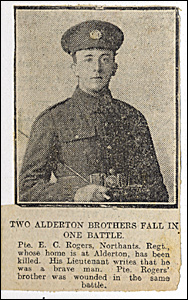 When War was declared in August 1914, all the eligible young men in Alderton decided that as soon as the Harvest was gathered in. They would all attended a special Servive in Church, with their mothers before going to Northampton. It is with pride that we are able to show some photographs, which were taken after the Service.
|

