|



|
Adapted from The History of the County of Northampton Vol.V - Cleley Hundred (ed. Philip Riden)
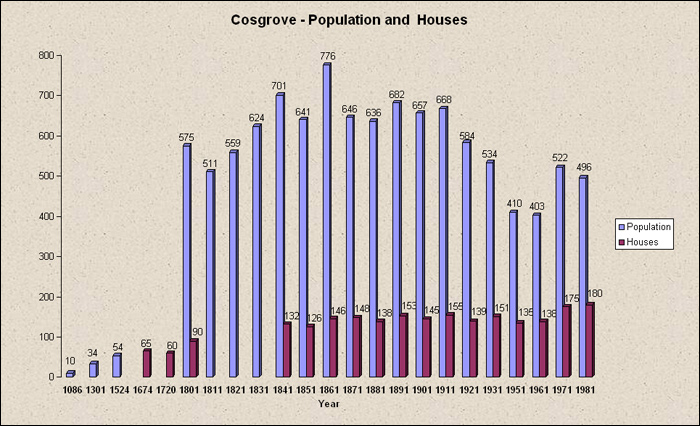
A Brief History of Cosgrove As a parish, Cosgrove has traditionally been something of a patchwork. Some sections were part of Furtho - a much smaller entity on terms of population - and were only regarded as parts of Cosgrove in the late 19th century. Meanwhile, Cosgrove parish included sections of Old Stratford (70% of it in the 1830s). Rationalisation finally arrived with local government boundary changes in 1951. Furtho was incorporated into Potterspury, and Cosgrove's part of Old Stratford was lost when Old Stratford achieved parish status. The impact this had can be seen on the graph below.
The impact of the 1951 changes apart, Cosgrove follows the general pattern of settlement in the area: rises in population in the first half of the 19th century, a fall with the agricultural downturn of the latter part of the century, small recovery before another fall in the 1920s and 30s. The general size of the settlement seems to have been fairly stable, with mild growth in the latter part of the last century, but not the dramatic developments seen elsewhere. Some reasons for this are thought to be the convoluted layout of the roads, the limited sewerage facilities, and the need to retain a green belt between Cosgrove and the northern edge of Milton Keynes. In the period after the Norman Conquest, the Manor of Cosgrove formed part of the barony of Hanslope, the adjoining parish over the border in Buckinghamshire. In 1131, Henry I gave the barony to his chamberlain William Maudit, and it remained in the possession of the Maudit family till 1268, when the then William Maudit died without issue. As he had been created Earl of Warwick in 1263, the ownership passed to the Beauchamp Earls of Warwick, and remained with them till 1487, apart from periodic forfeitures in the mid-fifteenth century during the Wars of the Roses. The Lordship of Cosgrove, as an undertenancy of the barony, passed down the Spigurnel, de Burghersh and de Paveley families, until in 1397 the manor was in the hands of the Crown and then passed to the Beauchamps.
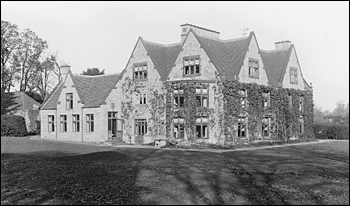
In 1881 J C Mansel sold Cosgrove Hall and the lordship to Alexander Grant-Thorold. Mansel himself moved to a smaller property on the estate which became known as Cosgrove Cottage, and was later called The Old Dower House. In 1886 Grant-Thorold sold Cosgrove Priory and some land to John Atkinson, and in 1891 conveyed the Hall to his second son Harry Grant-Thorold, who in 1919 broke up the estate by auction, offering the lordship with the Hall and grounds. It has subsequently passed by purchase though several owners, till it became the home of a building contractor and also the headquarters of his business.
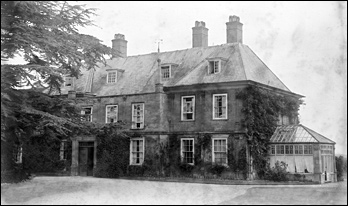
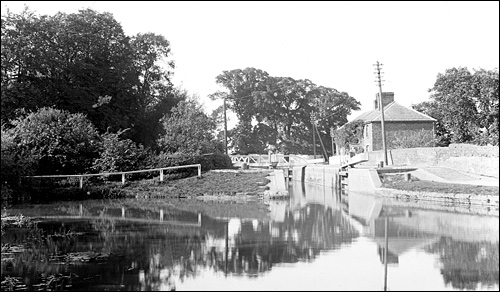
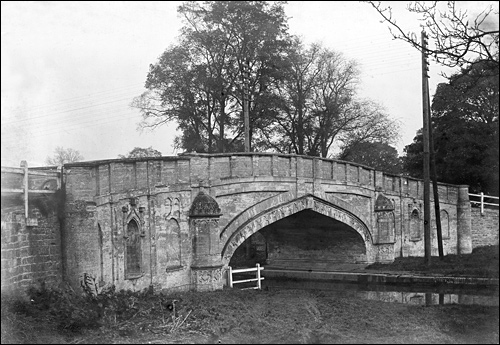
After its purchase from the Mansels, Cosgrove Priory remained with the Atkinsons till it was left in 1972 to Sir Hereward Wake, Bart, of Courteenhall. He sold the estate in 1979 to David Moore, who renovated the mansion, before selling it in 1981, and moving to a new home he had created in the former stables. The main house is currently the headquarters of Pericom PLC. The Priory stands close to the Tove and the oldest part of the present house is said to have been built by Christopher Rigby in the 17th century, though there has been much subsequent alteration. It was already known by the name of Cosgrove Priory in 1774. In common with most villages on the former Grafton Estate, the main occupation around Cosgrove was agriculture. Inclosure came in 1789, and though there were 27 small owners with claims on the common land, the main beneficiaries were the Cosgrove Priory Estate under John Biggin and the Cosgrove Hall estate under John Mansel. There was some consolidation of holdings afterwards, through sales to Mansel, and the parish began to change in character from one that had been relatively open under a range of owners to one dominated by a large landowner. This process accelerated with the merger of the two estates in 1803 (described above) and by the 1830s nearly two thirds of the parish belonged to the Mansels. The second major change to the village occurred in the late eighteenth century, with the construction of the Grand Junction Canal, which passes down the eastern side of the village. A public wharf, which became known as Castlethorpe Wharf, was constructed half a mile north of Cosgrove, while in the village itself one road passes over the canal while another went beneath it. In 1800, a side cut to the canal was opened at Cosgrove, running south west to wharfs at Old Stratford. In 1801 this cut was lengthened to form a whole arm of the canal all the way to Buckingham.
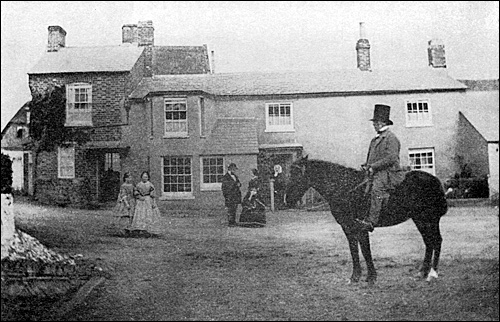
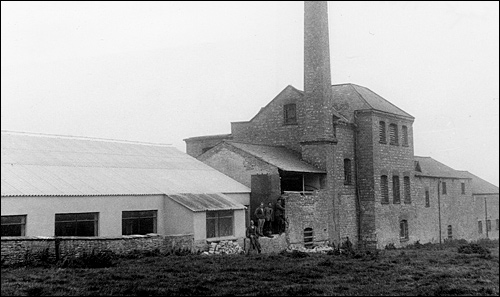
Warren was followed in 1874 by Frances Desvaux Bull, who was solely a brewer and maltster. In 1888 he sold the business to Phipps & Co of Northampton and stayed on as their manager until 1892. The premises came to be used as a store in the early 1900s, and Phipps closed the whole enterprise down in 1912. The buildings were sold to a local builder in 1932, and used by a number of commercial and light industrial users before being largely demolished in 2000.
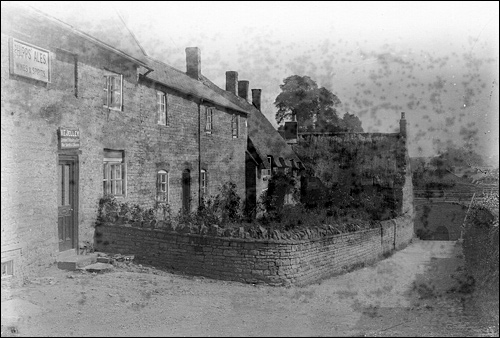
The other pubs in Cosgrove in the 19th century were the Barge and the Plough. The Barge was subsequently closed and its licence transferred to the Barley Mow, which along with the Plough came up for sale in the 1919 auction sale of the Cosgrove Hall estate. Phipps brewery acquired the Barley Mow, and added the Plough in 1924, though that has now ceased to trade as a public house. Another inn - the Navigation Inn - grew up near the Castlethorpe Wharf mentioned above.
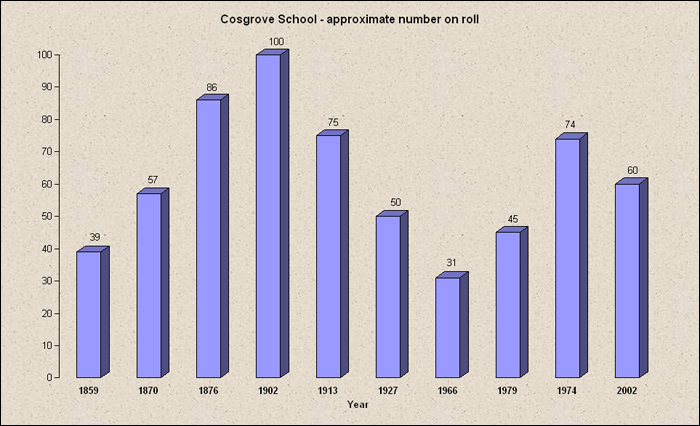
Cosgrove village was not of sufficient size to support a large range of trades, but did have a shop which also served as the Post Office, a blacksmith, a carpenter, and a couple of men who worked on the canal. From the latter part of the 19th century till the mid 20th century the most important source of employment was Wolverton Works - where railway carriages were constructed. Because of the number of Cosgrove men who had secure employment there, when the sale of the Cosgrove estate by Grant-Thorold took place in 1919, many of the tenants of the estate cottagers could buy them. This in turn caused a shortage of housing to rent in the village, a situation not eased until the local authority began to build houses on either side of Bridge Road in the 1930s. Further building took place in the 1950s and 1960s, but no other major development has taken place, for the reasons outlined earlier. Cosgrove has therefore become an essentially residential community of a stable but static size, with most of its inhabitants finding work in Milton Keynes and elsewhere. There was no school in Cosgrove in 1818 despite a perceived need for one on the part of the poor of the parish, who were said to be "desirous of the means of education". By 1833 however there were two: one connected with the house of industry (established in 1830) which was free to the children of both sexes from the labourers' families, and open to others on payment of a small weekly fee. Two Sunday schools were also in operation: one was supported by the parish rates and had opened in 1820; the other was taught by the minister's family at the parsonage, with the expenses being met by the incumbent. By 1840 the picture had changed. The day schools had both closed and the Sunday schools had merged. The same total number of children were being served, with the expenses for the boys met by the parish, and those for the girls by the clergy. In 1844 Maria Mansel conveyed to the rector and churchwardens the cottage at Cosgrove Green which had been used by the parish house of Industry, intending that it should serve as a National school. The cottage was demolished and replaced with a two-story stone building, with a schoolroom downstairs and apartments for the teacher upstairs. The school grew, and by 1867 a night school and a parish library were established there. In 1874-5 the building was heightened to allow a second teaching space for infants upstairs, but by 1876 the Education department were unhappy that the teacher had to supervise two classes on different floor, all children were taught downstairs till 1890, when the appointment of an assistant teacher allowed the upstairs room to be reopened. Pressure on places and spaces, led to a demand from the Education Department in 1906 that a new school should be built. Plans were drawn up in 1910, but the managers were unable to fund the development and so the county council erected a new building near the centre of the village, and this opened in June 1912. Standards rose through the next twenty years, but as can be seen in the graphs at the top and bottom of the page, the population was falling and this brought pressure on the school which culminated in a proposal in 1945 that it should be closed, the danger persisted for the next 20 years, as educational and boundary reorganisations took their toll, but the situation was saved by the new housebuilding mentioned above. The old school building vacated in 1912 was used as a village hall till 1966 when it became first a store for a local builder and subsequently was converted to residential use.
|
|

