|



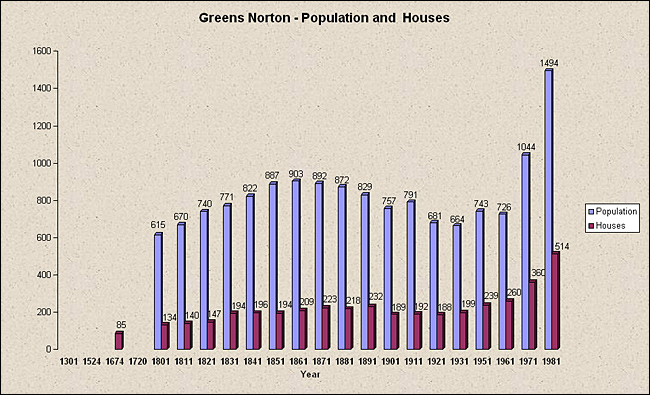
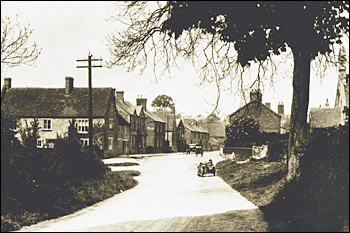
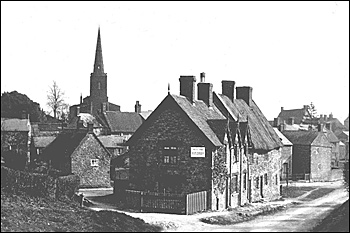
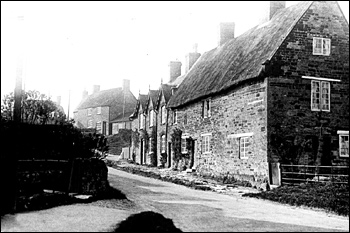
| Adapted from the compilation of the village history on the Greens Norton village website at www.greensnortonvillage.co.uk A Brief History of Greens Norton The manor of Greens Norton has a long and honourable connection with royalty, both as a holding in the early part of its history, and later as a venue for hunting. The parish is the largest settlement in an area which contains a number of small hamlets, and two of them - Duncote and Field Burcote - are counted as part of the parish of Greens Norton. The royal connections of the manor helped it to gain a status it never lost. The housing and population data shows a pattern familiar to many villages across the former Grafton Estate, with the characteristic strong growth in the early part of the 19th century, followed by a decline at the end of that century as agriculture suffered through poor harvests, the importing of North American wheat, and the general shift of population towards the towns and the factories there. Despite a slight recovery in the Edwardian era, the decline continued as with so many other villages. The 1920s and 30s were another time of agricultural depression. The period after the Second World War however is marked by strong growth and within twenty years from 1961 to 1981 the village doubled in size and population.
The manor at Norton was held by Edward the Confessor prior to the Norman Conquest, and his later successor was William the Conqueror himself, who at the time of the Domesday Survey held Greens Norton, together with Blakesley and Adstone. In the late 12th century Richard the Lionheart - soon after his return from the Crusades - granted this manor (along with Luton in Bedfordshire and Wantage in Berkshire) to the Earl of the Isle of Wight, Baldwin de Betun. From him it passed, on marriage of his daughter Alice, to William Earl of Pembroke, along with the hundred of Norton. It descended to his five sons successively, who died without issue, and then passed to John le Mareschall. John's grandson William joined the rebellious barons who were in arms against their sovereign. The manor was confiscate to the Crown who granted it to Henry, son of Richard, King of Almaine. It reverted to the former family in the following year when William le Mareschall's sons, John and William, obtained a royal pardon for their father's treason and were permitted to succeed to his inheritance. The manor descended with the Mareschalls until 1355 when it was purchased by Sir Henry Greene. It is from the long association with this Greene family that the village takes its name. In Richard Myddleton's, will dated 18 Nov. 1489 he directed that his body to be buried in the tomb of marble which he had 'ordained' under the north wall of the chapel of the holy Trinity, in the parish of Norton. He desired his dear wife Maud to enjoy his lands and tenements that he had in the counties of Northampton and Derby, and of which his wife was jointly seised for life with himself, this was upon condition of her providing a priest to sing and pray perpetually in the said church, and for a perpetual obit for him. As a result, a Chantry was founded here in 1496 by Matilda Green, which, at the dissolution had lands in this county and that of
The last Sir Thomas Green died in 1506 leaving his two daughters: Anne, aged seventeen years, and Matilda, or Maud, aged thirteen years, to inherit as co-heiresses one of the most considerable estates in the county. Anne married Sir Nicholas Vaux. He, Anne his wife, and Matilda Green had a grant of the profits of their father's lands, and in 1508 Sir Thomas Parr had a grant on marriage to Matilda. Dame Matilda Parr survived her husband, and died 1532, leaving William Parr Esq. - afterwards Marquis of Northampton -as her son and heir. The manor and hundred of Norton were annexed to the honor of Grafton on its formation by Act of Parliament in 1542, and they remained vested in the crown till 1550, when they were granted to William Parr, Marquis of Northampton, and the heirs of his body. By this grant Norton returned again to the line of Green, as he was the only son of Sir Thomas Parr and Matilda Green. Catherine Parr was youngest daughter of Sir Thomas Parr by Matilda Green, and is traditionally reported to have been born at Greens Norton. She became the second wife of John Neville, Lord Latimer, and in 1543, within a year of his death, was selected by Henry VIII for his sixth Queen. Henry died on the 28 June 1546, and later that year Catherine married Thomas, Lord Seymour, Lord Admiral of
The Hundred and Lordship of Norton was afterwards settled on Queen Catherine, the consort to Charles II, and in that way were still counted as being part of the honor of Grafton. At her death in 1705 they devolved to the 1st Duke of Grafton, and the village remained part of the Grafton Estate until the the Sale of 1920.
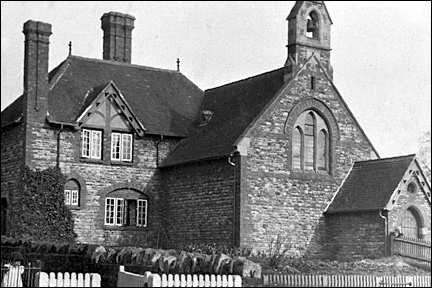
A National School opened in 1875. Its early years were dogged by poor attendance on the part of pupils - a situation familiar in many Grafton Estate villages, especially at harvest, haymaking time, or other times with counter-attractions. On September 9th 1878 "the school bell was rung but no pupils appeared, it being the Norton Feast. School closed." The situation was not helped by the failure of those responsible for ensuring school attendance. An extract from the school log for October 1880 says it all: "The attendance committee will not help their own officer and the magistrates will not help the committee and therefore the law is a dead letter." In the early years, fees were charged - another disincentive for parents in a rural area where work might be readily available but not highly paid. Nor were matters subsequently helped by the high turnover of staff including head teachers: between October 1918 and March 1920 there were "several changes of headmaster". Nevertheless, improvements came from about 1930 onwards, and by the mid-1960s the growth in the school population and rising standards in education meant that the old school building was unfit for its purpose, and a new one opened in 1966.
Employment was mostly on farms, though the village had a number of traditional trades like builders, blacksmiths and wheelwrights, as well as a range of shops. There was also a brickyard, a water mill and a windmill. (See the feature Greens Norton Gallery for more details). Work in the fields was hard, with little in the way of mechanisation to ease the burden of toil. Nor were the wages much of a compensation; one villager - Albert Booth - remembers "Before the First World War wages were very low. My grandparents were married on two shillings a week, my grandfather being a farm labourer. There was little other employment and two shillings was the average wage. Tradesmen had to be very good at their work to be in demand and perhaps earn as much as one pound per week."
The period after the First World War was a time of change and adjustment. The Grafton Estate holdings were sold in 1920; agriculture and the rural population both declined even further; an era had ended, but it would be another forty years before Greens Norton would see the expansion which would take the village up to and beyond the population level of the 19th century heyday and guarantee its future as a thriving community. For further pictures of life and work in and around Greens Norton, see the Greens Norton Gallery
|
||||||||||||||||||||||||||||||







|

