|



|
JOAN HARRIS Grafton Memories
I was the eldest of the three children of Henry and Florence Harris (Harry and Flo). My sister, Brenda was two years younger and brother John five years younger. Our home, for all of my childhood was the School House behind the school (now the Village Hall) at the top of The Lane. The house consisted of the ‘front room’ as we always called it, which overlooked the fields, the kitchen with black range for cooking and heating and the scullery, a lean-to building with brown stone sink. There were two bedrooms, one for my parents and one for us children with girls in a double bed and John in a single bed alongside. There was no bathroom. All our water came from the pump in the schoolyard. We had paraffin lamps (years later we had a Tilly lamp, still burning paraffin but with a mantle, which gave, better light). The privy was at the bottom of the garden. The kitchen was the hub of the house as the only place that had heating. We had this large, scrubbed top table that was used for everything from preparing food, eating, homework, playing cards, making jigsaws, etc. It was rarely cleared, just everything moved around. The front room was only used for special occasions, Christmas and some winter evenings if we had coal for the fire. Food was very basic as most of my memories are from 1939 onwards when food was rationed. We had lots of potatoes, fruit from the garden, rabbits – though I never remember feeling hungry. We ate things like bread and dripping and bread and sugar THE WAR My dad was called up for the armed services. He was a soldier in the Tank Regiment and was away for long periods, but I remember him coming home on leave and I used to wait up for him. It was usually late when he arrived because public transport was very poor. We would have a cup of tea and, because there was no sugar we would find a sweet and have that instead. Another time we waited in the school yard all day, meeting every bus until he finally arrived with his big kit bag. We were so happy to have him home for a few days. During the war all road signs were taken down and we children were told never to tell anyone the name of the village. We loved it when the convoys of American soldiers came through and would shout ‘Got any gum, chum?’ and they would throw packet to us from the trucks. In the school yard periodically soldiers were billeted using the school itself for sleeping. We loved it because they would give us food from their billycans and they would ask us daft questions like ‘Have you got any sisters’ and they would let us talk on their radios. I remember seeing search lights in Park Close (the field opposite ‘The Lane’). Mr. Bull, and Mr. Garrett were A.R.P. wardens and used to patrol the village in the evening making sure there were no lights showing from windows etc during the blackout. The windows were taped up in a criss cross fashion in case of breaking glass. Torches had red paper over the glass so as not to give too much light. We did not have an air raid shelter but knew we had to get under the table in the kitchen if ever there was a raid when we were indoors. Gas masks were issued and we had to take them to school every day where sometimes we had gas mask practise. At first John had a large dome contraption as he was just a baby but later this was exchanged for a Mickey Mouse type of gas mask especially issued for toddlers. Our clothing coupons we used to exchange for second-hand clothes. Mum had this arrangement, I think it was with some London friends of Mrs. Annand. Mrs Annand would give them our clothing coupons and they would send us clothes – large parcels of dresses, suits and coats etc. I remember having our Summer dresses lengthened with a frill of material round the hem, and then when they were too short even for that they were cut down to make blouses. There were tips in magazines on how to make clothes from parachute material and yellow dusters were somehow made into tops. Women used to wear turbans quite a lot and my own Mum used to tie a ribbon round her head and tuck all the bits around it in a sort of coil all round her head. Liberty bodices were worn in winter over a vest and, when you were older you could have ones with suspenders to keep up your lisle stockings. One horrible memory was when we had a telegram to say my Dad was missing, presumed dead and for months we thought it was so, but he turned up in a prison camp in Italy, wounded, but at least alive. He came home some time later in his ‘Hospital Blue’. That was the uniform issued to wounded soldiers, but he had to go back to the hospital and then was discharged from the army. EVENTS Garden Fetes after the war were held in the grounds of the Manor House. There was Spinning Jenny, Hoop-la and Skittles to win a pig – and always a brass band. V.E. Day - celebrated for the end of the war in Europe. We had a party in the School and everyone in the village contributed some food – A hurried affair but very happy. Someone played music. There was a piano, which I believe was damp and had to be dried out. RADIO PROGRAMMES Even if we were outside playing we always went in for Dick Barton with Jack and Snowy or for Wilfred Pickles, a first type of quiz programme. I was allowed to stay up with my Mum on a Saturday to listen to The Man in Black read by Valentine Dyall - It seemed very scary. This was also the era of the Big Bands, Ambrose Giraldo and Henry Hall. Childrens Hour was a lovely programme with Uncle Mac and I remember Mrs Dales Diary and Radio Luxemburg with Smash Hits. SCHOOL We went to school, mixed, boys and girls from 5 – 11 years, in Yardley Gobion which was the next village. We always missed the first lesson because we had to catch the United Counties bus, which stopped outside the public house at 9.40am The school was just two classrooms, wooden floors, blackboards standing on easels and coke stove in the middle of the floor for heating. Classrooms were divided by a moveable screen and the toilets were outside. We often had to wear our coats in the classroom in winter and our milk, (we all had 1/3 pint delivered to school each day) often froze in the bottles. The milk bottles had cardboard tops and we sometimes pushed out the middles, joined two together and wound wool round to make fluffy balls to hang in babies prams, or as a toy for the cat. Coke was stored in the corner of the school playground although I think there was a cellar somewhere. We played ball games in our playtime and games like The Big Ship Sails on the Ally Ally Oh and The Farmer Wants a Wife. The boy from Mr. Fegans Homes came to the school. They were marched to school in crocodile fashion, fetched home for lunch break and then marched back again. I always felt so sorry for them and used to give them my gloves. There were no school dinners provided at Yardley, but when we were eleven we went to Potterspury School and then we had lovely hot dinners in the Village Hall. The smell of pepper even now brings back memories of those dinners. Once a week children came to our school from Deanshanger by coach, boys to do woodwork, girls I can’t remember. We used to have a large garden somewhere at the back of the school where we grew vegetables for the War Effort PEOPLE Mr and Mrs Allen (Henry and Eunice) lived in a lovely cottage on the corner (The Bank), elevated with the garden going all round. Mr Allen we used to call Pappy Allen. He had very white hair and drove a steam engine, which was parked down at the Barley Barns when not in use. Mrs Allen (Granny Allen) always seemed to be busy gardening. She had chickens in the back garden and an old table stood outside the back door where she used to prepare vegetables. If you were around she would give you the stump of the cabbage to eat. Granny also cultivated the garden opposite her cottage. Sometimes on a summer evening she would hold a Whist Drive to raise funds for the church. If she needed someone to make up a table she would rope in one of use children, usually me as I could play whist quite well. After the game we would have sandwiches and a drink. Mr. And Mrs. Marchant (Freddie and Isobel) were the only farmers actually in the village. They lived with their daughter, Rosemary at the farm at the top of Church Lane (Paddocks Farm). They had a mixed farm and supplied the milk morning and evening. The morning milk was delivered by Nancy Holloway who came round with a milk churn and ladle. She came into your house and ladled the milk into a jug. In the evening milk had to be collected. Children used to deliver it in a can to some people. When I was older, about eleven I suppose I used to do this job. Lord and Lady Hillingdon lived at the Manor House. They had a daughter, Marigold, who was a Land Army Girl. We children were always invited to a Christmas Party at the Manor and, when we were older and went Carol Singing we were invited in for mince pies. Mr. And Mrs. Cartman and their daughter, Phillipa, lived at The Rectory, Mr. Cartman being the rector. They had an orchard where we children used to scrump apples Mr. And Mrs. Weston (Fred & May) at one time lived at the Tollgate between Grafton and Stoke Bruerne with Mrs Westons mother, Mrs. Gilbert whose son, Johnny, was a jockey. Mrs. Westons own son, John while still a small child was killed crossing the road outside their house. They also had a daughter, Daphne. At some time later they moved up into the village and lived in Mrs Ludbrooks house,(Hill Top) and then moved again into Mrs Ogdens old house (Manor Cottages) Mr. & Mrs. Plummer were originally from London They had three sons, Ronald, Kenneth and Peter and lived in a cottage opposite Pear Tree Cottage (Norfolk Cottage). It was virtually derelect when they first moved in but they eventually made it really lovely. They used to sell flowers Mr Morton (Percy) kept the shop, a wooden hut up some steps (Opposite Church Lane) Mr and Mrs. Holloway (Alfred and Mary) lived with their daughter, Nancy in a large house (next to the White Hart) and had a spaniel dog which always sat on the wall of the garden. Mr. Holloway worked for Pearl Insurance.
SOME MEMORIES Potato picking by hand. We were allowed two extra weeks off school to help get the potatoes in during September. Picking rosehips from the hedgerows to send for Rosehip Syrup for babies. The school organised this. Fetching beer in a jug from the public House for my Dad (after the war). Sometimes allowed a packet of crisps, Smiths, with a twist of salt in blue paper. Playing cricket on summer evenings, most of the children, and occasionally one or two adults joined in this. We played in Park Close, the field opposite Granny Allen. Granny Allen was the only person with a cricket set and a football and she used to let us borrow them. Playing hopscotch, playing teg,or tig and riding my bicycle everywhere. Skating on the pond behind Annands cottage (The Cottage), walking to Queens Oak, going down to the canal to see the barges. Gleaning (collecting the ears of corn left in the field when it had been cleared of stooks after the harvest) as feed for the chickens. Blowing the church organ, and remembering where the ‘amens’ came so I didn’t let it run out of air! There was a weight that you had to keep level but I used to take my comic to read so would forget. Reading in bed by candlelight. I particularly remember Jane Eyre, Little Nell and Rosie the Peddlar. Mum having the Red Letter magazine on Tuesdays, a kind of journal, and smoking Craven ‘A’ cigarettes. Mum that is. Stone hot water bottles and aluminium hot water bottles. They were long cylinders with ridges and a large, black screw top. Crumpets delivered in baskets on dark evenings (I think this was by Mr. Brown from Yardley Gobion). Paraffin for the oil lamps from Odells at Stony Stratford. Fetching the food rations (with coupons) from International Stores, also at Stony Stratford. We didn’t have a shopping list, just rations for five. As John was under five years old he had an orange juice allowance instead of tea ration. Learning to knit. My first effort was a pair of bootees. After that I became addicted to knitting and used to tale my wool and needles everywhere. Sawing wood logs using a crosscut saw with my Dad in the winter of 1947, a really hard winter with snow drifted up to the top of the front door. Digging our way out and the pump frozen up in the school yard so we had to melt snow in the bath tub by the fire to get some water. Smoking ‘Woodbines’ in the belfry! Playing on the hay ricks, also in the hay loft and jumping from the hatch onto the cart. Making stooks after the corn was cut. Running Errands for Mrs. Banting (lived at The Cabin) and being given seedcake. Lying in bed listening to the barges, and to the rabbit shooting very late at night. Haymaking and Cherry picking. Harvest time with the old type threshing machine, which was really hot and dusty. .People all standing round the last little bit of corn to be cut waiting for the rabbits to run out and Wally Hall running about with a stick trying to hit them. Taking the accumulator to be charged for the wireless down to Mr.Bull at the Manor House (George Bull was Stud Groom to Lord Hillingdon) which cost one shilling. This particularly when there was a boxing match on the wireless as my Dad loved the fights and we all had to be dead quiet, also when the football scores were being read on a Saturday night. I remember a red telephone box on the corner between Mr Holloways house (The Ruerne) and the pub, also, opposite the pub was a well with a wooden lid on it. The communal bonfire on November 5th. We collected wood etc. for weeks and always had the bonfire in the field beside the Council Houses. |
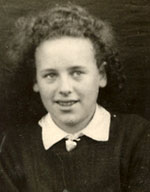 I was born in 1934 and lived in Grafton until 1949/50 when I left to live in Birmingham
|
