Geologically, North Bucks has a good variety of materials that can be used for building construction:-
BOULDER CLAY – the main geological feature of the area is the clay left behind by the Ice Age, and a brickworks had become established on the south east flank of the village by the late 19th century and is shown on the 1900 1st Edition Ordnance Survey map.
The works comprised several brick pits, a long drying shed and 2 scotch kilns. Remains of one kiln were recorded surviving as high as 3.5m as recently as 1990, but now all appear to have been removed. The brick pits to the north survive as a series of ponds. read more…
STONE – Limestone, featured in many local cottages and walls, came from the quarry at Blacklands, a few miles down the B526 road at Gayhurst.
TIMBER – Salcey Forest is very close and, for a long time, there was a wood yard at Springbank at the north end of the village.
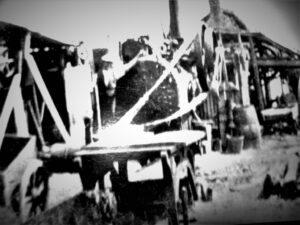
Springbank woodyard
WATER – The River Ouse is nearby and there are many springs in the area around the church.
A Water Company was set up in 1882 by J W Carlile to provide a good quality piped supply to the village.
There is also a tradition of Thatching in the area – as seen in many of the picturesque cottages in the villages – but the reed has to be imported from elsewhere.
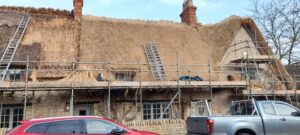 Kemp Cottage, Stoke Goldington High Street – 2024