|



| This article is reproduced from the November 1932 copy of The Northampton County Magazine. It gives a stylised view of Alderton as it was in 1932, in the period between the two World Wars. As this was written before the modern research on the Manor House, there are inaccuracies over the house and William Gorges. For the current state of knowledge on this, see the feature on Alderton Manor House. | ||||||||||||||||||
|
The Northampton County Magazine
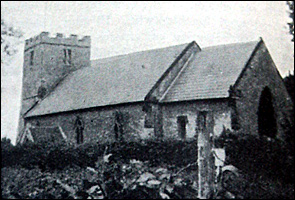
Our County Villages No. 46 : Alderton by Miss Dorothy Macmillan Alderton! What may be the possible meaning of the name? Might it not be Elderton? The village is old. Its history dates from Saxon times when the blood bond was the beginning of Early English social life. Kinsmen lived side by side. Meadows and ploughed lands were shared and - with farmsteads and cottages - passed from man to man. Hamlets were not named at random, but either to perpetuate a family name, in which case was added Wick, Stead, Ham or Tun; to mark a local feature, maybe a river, hillock or castle; or maybe to honour some characteristic of its inhabitants. Now the Elder-men were distinguished from among their fellows by nobility of birth, by courage in warfare, or on account of their wisdom in dealing with the affairs of men. They were called upon to settle disputes and maintain order and decency in the community in which they lived. Looking back down the ages from the civilised and enlightened days of the twentieth century, does not the primitive form of judicature practised in our villages stir in us an emotion akin to reverence?
Edmar and Edwin were Saxon proprietors of Aldritone, which was rated at 50 shillings before the Conquest. At the time of the Conqueror's Survey, Earl Ferrers held two hides of land and half a virgate here, most of the village in fact, for a hide was somewhere about eighty or a hundred acres. In the reign of Edward the First, Sir Pagan de Cadurcis, or Chaworth, was lord of the manor. In 1278 he obtained the grant of a weekly market to be held on Thursday (in choosing that particular day was he actuated by and old superstition, to propitiate Thor, god of air, storm and rain, and so insure fine weather?) He also obtained an annual fair on the vigil, the feast and morrow of St Margaret, the patron saint, a three-day revel, when Alderton would be the centre of attraction for miles around.
He died without issue and was succeeded by his brother, Patrick de Chaworth. This gentleman had no son, therefore his daughter, Maud, carried the lordship in marriage to Henry, Earl of Lancaster, the king's nephew, already rich in the earldoms of Lincoln, Leicester and Derby, whom Gaveston rudely nicknamed The Actor. In 1307 he granted it, with the advowson of church and manor, and the advowson of Stoke Bruerne, to William de Combemartin. Henceforward, Alderton was considered part of the manor of Stoke Bruerne, and had the same owners. In 1318 Sir William de Combemartin died. The year 1539 finds Alderton in the hands of the Crown, three years later it was annexed to the Honor of Grafton. Little is known of the ancient structure called Alderton Castle. We can, however, picture it with its keep, stout walls and battlemented towers, situated on high ground, commanding a wide view of the surrounding country, its ramparts encompassed with a deep moat, still to be seen, now much overgrown with underwood. The castle stood at the north end of the village, near the church; its site is now called The Mount. It occupies an are of about two acres and is covered with trees, centuries old. In the reign of Edward the First, Sir Pagan de Cadurcis paid William de Sauvage £100 for his castle and all his lands in the village and fields of Audrinton. The manor House stood in a low situation at the northwest extremity of the village. A ruined farmhouse occupies the site of the early mansion, its garden a wilderness of weeds, its windows unglazed, a sad enough picture of neglect and desertion in a village where cottagers vie with one another in the neat and dainty appearance of their quaint, thatched homes. Mr Baker informs us that in 1605, two years after her husband's accession, Queen Anne of Denmark stayed four nights, and received regal entertainment, at Alderton (August 16th - 20th), the king being at the same time at Grafton; and that in 1608 King James was here on August the Fourth, when he knighted Sir Henry Anderson, of London, having just bestowed a like honour at Grafton, on his host, Thomas Haselrige, Esq. Queen Elizabeth bestowed honours sparingly; she gave a little, but when she gave she meant the gift to be appreciated. James, on the other hand, liked to shower knighthoods upon gentlemen wherever he went. He bestowed this honour upon 237 Englishmen, during a journey which lasted 32 days.
|



|

