|



|
Adapted from The History of the County of Northampton Vol.V - Cleley Hundred (ed. Philip Riden)
A Brief History of Ashton Since the Middle Ages, Ashton village has been the main settlement of the Parish, situated in the centre of it at the junction of the roads from Stoke Bruerne, Hartwell and Grafton. The population peaked at just over 400 in the middle of the 19th century but had stabilised at around 380 in the late 20th century:
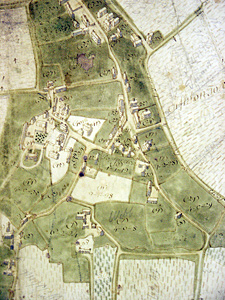
The dominant buildings in the early history of the village were the moated manor house and outbuildings on the northern side of the village, and on the southern side the church, parsonage and tithe barn. The church began life as a chapel: the earliest reference to it is in 1298. The lords of the manors of Ashton and Hartwell built a church at Roade and chapels on their respective manors. In 1516 the Culpeppers (see below) managed to reverse the status of Ashton and Roade so that the former became a rectory and the latter a parochial chapelry. The living at Ashton was frequently shared with another living, and curates were often installed to officiate at services. Between 1767 and 1895 the rectory was held by various generations of just two families: the Risleys and the Neelys. In 1925 the parish was united with Hartwell, and in 1987 the two were united with Roade - closing the circle begun in the 13th century.
The Church is dedicated to St Michael. Its earliest feature is a plain 12th century tub font, and its oldest monument is a wooden early 14th century effigy, traditionally ascribed to Philip le Lou (see below). The chancel was heavily remodelled in 1843 by a local builder, William Shakeshaft, at the expense of the rector John Risely. The Shakeshafts carried out later restoration work in 1892 and the construction for the new arch for the organ in 1909. The tower was substantially rebuilt in 1848; its south wall was also strengthened by three buttresses. The manor of Ashton was created in 1066 and passed down through a number of owners, including several families - the le Lous, the Hartshills, the Culpepers - till in 1537-8 it was granted to Henry VIII and became part of the honor of Grafton when that was created in 1542. The present manor house was probably built in the late 16th or early 17th century when the Marriott family leased the manor. In the survey of 1727 it was still surrounded by a moat, though this was drained in 1854, when the dovecote was demolished and the house divided into four tenements - a division which was reversed about a hundred years later.
The manor court was operating from the early 16th century onwards. In the 1720s Ashton manor court sat twice a year, nominating the constable, headborough, hayward and field tellers, as well as making orders for the management of the common fields. From the early 1730s the sessions declined in regularity until by 1764 the court had been amalgamated with those for Roade, Hartwell and Grafton Regis, where the court now sat, and continued to do so at infrequent intervals until the 1830s, when - following inclosure of the common fields - there was little if any business to transact beyond nominating constables.
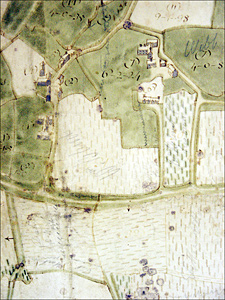
In 1819 the village was inclosed. This involved most of the land to the north and south of the village, which had been open fields or meadow land since the Middle Ages. A new, more direct road northwards to Roade was also created and the older western route off the Stoke Bruerne road was abandoned. In the next ten years, Rectory Farm and Ashton Lodge were built on the allotments which were the result of inclosure. More drastic change to the village came in 1838 with the building of the London & Birmingham Railway (which later became firstly the London & North Western Railway, and finally the West Coast Main Line). The route through Ashton required the building of a high embankment which split the village, despite the provision of two bridges. The process was not without at least one fatality - click here for the Inquest on John Addington. The embankment was widened further in 1875 when the track was quadrupled. A dozen homes at the eastern end of the village along the road to Hartwell were effectively severed from the rest of the village, and from then on were known as Little Ashton.
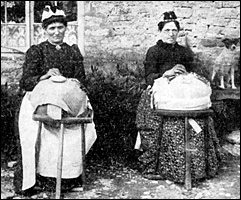
The Grafton Estate owned about three quarters of the land in Ashton, so it was a massive disruption to the identity and nature of the village when the estate was auctioned off in a series of sales in the early 20th century. Despite the claim that only "the outlying areas of the estate" were being sold off in the first sale which took place in 1913, about half the Grafton holdings in Ashton passed into private ownership, despite Ashton lying so close to Grafton. Those farms and cottages which did not sell for the reserved price in 1913 were included in the 1919 sale, when all remaining Grafton Estate properties were sold except Rowley Wood, which did not even make the reserve price when it was entered in the 1920 sale. The changes induced by the sales were felt all the more keenly when Ashton volunteers who had served in the First World War returned to the village. They faced a double blow: their wages had not been made up by the farmers, nor had their jobs been kept open. Despite these changes, farming retained its traditional role as the largest source of employment in the village till the late 20th century. The village was always too small to support more than a limited range of trades and services, and there was never any industry in the parish itself. There seems to have been a shop or store in the village from the late eighteenth century till the 1980s. Licenses for Ashton's only pub - the Old Crown - can be traced back to 1810. There was a blacksmith in the village from around 1750 till 1880, when the last smith died. Like many villages in Northamptonshire and Buckinghamshire, lace-making was a cottage industry for women in the 19th century, while several men in the same era found a trade as shoemakers.
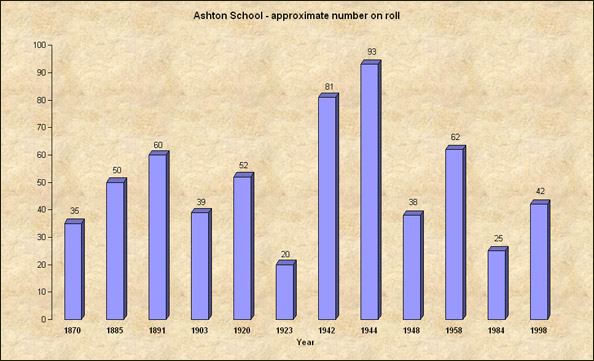
Ashton first acquired a school of its own in 1854 when the 5th Duke of Grafton built an infant school to the north of the church. Prior to that date, children from the parish could attend the free school at Courteenhall. There was also a lace school in the village. By the 1860s it had become a day school under diocesan rather than government inspection. In the 1880s it was a mixed day school. No children over 12 were at the school, though some attended schools in Stoke Bruerne or Roade, and the rector taught an evening school two nights a week for pupils aged between 8 and 20. From 1923, children over 11 from Ashton attended the larger school in Roade, which impacted on pupil numbers at Ashton. However, in 1938 the freehold of the school was transferred from the Grafton Estate to the Archdiaconal committee. The years of the Second World War saw an influx of evacuee children from London, Essex and Kent which boosted the numbers significantly only to have them decline when the children returned home after the War. Numbers in the late twentieth century rose and fell, reflecting the building of new houses in the village and the decline in the birth rate respectively, but Ashton still has a school - now a voluntary controlled primary school - and so despite all the dramatic changes to traditional village life which occurred in the last century, at least one aspect of it is still intact.
|
||||||||||||||||||||||||||||||





|

