Adapted from The History of the County of Northampton Vol.V - Cleley Hundred (ed. Philip Riden)
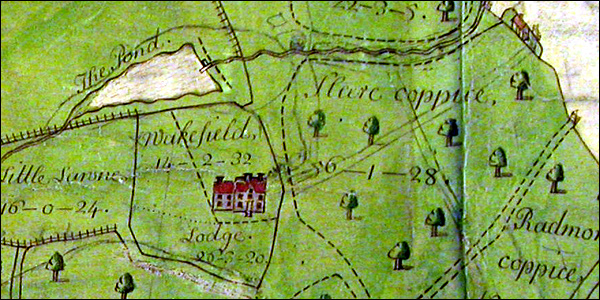
As indicated in the history of the Grafton Estate, when the 2nd Duke of Grafton came into possession of the Estate in 1706, his mother was living at Grafton and taking an active interest in the running of the estate. The Duke therefore set up home in Wakefield Lodge, of which he had acquired the use as part of his appointment to the rangership of Whittlewood Forest. When his mother died in 1723, he made Wakefield Lodge the administrative centre of the estate, which gradually became known as the Wakefield Estate as much as it was called the Grafton Estate.
The act of 1541 which established the honor of Grafton annexed to it both Whittlewood and Salcey Forests. Following 1542, the keeper or master forester of Whittlewood was one of a raft of offices which Henry VIII and later sovereigns granted to a succession of magnates and peers, beginning with Sir John Williams in 1545. These magnates usually appointed deputies to discharge the duties of the office, and these deputies would have lodges in the forest. The deputy keepership of Whittlewood seems to have been held by the second stratum of the gentry and yeomanry. Once such member was Cuthbert Ogle, who held the post in 1598 and was described as being "of Wakefield Lodge" when he died in 1633.
After the restoration of the Monarchy, when Queen Catherine was granted the honor, her council ran the rule over Whittlewood Forest as well as her other domains. In 1670 they warned the Earl of Northampton, who had been reinstated as keeper and warden, and who retained the office till 1681, that they were dissatisfied with the conduct of his tenant (and lieutenant of the forest) George Goodman, and the earl was instructed to dismiss him. Nevertheless, Goodman was still living at Wakefield Lodge at his death in 1673. He was followed by Thomas Newton, but in 1679 another official - Thomas Kingston - was resident at Wakefield. His will has survived, and can be viewed by clicking here.
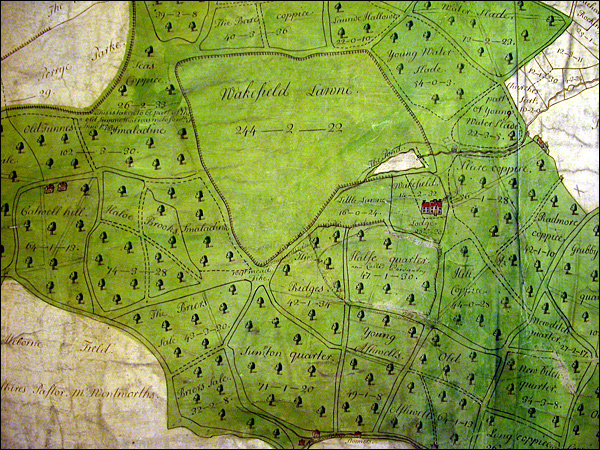
When the honor passed to the 2nd Duke at the death of Queen Catherine in 1705, he expected that the office of master forester would be included. However, Queen Catherine had granted it in 1681 to the Earl of Feversham who refused to give it up. Repeated petitions followed, but it was 1712 before the Duke and his heirs male were confirmed in the office, under which they were to hold Wakefield Lodge and its grounds, and the pasture known as Wakefield Lawn.
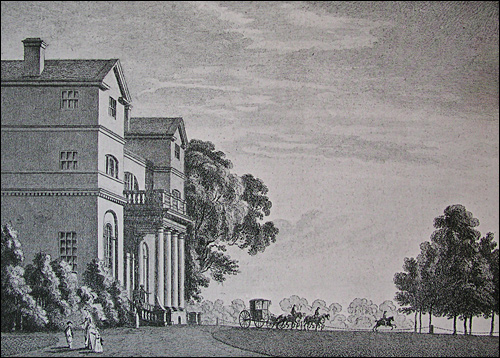
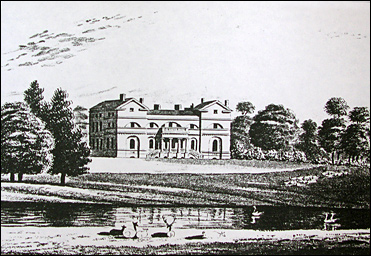
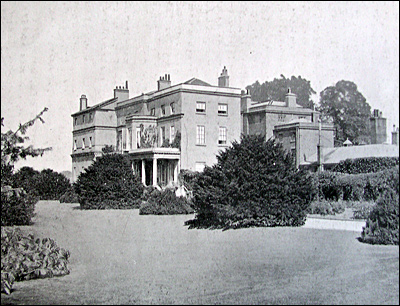
As originally built, Wakefield Lodge was of two storeys above a basement, flanked by three-storey corner pavilions. Repairs were carried out shortly after the 2nd Duke arrived there, and the repairs and extensions continued at intervals through the middle of the 18th century, till in 1770 the 3rd Duke reported that the remaining portion of the old lodge was no longer habitable, and it was demolished and new ranges installed, built of brick with hipped roofs.
|
|
|
|
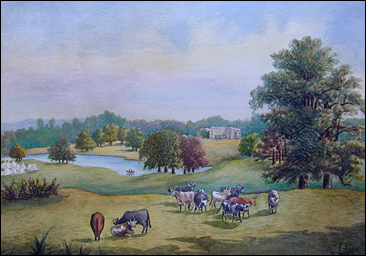
Two 19th Century views of Wakefield Lodge
(l) Clark's engraving c.1830, and (r) Isabella Sams' painting dated June 20th 1877
|
 |
|
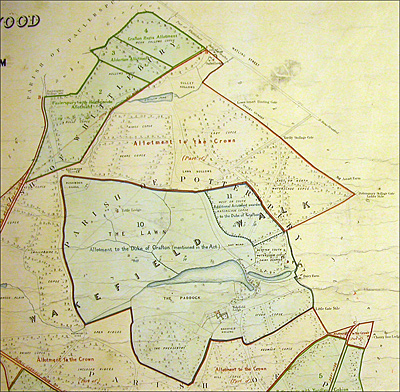
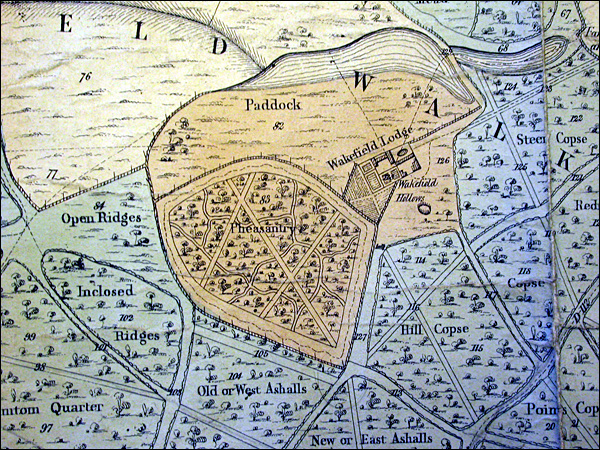
Wakefield Lodge on a map of 1848
|
The 2nd duke had made Wakefield Lodge the family's Northamptonshire seat, and this policy continued through his descendants until 1920. Later Dukes made other acquisitions of land as opportunities presented themselves through inclosures and most notably in 1856 when Whittlewood was disafforested. To compensate for the loss of office over Whittlewood forest, the Duke was awarded Wakefield Lodge and its grounds, as well as other allotments in the former forest.
|
|
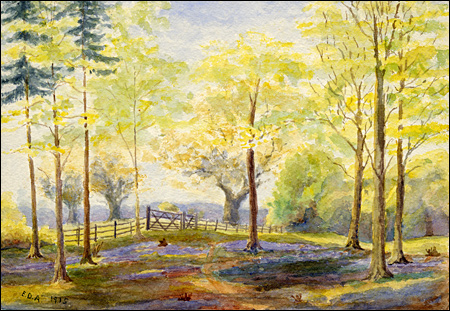
"Lady Copse - Wakefield Forest"
painted by the Rev. E. D. Annand in 1915,
when he was Rector of Grafton Regis
|
|
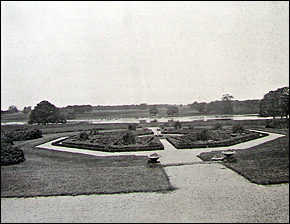
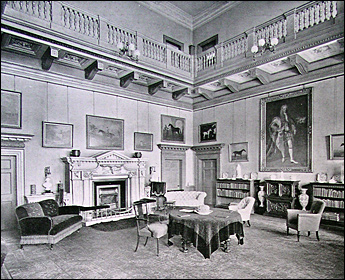
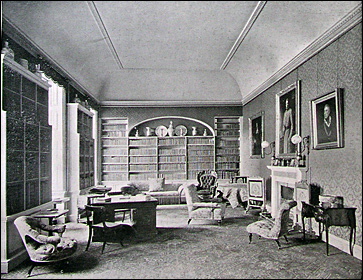
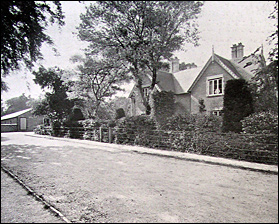
Wakefield Lodge had been in the family for over two hundred years when the economic and financial pressures outlined in the history of the estate forced its sale in July 1920. Even then it failed to sell and it was another four years before the freehold of the mansion passed from the FitzRoys to the family who had leased it in 1920. The contents of the Lodge were sold in a six-day sale in 1921. Extracts from the sale catalogues reproduced below capture the flavour of Wakefield Lodge as it was when the Duke of Grafton sold it.
|
|
 |
|
Gardens & Grounds
|
Home Farm
|
|
|
|
|
The "Stone Hall"
|
The Library
|
|