2nd Duke of Grafton 1690-1757

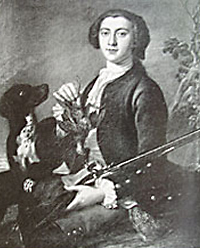
Charles 2nd Duke of Grafton, drawn by Barham Rushbrooke
Charles, 2nd Duke of Grafton, drawn by Barham Rushbrooke who must have given it to the Rev. Sir John Cullum Bart. of Hardwick House, Bury St Edmonds. Now acquired by Milton Keynes Museum.

Charles FitzRoy, 2nd Duke, who was also Earl of Arlington and Viscount Thetford, and like his father, he too was a Knight of the Garter, Viceroy of Ireland, Lord Chamberlain for thirty three years, Ranger of Whittlebury Forest and Lord Lieutenant of Suffolk. He also adroitly balanced two mistresses simultaneously -- one the wife of the Earl of Burlington and the other Princess Amelia, the daughter of George II.

He was an enthusiastic sportsman, to such an extent that George II, himself a keen sportsman, in a moment of pique, told the Duke it was "a pretty occupation" for a man of quality and of his age to hunt a poor fox [Grafton was 52 at the time]. His hounds were lodged at Croydon, and foxes were captured in Whittlebury Forest and transported via hamper to Croydon to provide sport. The Grafton pack was established around 1715 at Wakefield, and toward the end of the season the hounds were transported to Euston to continue the chase; the 3rd and 4th Dukes continued this latter practice. His enthusiastic support of the construction of Westminster Bridge in 1748 is said to have been due to his annoyance at having to transport horses and hounds across the Thames in barges when loaned some hunting country on the south side of the river, or, alternatively, his impatience at having to wait for a ferry when going from London to Croydon to hunt. He finally quit the field after a fall from his horse at the age of 72.

Click here to learn about the Grafton Hunt.

Lord Augustus Fitz Roy, the 2nd Duke's son.
He died prematurely, leaving his sons (Augustus Henry, the 3rd Duke, and his brother, the future Baron Southampton) to be raised by their Grandfather the 2nd Duke.

It is from the period of the 2nd Duke that the start of the extraordinarily complete records of the Grafton estate, under his enlightened ownership, provide an excellent example of the way in which the wealth and power of the great Whig magnates, who ruled England throughout the century, was based on the careful management of their landed estates.

At the beginning of the century Grafton Manor, known as the Great House, was inhabited by the widow of the 1st Duke of Grafton and her second husband Sir Thomas Hanmer. The 2nd Duke chose to make Wakefield Lodge (a few miles away to the south-west), which he had acquired as hereditary ranger of Whittlewood Forest, his Northamptonshire seat. The Duke commissioned William Kent to build a magnificent classical house and lay out a park with an ornamental lake.

This was the base from which the estate would continue to be administered until the sales of 1919-20. On the death of the Duchess Isabella and Hanmer in the early 1720s, the Duke decided to introduce a new system. In 1724 he appointed a body of commissioners to advise him on running the estate.

An up-to-date survey of the whole estate was commissioned from Collier and William Baker. This was remarkably detailed, accompanied by maps, and encompasses all the Duke's Northamptonshire estate. It is from these records that is has been possible to draw together the information for these CDs.

The Duke died in 1757 and was succeeded by his grandson Augustus Henry . Read his Will

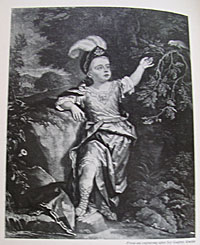
2nd Duke as a child,
from an engraving after Sir Godfrey Kneller
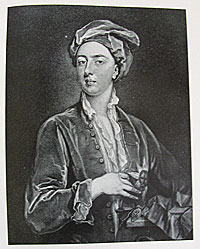
2nd Duke as a young Man
2nd Duke as a child,
from an engraving after Sir Godfrey Kneller

2nd Duke as a young Man
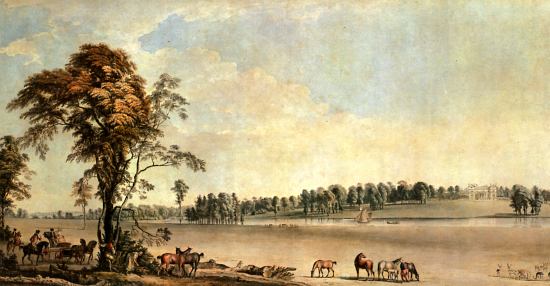
WAKEFIELD LODGE, painted by Paul Sandby in 1767.

117 acres of gardens, pleasure grounds and enclosed meadowland plus a share in pasturage offered by Wakefield Lawn was granted to the second Duke of Grafton as part of his appointment to Lord Warden and Chief Ranger of Whittlebury and Salcey forests by Queen Anne.

In 1751 the original structure, used by Oliver Cromwell as a hunting box, was replaced by the William Kent designed structure seen in the distance, commissioned by the 2nd Duke. Kent was a leading and popular practitioner of the "landscape garden;" the landscape designer Capability Brown is also said to have had a hand in developing the park.

The Grafton Hunt was founded here by the 2nd Duke, who also sponsored the Wakefield Lawn Races which were held here until 1868. The 3rd and 4th Dukes continued the Grafton Hunt from Wakefield. The 4th Duke also stabled "a splendid supply of first-class sires" at Wakefield to improve the breed of hunters in Grafton country.