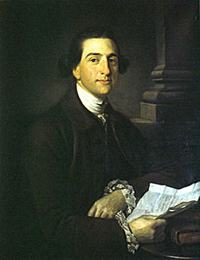
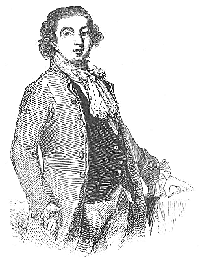
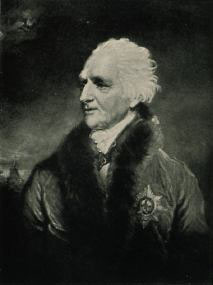
The 3rd Duke was six years old when his father, the Duke's third son, Lord Augustus FitzRoy died prematurely. His uncle, George, the Earl of Euston and heir to the ducal title, also died young at the age of 32, leaving Augustus Henry heir to the title. His grandfather raised and educated him and his brother the future Baron Southampton.
The great Earl of Chatham (William Pitt the Elder) selected Grafton as his most able protege to act as First Lord of the Treasury, and, from 1767 to 1770 Grafton served as Prime Minister. Although both men were favourably disposed to the American Colonists, Grafton agreed to serve as Lord Privy Seal under his successor Lord North, whose determination to confront the colonists led to the American War of Inderpendence.
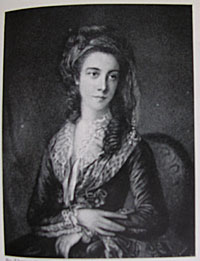
Grafton's political achievements were overshadowed by his propensity for the fairer sex and the turf. In January 1756 he married Anne Liddell, known for her looks, intelligence and charm, the only daughter of Lord Ravensworth. During their stormy marriage they had three children. The Duke was unfaithful to his wife, keeping openly, a series of mistresses. In 1764 he left her to live with Anne Parsons. In January 1765 Grafton and his wife separated, divorcing in March 1769, after she had eloped with the Earl of Ossory.
One of the Duke's sons, Charles FitzRoy was father of Admiral Robert FitzRoy.
In June 1769 the Duke married Elizabeth Wrottesley who bore the Duke twelve more children.
As a racehorse owner as well as breeder he was a distinct success and was regarded as an authority on what has been called "the sport of kings". The stud he founded at Euston accounted not only for his own brilliant series of wins, but was largely responsible for his son's even more prosperous experience. Between them their Graces are reputed to have netted nearly £250,00 in public stakes.
The 3rd Duke carried off the "Blue Ribbon of the Turf" no fewer than three times. His first win was in 1802 with Tyrant ridden by Frank Buckle. The Duke's second Derby win came in 1809 with Pope ridden by Dick Goodison. He repeated his success in 1810 with Whalebone ridden by William Clift. In 1804 he won the Oaks with Pelisse and in 1808 with Morel.
Lord Abingdon proposed the Duke called one of his horses Potatoes and intimated the same to his trainer. He was overheard by a cheeky stable lad who broke into a loud guffaw. Good humouredly his lordship took up a piece of chalk and turning to the boy, said, "Now my lad spell 'potatoes' on the corn bin and you shall have a crown." The boy, haphazardly taught his letters (there was no School Board in those days!) painfully scrawled Pot-8-0s, a whimsical form of spelling which tickled the owner's fancy that he decided to retain it.
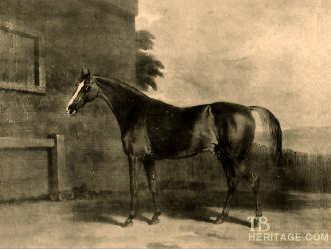
The star of the Euston stud was the famous mare Prunella, which is said to have yielded their Graces, father and son, little short of £100,000.
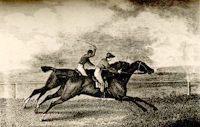
It was in 1764 that the much discussed match between his horse, Antinous, and the Duke of Cumberland's famous thoroughbred, King Herod, took place over the Beacon Course at Newmarket for £1,000 aside. Upwards of £100,000 were dependant on the result and interest in the event, was tremendous. The contestants were considered to be of even merit, but after a magnificent struggle King Herod scrambled home by a half neck.
The 3rd Duke, whose lifespan encompassed the transition from races and matches (run by four year olds or older in heats over four miles, until one horse won two outright), to the form of racing more or less recognized today, with a single race for three-year-olds forming the basis of what have come to be known as the "classics." The horses of the 3rd Duke and his son won the Derby or the Oaks 25 times between 1800 and 1837; the 4th Duke's horses won the 2,000 Guineas five times, and the 1,000 Guineas every year between 1819 and 1827, but one (1824).
He spent his remaining years in the pursuit of religious enlightenment, leaving the Church of England to convert to Unitarianism.
He died at Euston Hall in 1811 and was succeeded by his son George Henry.
extracts from
The Royal Fitzroys - Bernard Falk
and
Patricia Erigero, Thoroughbred Heritage,
www.tbheritage.com