|
Grafton Estate Tenants at Foscote : 1650 - 1919
Foscote was given to King Henry VIII by the Knightly family. Initially, the land comprised about 250 acres - mostly small holdings and two parcels of 50 acres, but the main farm of 155 acres consisted of Digged Field and Further Field, which was being rented by William Tibbs - a London stationer - in 1650, and still in 1662. He died in 1674.
The Barford Family
This farm should have been leased to Viscount Fitzharding from 1678, but formed part of the main lease which was taken back from Fitzharding's widow after her default of payments, and so became part of the Grafton land in hand. In 1676, William Tibb's nephew John Barford was farming it. John had cattle valued at £58 and sheep worth £76 at the time of his death in 1684 (Click for John Barford's Inventory). (Another farmer's inventory in 1682 valued six cows at £9 and 27 sheep with 15 lambs at £3.10).
|
|
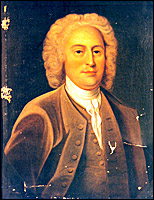
Valentine Barford (lawyer)
1675 - 1746
Foscote Tenant
from 1723 - 1746
|
John's widow remarried - to William Miles, whose father rented the neighbouring Handley Park Farm from University College Oxford. This had also been Henry VIII's land until he sold it to Bennet of Beachampton. Foscot was leased to the Woodall family, but the leases were sublet: William Miles was named as subtenant to Woodall's lease in 1706.The Duke of Grafton sorted his land leases in 1723. He split Foscote into two farms, leasing one to John Barford's son Valentine who had been a clerk to Captain Andrews of Barcote, Warwickshire until the latter died in 1710. Valentine then returned to Foscote to run the farm because his stepfather had just died.
Valentine died in 1746. He had used his clerical expertise to help the Abthorpe parishioners in their fight to become a separate parish from Towcester in 1737. After his death, they had a stone put by the lectern in Abthorpe church, in acknowledgement of his help (Click for picture and details). His nephews Thomas and Robert took over the leases of both Foscote farms, and from that date their descendants farmed both Foscote farms until the Grafton estate was sold.
Thomas's son Valentine had the Stocking Frame public house built in 1776, but died the next year. In Alehouse recognizances, his family was listed as owning the Stocking Frame with various tenants until his grandson died in 1864 and the pub was sold to the Phipps family who had started a brewery in Towcester.
|
|
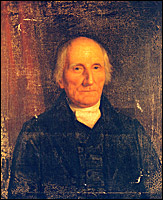
Valentine Barford
(1764 - 1848)
Painted in 1842
when the sitter was 78
|
The Foscote Flock
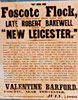
His son Valentine and bachelor grandson - also Valentine - bred sheep from the New Leicester breed which had been developed in the 1770s by the eminent stock breeder Robert Bakewell of Dishley Grange, Leicestershire. The breeding rams were let out as well as sold at an annual ram fair held at Foscote.
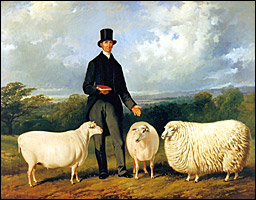
The New Leicester breed of rams were superior to the Lincolnshire rams which had been the previous breeding stock. They were smaller-boned and fatter, very hardy, and needed no artificial food such as oil cake. This meant that farmers could improve their own stock on any sort of lowland. The letting out of the rams enabled these farmers to breed their own, simply for the price of hiring a ram without the cost of buying one. This enabled poor people to have cheaper fatty mutton which was their staple diet, but as can be seen from the painting, the sheep were grossly fat: wethers were usually killed after two years before they got even fatter.
| Measurements of a New Leicester at 4 years old: |
| Height |
2 ft 6 ½ inches
|
| Girth |
5 ft 2 inches |
| Length |
2 ft 10 ½ inches
|
| Extreme Length |
4 ft 2 ¾ inches
|
| Dressed Weight |
236 lb |
Valentine Barford developed his own strain of sheep, bred from the New Leicester. He kept a pedigree register from the start of the breeding programme along with his bachelor son Valentine. After his father's death in 1848, the third Valentine Barford continued with the breeding flock and the ram letting. In 1857 his customers celebrated over 60 years of breeding by presenting him with a painting of himself and some of his sheep done by Henry Barraud.
|
|
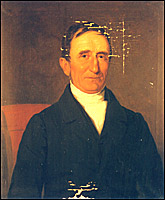
Valentine Barford
(1786 - 1864)
Tenant at Foscote House Farm
|
The two Foscote Farms were not big enough to support the sheep breeder's sons. They were the first generation to leave Foscote. Two went into farming and one into ironmongery. Their sons in turn spread their wings even further: William formed Aveling Barford, the engineering company; John was mayor of Banbury. Another John became Vice President of the Royal College of Veterinary Surgeons in 1884.
Those who remained at Foscote eventually fared worst of all: large families; early deaths; high rents; farming depression. In the end, the good life of having been a Grafton tenant farmer evaporated as it did for so many other farmers. The Depression of the 1930s nearly destroyed the farming industry. Then Welsh farmers settled in the district and rejuvenated many farms.
|
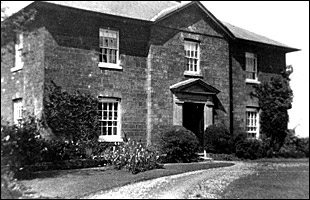
Foscote House Farm, at about the time of the Grafton Estate Sale in 1919
|
|
|
|
William Gibbins Barford, last tenant of Foscote House Farm before the Grafton Estate Sale
He then became the owner from 1920 - 1933
|
|