|



|
Adapted from "Blakesley Then & Now" by P.B. Kingston, published privately 1983. Reproduced with the permission of his descendants. Photos by Doug Blake, reproduced here with his kind permission.
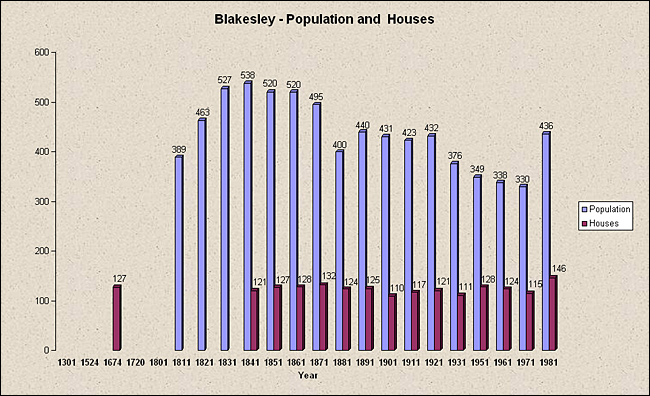
A Brief History of Blakesley The parish of Blakesley, also known in former times as Blaconesley and Blacolvesley, also comprises the hamlets of Woodend, Foxley and Seawell. Census and population data sometimes includes that for Woodend, but this has been disaggregated in the chart below, which represents only the township of Blakesley. The development of the settlement follows the general pattern of most other Grafton Estate villages, with a sharp rise in the population up to 1841. The village achieved a fairly stable size and despite a sharp fall in the 1870s, the recovery was earlier and longer-lasting than most though a decline set in in the middle part of the last century. Post-war development, however, has led to a sharp rise, and by 1981 the village population was back to what it had been at the turn of the century.
Blakesley has a somewhat chequered history of ownership. At the time of the Domesday Survey, the Lordship of Blakesley was in the hands of several individuals: the Earl of Moreton, the Earl of Chester, and William Peveril, and their holdings descended with the families, though the face of these owners was represented by a series of under-tenants. In addition to these three, there were other landholders in Blakesley by the reign of Edward I. The Knights Hospitallers (the Knights of St John of Jerusalem) held land in Blakesley, as did the Zouche family. All these holdings were subjected to the usual process of buying and trading. By the time of the Dissolution of the Monasteries in the 1530s, the holdings of The Knights of St John had been granted to Princess Elizabeth (later Queen Elizabeth I) during her lifetime, but then in the reign of Edward VI they were subsequently given to the Duke of Northumberland in exchange for lands in Kent. They returned to the Crown under Mary I but were then granted out again in 1560 to Thomas Watts. The Zouche holdings had been sold to a Nicholas Boynton, and Watts bought them from him and merged the two estates.
Perhaps unsurprisingly in view of the above, the Grafton Estate had few holdings in Blakesley village itself. In the Estate Sale of 1913, there was one centrally-situated lot, which was the location of the village smithy. The main Estate holdings were in the land surrounding the village - in particular Seawell Farm, Elms Farm and Southfield Farm.
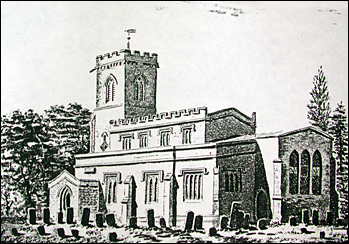
Seawell Farm was extensively rebuilt in the 1850s - one of a number of "model farms" which were created across the Grafton Estate. In view of that, it is somewhat surprising that it was not bought when first put up for auction in the Estate Sale of 1913, but other holdings suffered the same fate: Elms Farm also only sold at the second attempt, and Seawell Wood, despite being billed as "the well-known fox covert", made a third appearance at auction in 1920. The Parish Church of The Blessed Virgin Mary was given to the Priory of St John of Jerusalem by the Lord of the Manor in the reign of Edward II. It is built in the Early English style, chiefly of red sandstone, but mixed with limestone. A short pyramid roof was added in the 19th century, but the major change was the rebuilding and extension of the chancel in 1897, which as stated above was funded by the Squire. He apparently did this as a memorial to his father, who had died in 1895. Two stained glass windows, in memory of his sisters, were added to the walls of the new chancel.
The Wesleyan Methodists at Blakesley had held services in private houses since the early nineteenth century. A chapel was eventually built in 1868, on ground given by several members of the congregation. A vestry was added at a later date. The Baptist Chapel in Woodend is an offshoot of the much older church at Weston-by-Weedon, whose records date back to 1681. In 1689, the house of Joseph Goodman of Bradden was recognised as the meeting place, with baptisms conducted in the open air at Cathanger Farm, Woodend, the home of Thomas Lovell, one of the deacons. The branch chapel was built at Woodend in 1813, and was renovated in 1888 - Richard Loydell the blacksmith gave the ground for the graveyard.
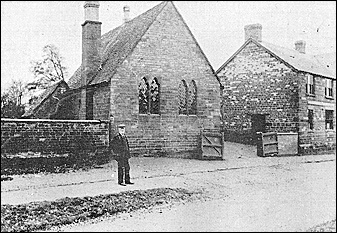
Blakesley's school is of quite ancient foundation. In his will of 1669, William Foxley provided a homestead for a Grammar School, together with about eight acres of land to support it. He stipulated that the appointed schoolmaster should be "a fit and able scholar out of the University of Oxford or Cambridge, and should have taken a bachelor degree at least." The master was to be "orthodox in his opinion and conformable to the doctrine and discipline of the Church of England." The Vicar of Blakesley and the Parsons of Maidford and Bradden were to be trustees on a board of five, and the two others recruited should be "honest, sober and discreet persons." Education was to be free to all boys in Blakesley. The good intentions were not enough, however. An enquiry in 1825 found that mostly the headmasters had appointed deputies of dubious quality to do the teaching; no rudiments of classical education had taken place and anyway were of little value to villagers; that no new trustees had been appointed since 1733; and the Vicar of Blakesley being "lately dead", the report concluded that it was high time new trustees were elected. No action was taken until 1847 when the Court of Chancery ordered the Master of the Court to hold an enquiry into the running of the charity and settle a scheme for regulating it. The new scheme came into force in 1850; a school for girls was set up in 1877. The two functioned until they were merged in a new school built in 1913, which was extensively remodelled in the 1970s.
In about 1900, Blakesley could boast the usual range of village shops and trades: shoemakers, a blacksmith, several shops, a post office, a cooper. There were several public houses and even a small factory which made briar pipes.
Blakesley was one of the few villages in the Grafton Estate area to have a railway station - others being Blisworth, Roade and Stoke Bruerne. The East and West Junction Railway opened in 1873, forming a connection between Stratford on Avon and Towcester, where a line from Blisworth to Banbury had been opened in 1866. The idea behind the venture was to provide a route for ironstone from the quarries of Northamptonshire through to the steelworks of South Wales, thus avoiding London. Through such a rural area as south-west Northamptonshire, revenue from passenger traffic was never going to be high, and the company folded, to be reborn again as part of the SMJR (The Stratford & Midland Junction Railway). It functioned mostly as a freight line with passenger services, seeing a peak in the Second World War fulfilling some of its original intentions, as freight from the Bristol area came east on a circuitous route to London which avoided the immediate attention of enemy aircraft. After the war, traffic declined. The line closed to passenger services in 1952 and to freight in 1963, with the inevitable removal of the tracks afterwards.
For more on Blakesley railway station see the Special Features on Blakesley Hall and Blakesley Gallery At the turn of the 20th century, Blakesley was still functioning much as it had always done: the Squire owned most of the village; the Duke of Grafton owned most of the land outside it; change had been evolutionary, not revolutionary. However, the worsening political climate of the Edwardian era, the First World War and then its aftermath altered life in Blakesley. Blakesley was at the centre of an area chosen to hold military exercises in 1913. Two "armies" manoeuvred against each other while being watched by a galaxy of royalty, ministers, generals and foreign military attaches. A year later a war started in earnest.
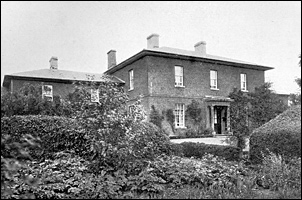
By the early 1920s, not too much had changed on the face of things, but in fact the old way of life had gone. The Grafton Estate properties had been sold, the Squire had died, and the economic climate was worsening. The 1920s and 30s were a time of economic and especially agricultural depression. Mrs Bartholomew at the Hall was still hosting events such as the Blakesley Show, but after 1945 she moved away. The contents of the Hall were sold; the house was allowed to deteriorate until it was beyond economic repair and it was demolished in 1957. Yet with the post-war period came new building - done sympathetically, with a careful choice of styles and building materials. New families moved in, the community took new strength from this, and the village was able to continue the life it had enjoyed in previous decades. |
||||||||||||||||||||||||





|

