|



Roade W.I. Village Scrapbook 1953 ROADE
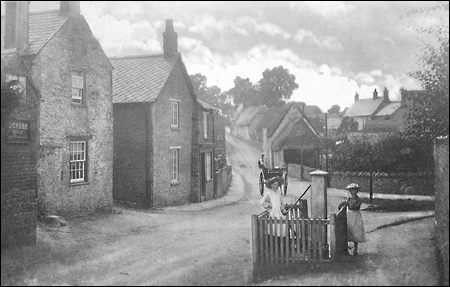
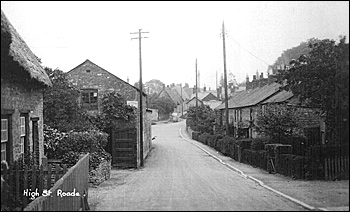
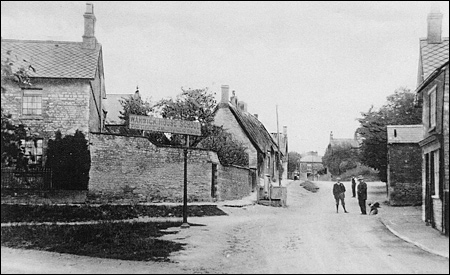
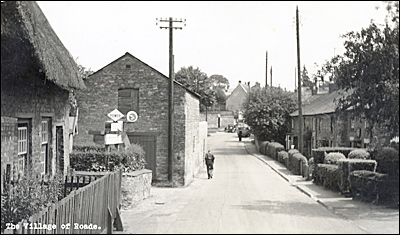
compiled by a committee drawn from the CONTENTS PROLOGUE SURVEY OF THE VILLAGE PLACES OF WORSHIP:- THE CHURCH THE BAPTIST CHAPEL THE WESLEYIAN METHODISTS SCHOOLS MEANS OF LIVELIHOOD:- FARMS ROADE AND RAIL PIANOFORTE SUPPLIES LTD THE QUARRIES PUBLIC SERVICES THE VILLAGE POSTMASTER PUBLIC HOUSES HOBBIES AND SOCIETIES ROADE FAIR EVENING IN CHIMNEY CORNER OLD SAWS AND SUPERSTITIONS YELLOWING LEAVES FROM THE HOUSEHOLD BOOK EPILOGUE PROLOGUE Surely Roade must be the most neglected and the most bewildering village in all England; the greatest mixture of ancient and modern, poverty and prosperity, romance and commerce; the finest example of muddle and compromise. No child could have drawn a more incongruous village, and no plan, short of complete demolition from the Railway Station to Burman Farm could improve its appearance. The High Street, the oldest part of the village, is a hotch-potch of old and new; stately houses well set back beside a row of two-roomed cottages sharing one lavatory at the end of the block. Houses have been converted into shops, and shops have been converted into houses. A modern bungalow backs onto an old farmyard; where the bereaved cow mourns her calf, and the clanking of pails at milking time reminds us not all farmers own bright new milking machines. A petrol-smelly garage stands beside a delightful old orchard, where you can buy the juiciest plums and pears, and jars and jars of the most delicious honey; clover-scented, lilac or lime, according to taste.
But the whole character of Roade; the spirit and peculiarity of its people is epitomised in the bungalow newly built along the Hartwell Road. "Herod's Gate" has the most spacious lounge, modern heating, and is fitted throughout with copper piping; but its one chimney, the most conspicuous part of the house from the road, is built from old grey stones from a barn behind a disused bake-house, to which for years the roast would be carried for Sunday's dinner, even from as far afield as Roade Hyde. No History of Roade has ever been published, and even the most detailed volume on Northamptonshire dismiss it with a line or two, as of little account. Yet we too have our legends, our glimpses of beauty, and our strange old men with strange wild ways, who lived hard and drank hard, and left behind them many children to grow up and find the world a better place. There they are, hidden among the neat little lives in the rows of neat little houses; and when the last old man is laid to rest, the new generation will fill their lives with cinemas and television, will gaze with clear bright eyes in clean bright shops, and never know what they have missed. SURVEY OF THE VILLAGE RODE, now spelt Roade, except on Ministerial Communications, lies 5½ miles south of Northampton, on the turnpike road to Stony Stratford. It is in the Daventry division of the County, in the Hundred of Cleley, the Union of Hardingstone, the Petty Sessional division of Northampton, the County Court district of Northampton and Towcester, the Rural Deanery of Preston, the Archdeanery of Northampton,, and the Diocese of Peterborough. The Dukes of Grafton have been Lords of the Manor since 1541, when John Mauntell, the then Lord was convicted of murder, and his lands confiscated, until recent years were the principal proprietors in the neighbourhood.
In 1801 the population numbered 345, rising to 716 in 1841, and fluctuated very little till 1936. Since then it has increased steadily, due, in part, to the growth of Pianoforte Supplies Ltd., the War, and easier travelling facilities. In 1953 the population is approximately 1200.
Three bake-houses there were, and all filled to capacity. Woe betide the laggard housewife abed on the Sabbath; all the best places would be taken, and her joint, furthest away from the furnace would have none of the tender crispness of that of her more diligent neighbour. See them at twelve o'clock, the children scurrying home with their precious burdens of sizzling beef, roast potatoes and Yorkshire pudding, urged along by the most enticing fragrance and the thought of the table ready laid; eyes glowing with self-pride if the dish was on the table while the fat still bubbled. But there's gas now, and the electric, and each wife cooks for her own, and the bakehouses stand, silent and proud, though their glory is forgotten. For who is there to locate the Old Roman Road, the Green Welsh Way, or the Old Toll Gate? Who will there be to point out the site of Hagbrook Ducking Stool, Fiddler's Green, or the Thorn Faggot Oven? Where is now the Saddler, and the Stonemason; the Cooper, Shoemaker, Carrier and Glazier? We shall not see their like again in Roade, for times have changed, and it's the Railway and the Factory that provide the means of livelihood for the majority; and of course the Land, the Land that is always with us. THE CHURCH Make your journey from Northampton to Roade on the nearside of a No. 26 bus. Look across Church Croft as you pass the White House, and you will see the prettiest setting of the village. There among the trees the roofs of the oldest houses snuggle round the twelfth century Church of St. Mary the Virgin. Pause awhile by the lych gate before making your way along the fine avenue of lime trees, and 800 years of peace will enter into your soul. You can feel the atmosphere of quiet pride and contented age, very like the atmosphere at Roade Hyde. Your mood will still be with you as you enter the porch and read the names of the Perpetual Curates, dating from Geobald (no date given) to Norman Husbands in 1941. You can learn how the Rectory at Roade was endowed in two portions; two thirds by Simon of Hartwell, and one third by Lupus of Ashton. Simon gave his portion to the Abbey of St. James, Northampton, the Abbots whereof became, by that fact Rectors of the two thirds of Roade Church. In 1516 Ashton broke its connections with Roade and was erected unto a separate Parish and Rectory. In 1535 St. James' Abbey was dissolved and the Rectorship passed into Lay-hands. As not even the small tithes were left, the benefice has, since that time been only a Perpetual Curacy.. The evidence of alteration and restoration of Roade Church since 1137 A.D. would fill a volume far beyond writing. The doorway, chancel windows and buttresses are Norman; the plain narrow windows on the North and South sides are early English, the East window with divided mullions is Decorated and the window on the North side of the Chancel is Perpendicular. The nave roof was re-tiled about 1660 and the arch between the nave and the tower blocked-up, leaving only a narrow doorway. In 1822 the Church was extensively repaired, reseated, and a gallery erected at the West end. In 1850 a new aisle was added containing 96 seats. In 1857 the Chancel was restored, and in 1879 an organ was built in and the vestry added. But the greatest Restoration has been during our own lifetime, for in 1942 the Tower was found to be on the verge of collapse, the parapet already crumbling. During examination the old oak bell frame was found to be eaten away with dry rot and the Death Watch Beetle. The bells, which had not been rung for two hundred years, were removed and a most exciting discovery was made. Three of the four old Medieval castings circa 1450 A.D. and the Council was recommended to discontinue the ringing by means of the clapper, since this method was likely to crack the bells and thereby destroy their value as ancient treasures. They were removed to Loughborough Bellfoundry to be cleaned and turned, and a new bell frame was erected. On the afternoon of February 17th. 1950, while still in the Churchyard they were blessed by the Lord Bishop of Peterborough, and twelve days later after 200 years the bells of Roade pealed out triumphantly over village and field.
The work on the tower was completed and the Weathercock fixed on October 27th. 1949. The Medieval shoots were re-discovered and the fall in the gutter adjusted to serve them. The old hideous iron down-pipe was removed; the North-West angle of the Tower and the entire parapet was rebuilt.
The Bishop of Peterborough conducted a Service of Dedication on Sunday 15th. October 1950, which was so crowded that many people, unable to gain admission, followed as well as they could from the Churchyard.
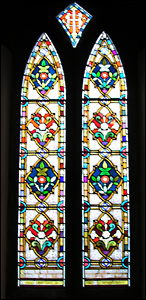
To commemorate the restoration of the parish Church the People's Warden, Mr. C.T. Cripps, M.B.E. presented , the Tower with a fifth bell suitably inscribed. This was consecrated by the assistant Bishop of Peterborough on July 26th. 1952. ANIMA DOMINAE MATILDE MALLIPRE QUONDAM PRI….. But who Matilde Mallipre was, over which Abbey she was prioress, and how she came to be buried at Roade, are Mysteries that may never be solved. About 1936 the second step at the Altar was removed, and under the Chancel floor was found another slab which is now lying under the Altar. There are three 18th. century memorial slabs. Those of Susanna and John Henshaw face each other over the choir stalls, and that of Stephen Hoe Henshaw is away at the far end of the South wall. John Henshaw's memorial stone, dated 1762, sixty years later than Susanna's bears a scull and crossbones, and is inscribed:- MEMENTO MORI. The one very pleasing stained glass window in the Church is sacred to the memory of Sophia Louisa Annand, daughter of Alexander Annand, rector from 1866 to 1878. An ancient painting has recently been discovered showing the outside of the Church about 100 years ago, with the Chancel made good and the North Aisle added. The really interesting feature was the low leaded Nave roof which showed the Tower to great effect, before the high pitched roof was built to correspond with that of the restored Chancel. Click here to read the full history of Roade Church
The greatest of all the ancient treasures in Roade are the three largest of the five Church bells. Until the restoration of 1950 they remained untouched since they were hung before the Reformation. From the marks of the founder which they bear, recent research establishes them to be cast by William Chamberlain of London about 1450 A.D. No. 1 Bell. New Treble. Weight. 5 cwt. 21 lbs. Cast 1950
No. 2 Bell. Weight 5 cwt. 3 qrs. 14 lbs. Recast in 1727 by Russel Wooton.
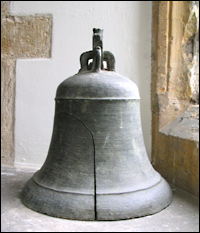
No. 3. Bell Weight 6 cwt. 1 qr. 20 lbs. Cast in 1450 Inscribed:SIT NOMEN DOMINI BENEDICTUM No. 4. Bell Weight 8 cwt. 1 qr. 21 lbs. Cast in 1450 No. 5. Bell. Weight 10 cwt. 2 qrs. 17 lbs. Cast 1450 There is also a small bell lying in the tower, much cracked, and about ten inches in diameter, but with no inscription. This is thought by many to be the ancient sanctus bell mentioned in the Inventory of 1552.
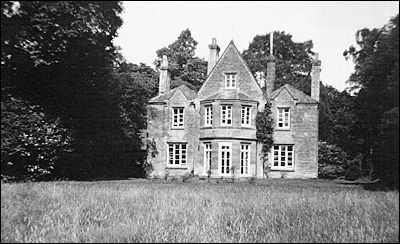
THE CHURCH INSTITUTE was built in 1885 on land given to the Parish by the Duke of Grafton. It was to be used as a Sunday School, for Church meetings, and for social activities. But Political meetings and the consumption of alcohol on the premises were prohibited. A clause in the deeds affirms that if ever the building fell into disuse the land was to revert back to the duke of Grafton or his heirs. During the War it served as a temporary school for L.C.C. evacuees, and whist drives in aid of war Charities were held. In 1950 it was completely renovated, and gas heating replaced the old coke stove. Providently the repairs were completed just two days before it was no longer possible to hold services in the Church as a result of the discovery of the extensive dry rot. During the next six months all the Services were held in the Church Institute. THE VICARAGE in its park-like grounds has served the Parish since 1841; a gracious setting for the Annual Garden Fete so beloved by the villagers. During the war it was used as a Head Quarters for the Home Guard and the stables were used as a Fire Station. In the attics and cellars were stored between two and three tons of tinned food; butter, biscuits, meat and milk. So dry are the attics that after five years sugar and tea stored in ordinary wrappings were found to be in perfect condition.
The year 1953 has been a great upheaval in the life of the Church. Because of the problems of labour and heavy maintenance costs a new and smaller Vicarage has been acquired along the Hartwell Road, and the present one sold to Pianoforte Supplies Ltd. Changes are always unpopular, but when the New Vicarage has been accepted the majority will realise that it was a wise and right move to have taken. ROADE BAPTIST CHAPEL, the second oldest in Northamptonshire, was founded in 1688, and will accommodate 350 worshippers. Mr. Lineham, the resident Lay Pastor, lives in the Manse adjoining. Until the Daughter Chapel at Blisworth was built in 1827, Roade Chapel was filled to capacity every Sunday, for Baptists came from all the neighbouring villages to worship at Roade. Some came in their pony and traps, and some on foot; whole families making the journey from Ashton, Hartwell, Blisworth, Milton and Stoke Bruerne. The women in their clean white aprons carried prayer books and parcels of lunch to eat in the vestry between Morning and Afternoon Services, for there was no time to go home to dinner. Little Anne and George Cook from Ashton liked to sit on the bank opposite to eat the dumpling their mother had packed them. George, a most honest lad, spent quite a fair while measuring it with his knife so that each had a fair share. Anne, when a very old lady, could still re-live the thrill of the Sunday School treat the year the Railway was opened at Roade. All the children were taken in open trucks to Blisworth, and after a very happy day, returned home by the same means. It was soon after this that the last Sale of Work was held in the Baptist Garden behind the Chapel, that was incorporated in the Burial Ground. Mr. Smith, the chief instigator in this plan, was the first to be laid there, and in time three parts of the helpers of that Last Sale of Work joined him, so that there was no more room, and later Baptists had to be buried away from the Church. Until the turn of the century Baptism by Immersion was conducted in the brook at Hyde Farm, and great dissension there was when this practice was discontinued. In this Chapel the Band of Good Hope was held. And children gazed enthralled at Munn's Magic Lantern. There was always an annual Sunday School Treat, but the wonderful outing of 1914 stands out as almost as exciting as the Ride in the Railway Trucks. Then the children were taken to Bugbrooke, where the school master, Mr. W.J. Wright, gave an exhibition of Wireless Telegraphy, then a remarkable novelty. In 1933 a two manual and pedal organ was purchased from the Abington Avenue Congregational Church, Northampton, a costly enterprise only made possible by Mr. Horace Parish's generosity in advancing a considerable sum of money free of interest. In this year also, the men's Fireside was established, which flourished until the War; but the Ladies Bright Hour held once a week still prospers. The 250th anniversary, held in 1938, was very similar to the 200th. in 1888, remembered by Miss Jelley as one of the highlights of her life, Special preachers addressed huge crowds of old and new members. Some of these had travelled long distances to join the reunion, so that there was great exchange of hospitality, and reminiscences lasting far into the night. But even new-comers to the village will remember the organ recital given by Reginald Foort, the B.B.C. organist in 1940. So well supported was it, that every available seating contrivance was used, and the overflow crowded in the porch and huddled by the outside walls. THE WESLEYAN METHODISTS
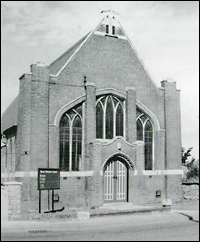
Here Mrs. Higgins was christened 94 years ago, and worshipped during her childhood. Since very few people could read in those days, the hymns were read out and sung two lines at a time, with accompaniment played on a flute by "a man of the name of John Evans". Later on the hymn "Come Holy Ghost, our hearts inspire" was learnt by all and sung at every service. When the Second Chapel was built in 1875 Samuel Tew bought the original one for £30, the price paid for it by the Authorities some 40 years previously. This second Chapel was situated at the south side of the Cock Inn, near the Old Mill Barn. Mrs. Higgins' parents, the Jesse Jacksons, and their ten children each laid a foundation stone. This Chapel also lit by candles, one on the back of every second pew, and heated by a large coke stove. Later the candles gave way to oil lamps, and later still to electricity. The flute of John Evans was replaced by a small harmonium, which is still in use today. Mr. Jackson met the Preacher for the day and stabled his horse in Mr. Grey, the wheelwright's barn, which was reserved for this purpose. After the third Chapel was built, the second Chapel was used for Sunday School parties and similar functions, and has been let to the Local Education Authorities for approximately 30 years, first as a Cookery and Woodwork Centre and latterly as a Woodwork Centre only. The Methodist Chapel in use today faces the Main Road, on the East side of the older building, and was built in 1907 to seat more worshippers. Again Mrs. Higgins and members of her family laid foundation stones. It is a fine building with stained glass and leaded light windows. Behind is a vestry which can be divided by folding doors into two smaller rooms when required. A square porch beyond links the old and the new Chapels, and a smaller outer porch shelters the entrance to a Lavatory, surely an innovation for a small country place of worship in 1907. Services are conducted by local preachers with occasional visits from Circuit Ministers, and whilst the Congregations are not large there is a flourishing Sunday School of about 50 children. ROADE SCHOOL The first school in Roade, the long low Church School, was turned into two cottages when the new Board School was built in 1876, and years ago when Mr. Mann redecorated her house he found on the wall the text "REMEMBER THY CREATOR IN THE DAYS OF THY YOUTH" , which had been painted there by Mrs. Annand some 80 years before. The young ladies of the village attended Herbert House Seminary for young ladies, to be taught all the necessary refinements by the Misses Lalor and Wilson; two gentlewomen who, in the evenings, instructed a selected company in the arts of Pillow Lacemaking and Netting. Mrs. Higgins, our oldest inhabitant, remembers working on her Pillow when she was eight, and Miss Jelly recalls her aunt making a flounce of lace nine inches wide by nine yards long to form the flounce of a Lady's petticoat. The regular wage for this art was 2/6. a yard, which was as much as any housewife could earn in a week, her fingers, flying among her bobbins every moment of her leisure and far into the night.
Roade Boarding School was run by those gentle sisters, Miss Emma and Miss Annie Lee, at Warwick House. Miss Emma, the much beloved, specialised in Art and Needlework; and Miss Annie, who played the Harp at village concerts, taught Singing and the rudiments of Music. She, the great dog lover, kept the dishes on her doorstep filled with water, importuned everyone to join the Dumb Friends' League, and berated neglectful dog owners to their shame. But they too grew old and retired, so that now only the New Board School is left, and that under the dignified title of "Roade Primary and Secondary Modern Council School". There's a new one to be built next to Milestones Field along the Stratford Road, with playing fields and showers, cookery and woodwork centres, separate classes for separate subjects, and many other things beside; all this if rumour be true, but its time is not yet come. Mr. Elden, before whom no schoolmaster can be remembered, was a stern man who did not spare the rod, but his pupils, now mostly in their prime, still speak of him with great respect; for woe betide the boy who blotted his copy-book, or did not mind his manners. They take immense pride in their beautiful handwriting, that the children today cannot rival, for all their fancy education, and will re-write a whole letter rather than send it smudged or despoiled. He it was who started the school garden, that Mr, Janes, his successor, brought to perfection, winning the County Gardening Shield seven times between 1923 and 1930. Why it was lost in 1927 we shall never know, but it was surely regarded as a major catastrophe in the village. In 1934 when Mr. Maxwell became headmaster it was Music Certificates that were won, and honour was brought to the school in the Spring Festivals; and now, under Mr. Harper, the Sports' Shield hangs proudly in the Senior classroom. If winning scholarships is the test of a school's efficiency, then indeed is Roade boys in the senior class. And Cooper's bus, which takes the children to Towcester Grammar School, is well nigh filled to capacity. Seniors from Ashton, Hartwell, Stoke Bruerne and Shutlanger are taught at Roade; and since the school at Courteenhall closed in 1951, the younger ones have come with their older brothers and sisters to be educated at "The Big School" that filled them with expectant trepidation. The Woodwork Centre is housed in the Wesleyan Chapel Room, but part of the School Garden has been annexed to provide a Cookery Centre for the girls, this after a plot had already been appropriated to build the Canteen; so that the old folk shake their heads and sigh that things are not like they used to be at all. The scurry of the War years is dimmed now, when 100 London evacuees joined the 87 locals. At first they were taught as two separate units; the Locals from 8.30 till 1 o'clock, and the Evacuees from 1,30 till 5. Later the usual school hours were reverted to, and every available room was used. There was a class in the Church Institute, one in the Wesleyan Chapel, another in the Vestry, one in the Baptist Chapel Room and the tiny mites went to their Nursery Classes in the George Room. There were difficulties and inconveniences, but they were overcome; and as one by one the Evacuees returned home one class was absorbed by another and one more room dispensed with, until by 1944 all the children were back in the school again. Of course the Evacuees got up to tricks, and of course they were blamed for everything that went wrong, but after a lapse of ten years, those harassed housewives who did their best for them agree that they were probably no better and no worse than any other children, their own included. INTERLUDE Nine Evacuee families have settled in Roade since the War, six of them working at the Factory; but they pass unnoticed among the many aliens in the village. Only eight families can claim residence for more than 100 years, or for more than two generations. There are the Sturgesses, Martins and Walkers; Malins, Jelleys and Freemans; the Tews and Smokey Smiths. The first great influx came with the Railway, the second with the development of the factory and the third at the end of the War when so many Council Houses were built. Almost every part of England and Scotland, Ireland and Wales are represented. Wales it is that sent us the sweet singers that have sung in the choir at Courteenhall, and those voices swell the Carolling at Christmas to the very great pleasure of the villagers who stand in their doorways listening and praying that this old world custom will live long yet. There are Americans, French, Italian and Czecho-Slovak wives of Englishmen, and three German husbands of English women. Four Roade girls have married Americans and made their homes in the United States, and five families have emigrated to Newfoundland, Canada, Australia and South Africa. Of these two have returned to be more satisfied with England and more contented with their lot. THE FARMS OF ROADE Very few old houses are still standing in Roade, for the limestone, quarried locally, crumbles quickly if neglected. The Newcomers during the boom years, built a little further along, to the East and West and North of the little village in the dip of the High Street, and the Post War Council House Estate lies further still to the North West, so that the outlying farms are no longer isolated. The most ancient is Roade Hyde, named after the measure of land of which it consisted originally. How much that was there is no telling, for a Hide of land is as much as would support one free family and its dependants. Now there is but 70 acres, and what is left of the old farmhouse. Its authentic history is brief, too brief for an ancient Manor mentioned in Doomsday Book, and so ideally situated for intrigue and romance. There it lies, in the curve of Blisworth Road, Pass through the gate and cross the field into the broad ridings beyond; one way to Blisworth, one to Stoke. Here are the Plain Woods, where primroses are to be found at Easter, and nuts and blackberries in September. Hyde Farm still retains the atmosphere of the Augustine monks who lived there in quiet meditation, fishing for their suppers in the pond below the house, carving the panels that beautified the kitchen, and meeting by the Dovecote in the dusk to be aware of the Goodness of God and the peacefulness of living. The porch is like the porch of a church, with a seat either side to pause awhile in the heat of the day. Above it are the almost obliterated remains of two gargoyles, all that is left of a probable dozen. Bow your head as you come into the house, for the portal is low, and on the left is a niche which surely at one time held the Holy Virgin, blessing all who entered or departed. On the outside south wall can be seen the outline of another building, which may have been the Augustine Chapel; and in the depression below, a tiny trickle is all that remains of the brook where Baptisms by immersion was practised. The only ancient monument Roade can claim in the Dove-Cote at Roade Hyde. Lift up the iron grating that guards the tiny doorway, and see inside the rows upon rows of tiny pigeon holes. The old folk remember the central rotating pole with radiating arms, that monks climbed to reach the eggs the easier. But pigeons were not favoured by old Ben Dunkley, who used the Cote to house his chickens, as did William Malin before him; Billie Malin who ploughed the straightest furrow and deepest corners, who took such pride in his horses, always winning first place in local competitions. That was seventy years ago and more, not all the succeeding tenants have honoured Roade Hyde; yet it still smells of the past, the farmer scattering the powdered lime by hand, and following the horse-drawn plough. Mr. Bennet, brother-in-law of the present owner, is engaged on research into Roade Hyde history, and has acquired a goodly pile of documents, hitherto unknown, dating back to the reign of George III; so that in the near future, a more comprehensive study may be available. But we doubt whether he will be able to solve the mystery of the depth between the sitting-room and the kitchen, or the legend of the tunnel between Roade Hyde and Ashton Manor, that so many people would like to believe in spite of the evidence of geologists. BURMAN FARM
A farmer's life is long and hard, and if he is to win through he must have experience fro the past and forethought for the future; he must have patience and determination, courage, faith and vigour.
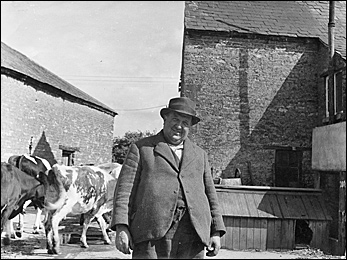
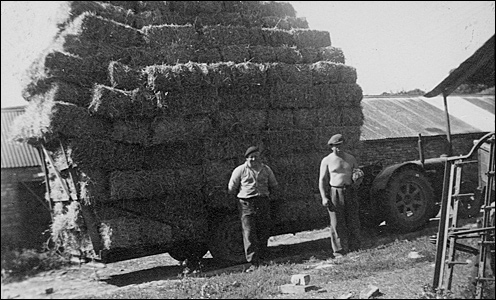
"Poor land," commented old Ben Dunkley of Roade Hyde, "yielding nobbut 5 cwt to the acre." But Mr. Cozens, whose greatest disappointment in life was having to follow his father as a farmer, instead of his own bent as an engineer, pushed his hat to the back of his head, and thrusting his hands deep in his pockets, swore that "If he had her, he'd make her give up more." And, of course, he did. 30-40 cwt to the acre she yields now. "Praper sowing, praper harvesting; one eye on the weather and t'other on the land; but feed her." He used to say, "You can't live without food, no more can't she. Give her back what you take out. I'd neither give nor sell my mullock to friend nor foe. Put it back in the land. She's the one will pay you best dividends." The farm prospered for five years, till, as Mr. Cozens said, a cow licked his coat at the market, and he brought home the dreaded disease. All his cows, sheep and pigs were slaughtered, whether they had Foot and Mouth or not, and he stood by, a stranger on his own land; stood by watching the great pit being dug in the Paddock, and Freda and Betsy and Daisy, all lifeless carcasses, slung in without respect; watched the quick-lime spread over them and the earth piled high. When the last clothes had been burned, and the last douching with disinfectant was over, Mr. Cozens broke down and wept; wept for the callousness of Fate, for the pride he had in his farm, for the beasts that he called by name.
But the next day a new man arose. "It's no good looking behind." He said, "Yesterday's gone. Look forward if you want to get on in this world." When his time of quarantine was over, he experimented with various herds, Guernseys, Friesians, Ayrshires, Herefords and Shorthorns; read all the farmer's journals, and experimented with machinery. He became his own mechanic; built his own forge to shoe his five horses, and became his own vetinary surgeon, calving his cows and doctoring his sick.
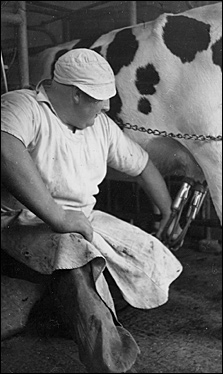
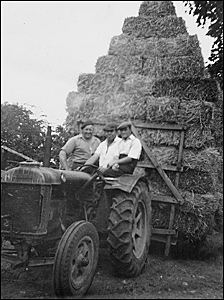
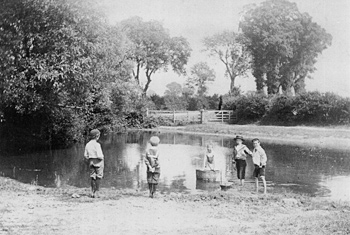
Now Cozen's Farm has one of the largest and best herds in the county; pure bred T.T. attested Friesians, all but one, and that a Guernsey. They started their milk round with a churn slung between two iron wheels, and progressed through milk-carrying bicycles, through the hand-cart, the horse-drawn float, the Express Waggons, that they nick-named "The Stage Coach", to the motor vans that were such an asset as the milk round grew, covering Roade, Ashton, Hartwell, Stoke Bruerne and Shutlanger. But now the milk is sold to a firm in town, who collect it every morning, and distribute it themselves, giving the Cozens the opportunity to concentrate on improving methods of farming and milking. From hand milking they progressed to the bucket-plant, and to the latest Milking Combine, where the milk is taken from the cow, recorded, filtered, and cooled and churned untouched by hand. The old farmhouse has been modernised; airy brick buildings take the place of dim stone and wooden ones. The five horses have been replaced by five tractors, but they still have Bonnie, the white mare. There is a thriving poultry business, started from a few ducks that used to frequent the pond in Summer Hill. There the children used to skate in winter, and the cows stand knee deep in summer, swishing away the flies and gnats. But it's filled in now, and the farm is the better for it. There are still a few ducks, but mostly it's hens in batteries or dry litter-houses. There is plenty of water at Burman, flowing the north-east and into Summer Hill. Three wells there are near the house; one in the kitchen garden, one beside the house, and one in the corner of Home Ground. In the years when Roade Water Supply was so short, Mr. Cozens sank his own bore-hole, and piped-lined the water to all his fields, so that there was always sweet clean water for the beasts, while we lesser souls were filling buckets from the tanks replenished daily by Corporation Carts from Northampton.
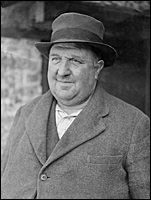
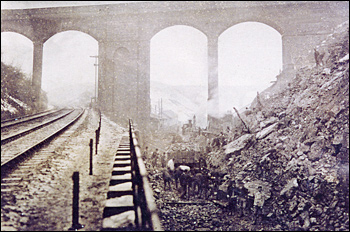
There are many of us who knew and loved Mr.Cozens, calling greetings as he delivered his milk, or dismissing the local Government, with his hat pushed to the back of his head, and his hands deep in his pockets. He was simple and kind, like the good earth, and his smile was gentle and shy, like the smile of a child. He'd call all the little girls "Topsy", and they'd swarm round the milk-float begging for rides, counting it a great privilege to be allowed to deliver a bottle of milk. All the children "Up the other end" would race down to Burman Farm after school, glorying in any odd jobs, where they were often a hindrances than help. A treat was to be allowed to "Go down Cozens"; it always secured immediate obedience, and their mothers knew they were in good hands. Now that he has returned to the Good Earth, he has left behind him the greatest of all legacies: a job well done, a life well spent and children to carry on his traditions. THE NEW INN I doubt whether half a dozen people in Roade besides the postman could direct you to Woodley's Farm, but ask for the New Inn, and you'll be told to follow the Northampton road, past the White House almost to Courteenhall Lodge. How old it is nobody seems to know, but they do know that for centuries it was the main Coaching Inn in these parts; and though it is now a farmstead of about 175 acres, leased by Sir Hereward Wake, you can still see the window that was once a serving-hatch, the wide chimneys that surely little boys climbed to sweep with a hand brush, and the original Roland Hill grate in the bedroom. Not even Mrs. Higgins, our oldest inhabitant, can call to mind the night that Charles Dickens stayed at the New Inn, and commemorated in "Dombey and Son", but there are many who remember William Barker, who must have been his host. He had stabling for 100 horses opposite, in what is now the spinney by Courteen Hall Lodge. Here the Stage Coach horses were changed, and the passengers climbed down to stretch their cramped limbs and partake of a little liquid refreshment in the Inn opposite. There'd be a private room for the ladies, with push chairs and a couch to recline upon. William Barker was the biggest horse dealer hereabouts, very much in evidence at all the Midland Fairs, and had regular orders from the London cabbies. Some there are who swear he was a horse thief, naming Jack Jones the blacksmith as his partner in crime, and some there are who say that he was the victim. The culprit is supposed to have been a Hanslope man who was caught and hanged along the Hartwell Road, but neither of these tales can be proved. See London Gazette Entries for Roade There are still men in Roade who remember Sylvanus Wreford the last Licensee of the New Inn before it became a farm house 70 years ago. THE WHITE HOUSE After the railway track had been laid, and the station built at Roade, a house was erected for the Station Master, as near the line as possible; to be shaken by every passing train and shrouded in clouds of smoke that clung affectionately to the walls, the curtains and even the furniture inside. Years later, when the second track was laid, they found that it would pass through the Station Master's house, which was therefore put up for sale to anyone who would carry it away; and the authorities built a second house at the top of Station Hill, that curious affair that overlooks the line, with the back door at the front, and windows that do not open and cannot be cleaned. The Old House was piled on the carriers cart and re-erected in the field opposite the Church Croft, where it stands to this day. It was named the "The White House", and became the first poultry farm in Roade. Later it became a factory, making heels for ladies' shoes. There, sixty years ago, little Carrie Jelly, just leaving school, dinned her mother to let her work for half-a-crown a week. Shortly after she was put on piece work, clapping heels together at 1½d a 100, and was hard put to it to maintain her weekly earnings at that rate. Now "The White House" is a flourishing dairy farm owned by Sir Hereward Wake, but we remember it for our Christmas birds: turkeys, geese or cockerels, all plump and tender, and ready dressed for the oven. ROADE AND RAIL Roade Cutting is one of the major works of the old London and Birmingham Railway. It is approximately 1½ miles long with an average depth of 65 feet. 1,000,000 cubic yards of soil were removed, and 3,000 barrels of gunpowder were used in blasting. The cost amounted to £220,000, nearly double the original estimate, and the Cutting was completed in 1838. There was great controversy over the planning of the line from Euston to Rugby, so advice was sort from the great George Stevenson. After examining the gradient down into Northampton he is reported to have said "I can easily get you a train into Northampton, but the difficulty would be getting out again". His suggestion of Euston-Roade-Rugby, via Blisworth, was taken and work commenced, the great Master himself superintending the most difficult part. This was when the Swan Inn flourished, gentlemen from Northampton enjoying a brief respite before the porter ran over the level crossing with news that the train was on the up. With the development of the railway, locomotives became more powerful and were able to take the gradient out of Northampton, so the new line was laid. That was when the White House was transferred to Big Hoe. The cutting was widened to carry four sets of rail, the New Line being cut deeper than the first because of the gradient. With astonishing foresight the bridges over Dirty Lane and Bailey Brooks had been built wide enough to take a second set of rails, and we like to think that this was due to George Stephenson, but we shall never know. The soil from the huge excavation was used to build up the banks at Ashton and Blisworth.
About 1890 the disastrous landslip occurred at Courteenhall Bridge end of the Cutting, when thousands of tons of rock completely buried the New Line. Hundreds of navvies were employed, clearing away the debris, constructing retaining walls and supporting girders; surely one of the grandest and most remarkable feats of engineering in the country. During the period of reconstruction they camped out in the field next to Dirty Lane, where there were such goings-on on Saturday nights that the respectable folk of Roade hustled their families indoors and shut all the windows. The less respectable, of course, joined in and earned the filed the name of "Fiddler's Green", which it retains to this day. Singing, drinking, gambling, bawdy stories, course laughter, drunken fight - even the policeman turned his back until the men had spent their pay. But when their work was finished they left behind them something greater than their vices; something far outlasting the memory of their weaknesses. In those days there was a signal box in the cutting, but now those signals are operated from the signal box at Roade, where recently an Indicator Board was installed on which little lights trace the progress of all trains between Bletchley and Rugby.
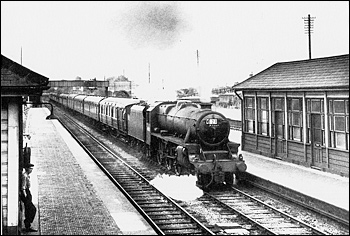
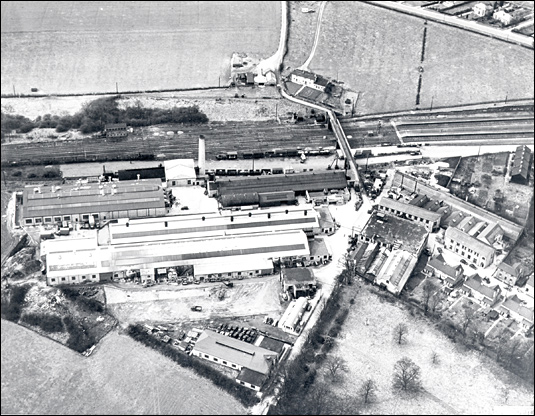
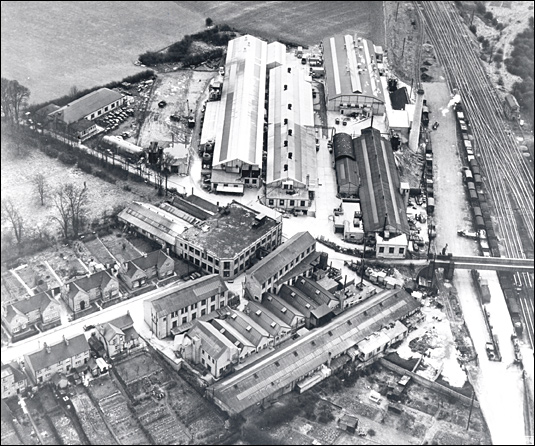
During the War the Simplex Factory and the R.A.F. Unit at Hartwell brought so much extra business to Roade Station that it was upgraded. Passenger traffic also increased. The trains were crowded with relations of evacuees, shoppers to Northampton mostly travelling at reduced rates, workers to Wolverton and members of the Armed Forces. How different from the days before the new line was laid, when Jeff Butler met the London train with his Brougham and the ostler from the George Hotel gave the gentlemen's horse a final grooming before he led him down the Station Road to await his master. There were ponies and traps for the luggage, and large tips; enquires after the families' health and perhaps a joke or two, for the "Gentry" from all the villagers around came to Roade to catch the train. But now the scurrying passengers are off the train, up the steps, along the corridor and out in the street before the porter has even had time to examine their tickets. Never a tip, never a smile; and the sadly depleted gentry have their cars, and perhaps their chauffeurs, and seldom, if ever use the trains. There will be many who remember the devastating Fire of 1942, that started in the Booking Office. Raging fiercely it was before its discovery, and the great iron safe crashed into the store room below where the oil and detonators were stacked. One by one they exploded, and never two together, so that the villagers thought the bombs had come, and some took cover and some went out to wake their neighbours. For 11 years the booking Office has been housed in the Waiting Room on No. 4 Platform; but it's all under reconstruction now, and a fine place it will be when it's finished. Even the oil lamps that have lighted the Platforms these last 100 years and more will be replaced by Electric Standards, and it will be so grand we shall all go down to see. Another Railway passes through Roade; the Stratford-on-Avon Towcester and Midland Junction Railway, now rarely used except as a means of communication and transport in War-time. It was constructed in 1890-91, and passes through Roade in a north-easterly direction from Towcester to Ravenstone Junction near Olney, where it connects with the Midland railway, now, of course, a mere link between the Western and Eastern trunk lines. This line was opened as a passenger and goods railway, but the passenger service was short lived, although a S.M.J. line by a loop, which ran behind the existing signal box and joined up close to Mr. Sturgess' Quarries. The undertaking has had a chequered existence, and has been known by several ironical nicknames, such as " the Linger and Die", "Bread and Herring", and "the Scratter", probably because of the fussiness and rush of its old locomotives rendered necessary by the heavy gradient at both the east and west ends of the Parish Boundary. Since its adoption into the L.M.S. and present B.R. systems it has been solely for goods traffic, except on the Days of Towcester Races, when a special passenger train was run from St. Pancras via Bedford, Olney and Towcester; but now even this Special has been discontinued. PIANOFORTE SUPPLIES LTD. As Mr. Cozens was a giant of the Land so was Mr. Cripps a giant of Industry; conquering through his enterprise and perseverance where lesser men would certainly have failed. About the turn of the century masters and Shuter built a workshop between the Leys and Gravel Walk to make their Simplex Polishes. But it was never a very profitable concern so in 1912 they sold out to Thomas Henry Dey in London. Mr. Dey who made one fortune as a Bookmaker, set out enthusiastically to make another as an Industrialist. He was said to have spent thousands of pounds on advertisements, and beside Roade Station erected an enormous hoarding bidding the world "Watch us Grow". It watched in vain. Competition and the first World War proved too much for him and for his successors and for the immaculate Mr. Phippard who stayed only months, but is still remembered for his stately bearing on his way to Chapel; his tall "Shiner" rivalling his gleaming black boots. The little factory seemed domed to failure and stood twelve months or more dejected and unwanted, nicknamed "Master's Folly". Then came Mr. C.T. Cripps, a young man who had been in the employ of the Simplex Polish Co., but who three years since had set up in business in London, making component parts for pianos. The premises he had were too small for his requirements, so, on January 1st. 1923 he took possession of the Simplex Works. During the first years some of the work was done in Humphrey's Smithy and the original 7 hands soon increased to 25. Steadily the factory grew. A Smithy and Moulding Shop were built onto the Simplex Works; more men were employed and more machinery installed. The Factory lorry journeyed to London twice a week with completed orders, and an old wooden Army Hut was bought to house the Office Staff. Nearby a house named "St. Malo" was built for Mr. Tarry, the Works Manager, and it seemed that the hardest days were over. The Factory had survived the General Strike and the World Slump, and a New Shop had just been built. The blow fell in the early hours of Friday 25th November 1933 the Great Fire started in the wooden offices. George Tyrrell, out early to pick up the morning newspapers, gave the alarm. Very shortly men came running from every direction, in every state of undress, 'phoning the Fire Brigade, carrying office equipment to St. Malo, rescuing oxygen cylinders, chasing away the frantic fowl and the little tame pony maddened by the acrid smoke; working harder and faster than ever in their lives before, till the local policeman ordered them out of the premises that were likely to collapse at any moment. With a thunderous roar the petrol tank in the lorry exploded and the flames shot up afresh. Northampton Fire Brigade arrived and added to the confusion, asking for water and being besieged by the contradictions of many willing helpers, for there was no water supply in Roade till 1937. They finally laid hoses across the vicarage paddock to Roddis' underground tanks near the Wesleyan Chapel, and at last began to control the fire. When it was all over nothing was left but the gutted shell of the original Simplex Building, a mass of sodden desolation, and the indomitable spirit of a man with the heart of a Phoenix. Piece by piece the twisted metal was carried away, foot by foot the shambles cleared. Sheds of corrugated iron were built round presses and machinery that could be put into working order; the Office Staff were temporarily housed at St. Malo, and the Firm carried on. All through that hard winter of bitter winds and deep snow, courage and despair walked hand-in-hand. Slowly, painfully, conditions improved. Every available penny was put back into the Firm; one by one new lorries were bought, one by one new shops were built and piece by piece new machinery was installed. By 1938 Pianoforte Supplies Ltd. Employed 400 men and had contracts all over the country; making regular deliveries to London, Coventry, Birmingham, Oxford and Luton. They were now making metal components for many Industries including the Motor Car, Aircraft, Piano and Cabinet Trades. The year 1938 marks a Red Letter Day in the annals of the Firm's History. On January 17th the factory Canteen was opened at an inaugural dinner for Employees, Friends and Business Associates. The building is one of the finest of its kind in the Midlands, combining the functions of Lecture, Dance and Social Hall, Theatre and Dining Room. Among its many fine features are the beautiful Maple sprung floor, the large Billiards Room and the spacious well-equipped kitchen. Then came the War, and the Factory was very busy on Armament Work, making a variety of Pyrotechnics and numerous parts for Aircraft and Army vehicles. The many whist drives held in the Canteen in aid of various War Charities will never be forgotten; as many as 340 players supported them from Roade and the neighbouring villages, in spite of black-out restrictions and other hazards. Now the Works has reverted to more normal, piece time projects; the greater part of their output being for the Motor car Industry. Over 800 men are employed and special buses are run from Northampton and neighbouring villages for their convenience. Since the War more new Shops have been built and further extensions are being planned. Now indeed may "WATCH US GROW" be changed to "ALL ROADS LEAD TO ROADE".
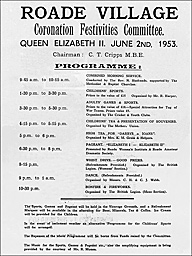
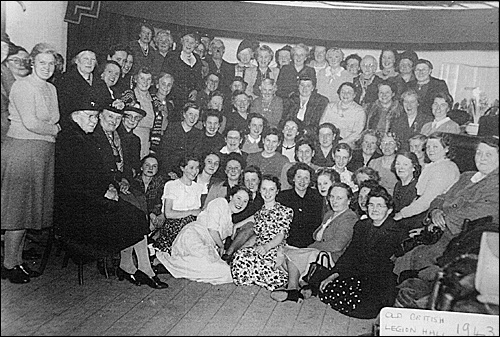
C.T. CRIPPS Esq. M.B.E. The mainspring of activities at Simplex Works comes from the energy, drive and shrewdness of C.T. Cripps Esq., who came to the sleepy little village of Roade on a bleak morning in February 1912. He still remembers, the comforting warmth of the George Hotel where Mrs. Battams served him with his first Roade dinner, and the icy wind that met him at the doorway. In the late thirties, when the Government of the day was seeking to re-arm the nation, Pianoforte Supplies was one of the places that shouldered many responsibilities. Mr. Cripps saw to it that their resources were put at the disposal of the Country, and War work was commenced in 1937. This grew as the months went by and at the time of the Battle of Britain in 1940 practically 100% of the Works Production was for War Stores. It was not surprising, therefore, that Mr. Cripps' name was included in the Honours List of 1943, when he was awarded the M.B.E. Mr. Cripps has always taken an active interest in the life of the village. He holds office in the Drama Club and the Cricket Club and is one of the School Managers. Until 1929 he was Chairman of the Parish Council and in 1950 was returned as representative on the Rural District Council. Housing is his chief interest in this branch of work, and the new Council House Estate between Grafton Road and Hyde Farm bears witness to his great activities. He has been People's Warden for the past 9 years, and presented the Church with the New treble Bell to commemorate the Restoration of 1950. His leadership and guidance ensured the great success of the Coronation Celebrations of this year, so that in spite of the inclement weather the festivities were enjoyed to the full. Roade soil is principally loam or clay on limestone subsoil, so that there was a fortune to be made out of quarrying in the days when transport was cheaper, for our limestone was said to be the finest in England for clarifying iron. Millions of tons were excavated where Mr. Parish tends his orchard, grows his spring flowers and runs his poultry farm. It's sheltered in the hollow and his business thrives. "Greystone", the large square house on the east bank of the Quarry is built from its stone, and a very fine advertisement it is. In 1936, when the foundations for a Factory Building were dug, the remnants of two lime-kilns were found in Pixie-Land. When this quarry was worked out, Mr. W.D. Sturgess opened up another along the Stratford Road. Being a very shrewd business man, he worked it in three directions; towards the Railway, the Road and the canal; so that for many years to come he would have the choice of three methods of transport. He built his own Lime-kiln, and employed about 30 men with Mr. Reed, who now keeps the Swann Inn, as Foreman. He laid his own single line railway, named Jubilee Track, to connect with the S.M.J. line, where the lime-stone was transferred from his wagons to the railway trucks, and sent to Hunsbury Hill Iron Foundry. The top layers of limestone were soft and, after being in the furnace for a week, were used to make cement or were mixed with Cow's hair to make Mortar for building. St. Malo, the house adjoining the factory, is made exclusively from mortar from Mr. Sturgess's quarries. The hard limestone under the clay water course is used for road making, house building or rockery work. The two houses at Stoke Gap are built from this stone, and the railway bridge along the Stratford Road, just inside the Roade Boundary, is faced with it. Most of the stone was carried by road, but an order from the London Zoo to supply large pieces of stone, weighing not less than 5cwt. each to make one of the rockeries, was naturally sent by canal; a reward for Mr. Sturgess's forethought in development. During the General Strike, however, Transport and Foundries, like many other branches of Industry, were paralysed, and the smaller Firms could not bear the loss. Hunsbury Hill Iron Foundries closed down, other foundries bought from quarries nearer, and the 30 men in Roade drifted to other employment. There are millions of tons of limestone still untouched in Roade Quarries, and like to remain so, for there's no furnace near, and transport is much too costly to consider going far afield. PUBLIC SERVICES Roade claims to be one of the first villages in the Country to set up a parish Council, to introduce street lighting and to have a sewage system; so that it is surprising to find that there was no electricity till 1929 and no gas or water till 1937. The Parish Council was formed after the Enclosure Act of 1883. it consists of 9 members and a Clerk. Mr. Martin, the present chairman, has sat on the Council since 1919. Surely 35 years service on one of the most unappreciated bodies of Government is worthy of note; for when all goes well it is completely overlooked, but in controversial times its members are stopped in the street by irate villagers demanding to know what is to be done. Great interest is shown at Election times, almost every able-bodied adult going to the Polls. In 1951, for the first time in our history, a lady was among the Councillors. The original sewage plant of 1900 was at that time the most up to date in the Country, and needed no extension till 1952 when the new Council Houses were being completed in large numbers. But ideas seep slowly into the minds of old folks and not many houses were connected to it until the Diphtheria epidemic, and even now there are a few who have private arrangements. Before the coming of the overhead Electric wires in 1929 the Streets were lit with oil lamps which would waver in the breeze and smell horribly of paraffin. Harry Molcher, the sexton, who succeeded Old Dickie Freeman, and was the last lamplighter in Roade, started on his rounds at dusk with his hooked ladder and two boxes of matches in windy weather. An hour it would take him to light the 16 lamps, and longer in the bad wintry evenings. At ten minutes past ten he'd start at the far end of the village blowing them out again, having given the men ten minutes to get home after closing time. He'd hook his ladder over the bars of the lamp standard, climb up, blow onto the flame through a little metal tube, and off he'd go, leaving behind him the stench of the smouldering wick in the darkness. But it's electric lamps now, regulated by clockwork to light up and switch off at pre-arranged times; and the Lamplighter's ladder was used to prop open the out-house door. There have been more hard words spoken over the Water Supply than over all other subjects put together. Before 1937 water was obtained from the numerous wells and springs in the village. Only a few years after the Main was laid from Hartwell the trouble started and during the War the shortage of water was a minor catastrophe. Hardly a week passed without it being completely cut off, and the Hartwell people said rude things about the Roade people stealing their water, and the Roade people said even more rude things about the water board; and the old folk reminded everyone how there was never any trouble when they carried their own water from the pumps, and how much better it tasted than this you sometimes manage to squeeze from the unwilling, new-fangled pipes. In the end we all drank well or pump water and the Authorities posted notices to say it was unfit for human consumption. Finally they requisitioned new Salvage carts and distributed water from Northampton to tanks scattered throughout the village. It was all very expensive and not very satisfactory, but after a great deal of planning and arguing pipes were laid to bring water from Harpole, much to the relief of our ever growing populace. Now that the water problem was solved the Villagers pestered the Parish Councillors to do something about the narrow bridge over the railway along the Stratford Road. It had no footpath and was very dangerous, so that even dignified elderly ladies were forced to scurry along close to the wall, enveloped in clouds of smoke from the trains below. It took ten years of arguing to get the light erected at the far end of the bridge; then they built the New Council Houses along the Grafton Road and Hoe Way, so that dozens of little children crossed the bridge four times a day on their way to and from school. Again the Parish Council was besieged by irate parents, and in this year, 1953, an adjoining footbridge was built. For this the Authorities responsible have our sincere gratitude; it is more universally appreciated than any other amenity in Roade. Thirty years ago there were no refuse collections in Roade, only Mr. Arthur Parish, the "Tin Man", who once a month made a house to house collection, with his greengrocer's cart, of all old tins and dumped them in a field along the Ashton Road. All the other rubbish was put either on the compost heap or at the back of the fire, so that the kitchen was saturated with the smell of burning tea-leaves, cabbage stalks and potatoes peelings. Some there were who made secret journeys to Bailey Brooks or Lucus Lane, and in the morning the policeman was hard put to it to trace the depositors of the heaps that appeared overnight. Old Jack Butlin, who kept the General Stores in the High Street dip, piled all his ashes at the side of the house, and since all cooking was by fire in those days he had a fair tidy pile by the Autumn, sometimes reaching nearly to the bedroom window. When the icy weather came he'd out with his barrow and strew ashes down the two hills of the High Street, calling himself a public benefactor and making room for next year's supply in his yard. When the R.D.C. started refuse collecting in the regulation lorries all types of rubbish were taken. Originally this collection was monthly, soon after the War it was increased to fortnightly but very shortly after that became weekly, and Roade is the cleaner for it. THE VILLAGE POST MASTER Daylong he stands behind the grille, unhurried and unflurried, dealing with all the paraphernalia of modern living. But when the last stamp is sold for the day, and the last entry made, the evenings are his own. You will find him in the roomy kitchen, making model trains engines, sketching, or painting scenes in delicate water colours; a man of patience and discrimination, respected by young and old alike for his balanced thinking and dispassionate judgements. How he delights in relating "Shaggy Dog" stories, recalling incidents from the past, or impersonating the quaint old characters that used to people Roade half a century ago. But he is adamant in the truth, and dismisses the most exciting tale if it cannot be proved to be founded on fact. He will have none of the legend of Roade Hyde Tunnel, or William Barker the Horse Thief. It is his boast that he is the only man in England who has seen two trains collide head on, seen a steamer ram a pier, and has lain in a murderer's coffin. Under Mr. Elden at Roade School, he won handwriting and drawing prizes for the County, and still takes pride in his beautifully written telegrams. He it was who, year by year, inscribed the Honours' Board at Roade School, and who carved the stone inscription over the gate of the gardener's cottage for Mr. Aiken of Gayton. "BY THEIR FRUITS SHALL YE KNOW THEM" a worthy memorial to his honour. He has kept the Post Office since Mr. Gregory gave up: he that followed Tommy Tew the Tailor. It was insignificant in those days, a few letters delivered by the postmaster, a few stamps, but never a telegram except at times of family disaster. Tommy Tew sat cross legged at his stitching in the back room, while his thin little wife, Nellie, served in the shop. There'd be drugs, stationary, tobacco and a host of oddments that only she knew where to find. She was always neat and trim and held her mouth just so. You must bring your own cup if you wanted a penn'th of black treacle from the barrel in the corner, and if you were a nice little boy, happily she would let you wipe off the last drip with your finger. But Mr. Tew grew old and his legs unsteady. One evening, crossing the plank over the brook that carried away the village sewage, he lost his balance, and arrived home before his prim little wife covered in thick, black, evil-smelling slime. Roade Station and the neighbouring cottages never received their obliterated letters, and Tommy Tew retired soon after. In those days the telegrams were dialled to the receiving office who had a machine on which the appropriate letters lit up. Then the recipient would dial the message back to ensure receiving it correctly. A long and tedious business it was, but telegrams were so few that it seemed to add to their importance. Now of course, it would be quite impossible, for Roade Postal business has grown out of all recognition. There was the Factory business, postal orders, insurance stamps and the like, village pensions, allowances, licences, and the Football Pools. Now the Factory has its own franking machine, its own Post Office department, but the increase in population more than compensates for the business lost; especially at Christmas time, but that is a nightmare it is best to leave undisturbed until the joyous season arrives. THE WHITE HART INN There they sat in the Private Room of the White Hart Inn, each in his allotted place; Schoolmaster, Elden on the far side, Butcher Martin on the near side, that he might see more easily through the window if customers should go into his shop. The five Billies would be before the fire, and each a character worthy of perpetual remembering. These were the days before licenced hours, and all the time they could spare from work, and sometimes more, there they were with their glasses before them, for there were no pewter pint pots in Mr. Skears' Private Room, only in the Public Bar. In came Old Jack Weston, the living spit of Henry VIII, and in an outsize voice, demanded to know who would drink with him. If the answer were too tarty, he'd sweep all the glasses from the table with one majestic flourish of his knobbly stick, bellowing, "Now who'll drink with me?"; assuring Mrs. Skears, mopping up glass and beer, "Never mind, Missus, it'll all be paid for". Mrs. Skears was one of the most respected women in Roade, by drinkers and abstainers alike. No word was spoken out of place in her presence. She had been known to stand up to a man in his cups, seize him back by his collar, and throw him out. Although she had a seven day licence, the White Hart was never open on Sunday. 6.30 a.m. till 10p.m. she was at your service, but on Sunday she went to Church morning and evening, and it is fitting that at the end of her life she was the last person to be buried in the Church yard. But times have changed. Drinking hours are shorter, the barrels are new and the fittings of stainless steel. The Skittle Alley and Shove Halfpenny Board are rarely called for; it's the flourishing Dart's Team that draws the men. That, and the happy company, and a good glass of beer. The Darts Team was formed in 1949, and has already risen to League A. Last year they won the "Runners Up" Trophy, and ended the season with the Annual Dinner, a night of great rejoicing and jollification. The White Hart is also the headquarters of the Cricket and Football Clubs, providing teas for the visiting teams when desired. After the War there were thick meat sandwiches to eat with your beer, packets of biscuits and potato crisps to take home to the wife and kiddies; a Christmas Club to put a bit away in, and Sunday outings to the seaside in the summer; and if you can think of anything more to further the happiness of the villagers, just speak to the Landlord, he will appreciate kindly suggestions. HOBBIES AND SOCIETIES The Land, the Railway and the Factory absorb most of the labour of Roade, but there are other sources of occupation, especially now that the buses into Northampton are so frequent and convenient. Engineers, Shop assistants, Office workers, they all have their honourable place in Society. When the day's work is done you will find men in their gardens, for more money is spent on seeds than on vegetables, and the Greengrocer must need supplement his income. There's model making too, carpentry, wireless transmission, upholstery and watch repairing, there's apiary, lepidoptery and topiary, dressmaking, knitting and all branches of needlework, and, of course, there's music. There have always been Musician in Roade, and always a Dance Band, playing not only in Roade but in the neighbouring villages also. Accordianists, cellists, drummers and pianists there are aplenty, but our only trombonist plays in Northampton Symphony Orchestra. There are more Societies in Roade than can be counted on the fingers of both hands, and those who are interested are kept so buy that they are hard put to it to find time even to watch television. One of the most flourishing of these is the Women's Institute, formed in 1928 with 28 members, steadily increasing year by year and now numbering over 80. The original Secretary and Treasurer are with us still, and the books show an increase in business from £26. 1s. 4d. in 1939 to £157. 15s. 10½d. in 1952. Besides the monthly meeting the Women's Institute has introduced Sewing Meetings, Folk Dancing and Square Dancing into the village. Plays have been entered for the drama festival, and Mrs. Scotts, the President, organises Canning Classes. In 1952 Roade Institute won the A.C.W.W. Essay Competition, and Mrs. Smart won the Flower and vegetables Cup. This year we are proud to say she has not only retained this but has also won the Allotment Cup. Cookery and Handicraft Prizes have been won by many of the Members in the Annual Exhibitions, but Mrs. Butler, who has exhibited since 1933 has 46 awards to her credit and in 1935 won the W.I. Blue Ribbon. There is a Branch of the British Legion, the Conservative Club, Young Farmers' Club, Youth Club, Red Cross and so many others, booking the Church Institute, British Legion Hall or George Room. There' the W.E.A., Football and Cricket Clubs; Cricket dating back beyond the oldest man's memory. They have always challenged teams all over the county and in Bucks as well; but the greatest fun used to be on Roade Feast Monday when the local tailor and baker picked sides for the entertainment of the village. The tailor's team batted with his sleeveboard, and the baker's with his baker's peel. Excitement ran high, but as the spectators usually joined in the fielding before the close of play no verdict was ever recorded. Afterwards there was dancing in the Swan Field, the local Quoits Ground; dull must he be of mind and poor in spirit who sought his bed before midnight chimes.
MR. WALTER RICHARDSON Mr. Walter Richardson has brought great honour to himself, to Roade, and to Wolverton Carriage Works where he is employed, through the successes of the Wolverton team representing No. 6 Region in the St. John's Ambulance which he captains. His medals and prizes are the envy of all aspirants, and his region has won more trophies than any in England. This year they are the holders of 10 trophies, 5 of them National, and they have won the Railway Finals 6 times; but his great glory lies in winning the Dewar Shield 5 times, in 1935, 1937, 1947, 1952 and 1953. In 1937, at the Coronation of George VI, the Wolverton team representing No.6 Region, the all England finalists, were on duty in Oxford Street. This was the Jubilee Year of the Brigade. All the English speaking countries sent over a contingent to attend the Coronation, and later they competed for the Empire Medal. This, we are proud to recall, was won by the Wolverton Team for England, and Mr. Richardson has a wonderful commemoration of the event. This year, the Wolverton team, as the All England Finalists, were on duty in the Peer's Gallery in the South Transept of Westminster Abbey during the Coronation of Queen Elizabeth II. Mr. Richardson, now the proud holder of the Queen's Coronation Medal, had an uninterrupted view of the entire ceremony, including the Communion and the Annointing. The most impressive part of the service, he says, was the moment of crowning. In hushed solemnity the Archbishop lowered the Crown, and, as it touched the Queen's brow, the bells peeled and the guns boomed forth their salute synchronising in one perfect expression of joy and gladness. ROADE FAIR Roade Feast follows September 19th., and although Oxen were never roasted whole on the Village Green as at Towcester, it has always been celebrated with Sports, general rejoicing, the Fair and special Church Services. The Fair, a magic word of garish lights and raucous music, to set your blood leaping and toes dancing; a word of expectancy and excitement, of gaiety and laughter and devil-may-care freedom. Roade Fair was held in the Railway field in the old days, and Mrs. Bester Round-the-Church was always the first stall inside the gate, surrounded by wondering urchins watching her make sticks of sticky, brown, striped rock, or waiting for a penny shot at a huge wooden target. She'd charm away your warts too if you did as you were told, said the Lord's Prayer and buried the piece of house-leek when no one was looking. Old Billie Bester was famed for his wonderful greenhouse, and made penny button-holes for the gentry going to church and posies for the children's Flower Service. It was Sheppard's Fair in those days, with a little pony to work the Roundabouts. All winter they quartered in Roade, repairing and painting; fetching their water from the George pump, their drinks from the George Bar and worshipping at Roade Church. Big Church people they were, and very well respected in the village, for Mrs. Sheppard was a motherly little woman; and all Roade turned out to follow Louise when she died so tragically from diphtheria and was buried in Roade Cemetary. Later the Sheppards intermarried with the Strudwicks, and now they winter at Stoke Bruerne; but Roade Cemetery is still their last resting place. Elliott's bungalow stands in the Railway field, and sold Teas and Light refreshments till after the War, and the Annual Fair is held in the Recreation Ground of the Swan Field. EVENING IN THE CHIMNEY CORNER Seek out the old folk in the thatched roof cottages back off the road. They'll be glad of a bit of company in the long winter evenings, and if you take the best chair side the fire they'll tell of old customs and old legends, cures and recipes handed down from their mothers and grandmothers, all in a broad dialect of misused words and phrases, for when you'm be got a fair tidy bit to say you don't talk choosy no how. Our fathers'd be fair mazed if they could see Roade now, for there were no houses past the station bridge then and nothing beyond the Fox and Hounds. That's where the Carrier's cart stopped , and a rare it was to go to town in it. More then two hours it would take as [missing] driver'd be got a drop inside him he'd whip up the horse and we'd [missing] along , and the dust'd come up through the floor - but bless you [missing] mind, it were all part of the fun.
Yes the Fox and Hounds it was where we'd all get off, there by Lucas Lane - where the Rubber Dump is now, the Ministry of Supply Stores to call it proper, that they pit up in the War, and a rare ugly place it is too. We'd cut down Lucas Lane of a weekday, out past the Tithe Barns - what you'd call Fred Jelley's workshop now - or over across Money Hole. They say a highwayman buried some jewelry there, but I've never heard the right of it; but we'd come round the street way a-Sunday all dressed up. There was a stream across the High Street dip in those days - from Clarke's orchard to Mr. Cripp's garden - with a wooden plank across to walk on, but the horses'd go splashing through; not that there was much traffic then, just the fish man's cart and such like. There's not many of the old houses left, most of them were condemned on account of being too low or some such. There's the Pound by Memorial Green - that's where they'd tether the stray animals till they was claimed. You can see an odd-shaped niche each side of the fire place, and there's some as like to think they put the Babs there to keep warm like they do in Russia, but it's my guess that's where they hung the hams for drying. The there's the Pond that used to be the Pond garden 60 years ago, and a fair pretty sight it was too; but then they drained it and built the house and that's how it got its name. There's Chaplin's cottage by the Cemetery, where they went for parish Relif - 2/6d a week and a loaf of bread, and you were expected to go to Church a-Sunday. I mind all the Parsons since the Reverend Annand, whose wife painted the Texts round the Church. Mr. Wilson now, he'd be about 70 years agone; five minutes before service he'd sit in the vestry with his books in his lap and his shiny gold watch in his hand. And it was worth more'n your life to speak; and on the dot he'd get up and say "Right", and in we'd go. I mind the time he turned away a wedding that was ten minutes late and they had to come the next day. Talking of weddings, we had one of the first motor weddings in the Country - Joseph Hillyard it were, in 1900 or there abouts. And then there was the Steam engine wedding, when Peggy Westley and Les Pride went in a large truck drawn by old Tom Roddis' traction engine. Then there was the Reverend Berry, you should have seen him in the last Coronation do as St. George on Tom Webb's girt white horse! They used to Beat the Bounds every Ascension Day in those times and Bless the crops - the Parson followed by the choir boys and all of us coming after, except them that dropped out at the pubs, shame on 'em. Ah! And I'm forgetting the Reverend Sharland, a fine gen'lman he were to be sure. Understood the young folk he did too and had a good big Sunday School with Miss Goodridge helping him like she did. Miss Annie Lee used to play the harp at all the Church Concerts, her that was so fond of the dogs, and a rare touch she had too. The women were great ones for gleaning and would be got enough corn to last all winter. Many a sack they carried to Hagbrook Mill along the Hartwell Road to be thrashed and ground into flour. When it transferred to Bozenham Mill they went to Winkles of Wootton that was nearer you know. There was no Factory in those days - just the small Simplex Workshop and the Gravel Field that's all built on now was used mostly for Sports. There Miss Emma Lee could be seen marching a crocodile of young ladies armed with hockey sticks; and on Saturday afternoons we'd have rare fun with our cricket and barrel of beer. I mind old Jack Pointer owned the field and he'd have no boys playing around during the week. One night coming home from rabbitting he found us kicking a football about. "Be off you young shammocks" he shouted, "you ain't got no commission here", and when we cheeked him he upped with his gun and shot the ball, sending it spinning away into Pixie Land. Pixie Land? Never heard talk of it being called anything else, but now its got another name that I can't tell you. Have you heard talk of Henry Jordan of Cannons Ashby who rode from Wales to the Wash every year - along Dirty Lane that should by rights be called the Green Welsh Way, along Hardings' Well and through the Fox Covert? Or Khaki Smith who used to whistle a tune every morning between five and six outside Herbert House, and years later Miss Wilson the School-mistress left him a legacy of 5/- for his cheerfulness? There was Uncle Labrum, the last Toll Gate Keeper by the Blisworth Turn, collecting twopence from vehicles and ½d. a head for cattle; and William Butlin who stood outside his cottage door holding up his handkerchief at midnight every Martinmas Eve, believing that the wind would stay in that quarter for the next three months. More recent was the great excitement of the London to Manchester Air Race sponsored by the Daily Mail, when Grahame-White made a forced landing in the field along Ashton Road early on April 28th. 1910. Jim Skears straight away padlocked the gate, but whether to keep the aeroplane in or the crowds out nobody knows. Anyway it were soon all over except the thrill and the teasing, for there were more people in Roade that night than ever before - and the Pubs they do say were open mostly all night. OLD SAWS and SUPERSTITIONS The old folk start mowing their lawns on Good Friday, dig the first potatoes for Blisworth Feast, call the Sunday before Easter Fig Sunday and the third Sunday in June Gooseberry Sunday. They hold it unlucky to clean widows on Friday or sew on Sunday and still pray for a dark-haired man to be first visitor on New Years Eve. They will tell you the cuckoo takes dinner in Brafield the third Sunday in April and then makes his rounds of the other villages. Rain on St. Swithin's Day does not mean rain forty days and forty nights to them but the little apples have been christened. Beware the night of October 13th. for the devil is abroad and stamps on all the blackberries, so that whoever gathers them after that eats Devil's Fruit, and sure enough you can see the mark of his hoof upon them. Miss Jelley of Church School House still begs a basin of Goose-grease at Christmas, for there's nothing like it for a cold on the chest. Her father always used it in the spring with brown paper pinned inside his coat to keep out he wind. Grandpa Curtis used to cover his brown paper lining with melted tallow candle, but then he didn't rub his chest with Goose-grease. Every housewife worthy of the name had sheaves of yellowing paper recipes she had collected at the back of her Cookery Book. There was old Mrs. Wingrave's Primrose Ointment that took the inflammation out of sores and abscesses in next to no time. Grandmother Brice's Cure-all ointment; and Herb Beer so refreshing in the summer and health giving in the winter. Then there are many axioms they repeat as often as their prayers:- YELLOW LEAVES FROM THE HOUSEHOLD BOOK TO RID THE HOUSE OF FLIES. GRANDMOTHER BRICE'S CURE ALL OINTMENT CURE FOR BRONCHITIS OR ASTHMA LINSEED TEA CALAVELLA WINE (1784)
Chop the almonds and raisins and boil in the water for 1 hour. Strain and add the lemon rinds and sugar. Simmer for a few minutes. Dissolve a little isinglass in the liquid and leave for 12 months. ROSE PETAL WINE
Boil rose petals in muslin bag in the water for 2 hours. Stir in sugar and boil for 20 mins. 2 or 3 oranges and lemons will improve flavour. BROOM WINE
Boil all together in bag for 30 mins. When cool work with 2ozs. Yeast and stand for 4 days. Strain and cask. CARROT WINE
Put carrots loose in 1 gallon of water. Put hops and ginger in bag. Boil till well cooked. Take out carrots, and make water up to 1 gallon again. Boil for further ½ hour with hops and ginger still in. Strain and add sugar. Bring to boil. Stir well, and when cool add yeast. PARSNIP WINE (1st. method)
Clean parsnips. Add water and ginger, boil for ¾ hour. While hot strain off onto sugar. Spread slice of toast with yeast and lay in pan. Let it work 36 hours. Strain into cask or jar where can finish fermenting. Leave for 12 months or longer. PARSNIP WINE (2nd. Method)
Boil parsnips till cooked. Put all other ingredients into strained liquid. Boil for 20 mins. And strain. Pour into vessel and stand till cold. Put into jars and add 6 raisins to each gallon. Don't cork down till it has finished working. POTATO WHISKEY
Put all except yeast in vessel and pour over 1 gallon of hot (not boiling) water. Let it stand till nearly cold. Add yeast. Stand 2 weeks. Strain and put in jars, but do not cork down till it has finished working. PARSLEY WINE
Boil parsley, oranges, lemons and ginger in 1 gallon of water for 30 mins. Strain onto sugar, and boil for another 30 mins. When cool add yeast and leave for 10 days. Strain and cask. HERB BEER Take dandelion leaves, young nettles, agrimony, yarrow and young hedgetops. (hawthorn). And 1½d yeast. EPILOGUE
To read more memories of Roade, click here for the recollections of Job Sturgess |
||||||||||||||||||||||||||||||||||||||||||||||||||||||||||||||||||||||||||||||||||||||||||||||||||||||


|

