William Watts 1722 – 1764
William Watts was a British official in the East India Company under Robert Clive. He was involved in the conclusion of the 1757 Treaty following the Battle of Palashi (Anglicised to Passey) in 1757, which resulted in the defeat of the last independent ruler of Bengal and installed Mir Ja’far as Nawab of Bengal, and beginning the transformation of the East India Company from a trading organisation into a military and political power under the British Crown.
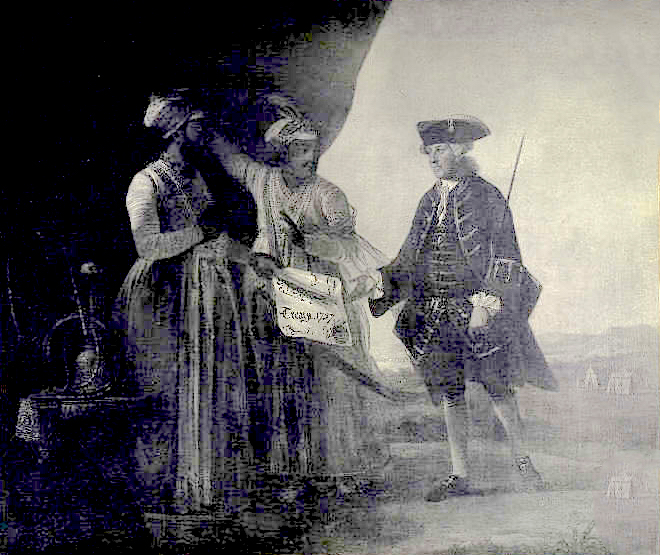
Having made a fortune in India, William Watts retired in 1760, returning to Britain with his wife Frances and two children. In 1764 he began the purchase of Hanslope Park, then the property of Evelyn Pierrepont, 2nd Duke of Kingston.
Unfortunately, William died during the purchase and never lived at Hanslope Park. The sale was completed for his son Edward, still a minor, who had been born in Calcutta in 1752.
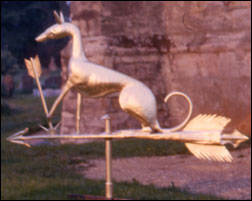
The weathervane on the spire of Hanslope church commemorates an event from William’s India career, when he was saved from an attack by a wild dog, which was shot with an arrow in its foot.
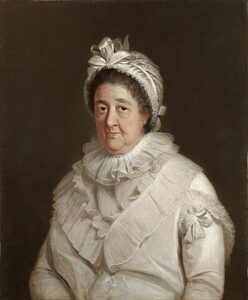
Frances Watts, nee Croke (later Johnson)
William married Frances Croke in 1749, the daughter of Edward Croke, governor of Fort St. David, Madras.
Briefly married and widowed twice previously, she had been brought up in India, and so came to England for the first time with William and their two children in 1760.
After William’s death, and with their children grown up and settled, she returned to India in 1769.
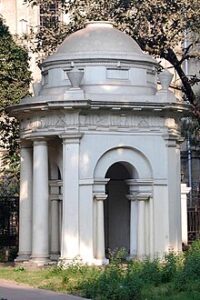
In 1774 Frances was married for a fourth time, to Reverend William Johnson, recently arrived in Kolkata from England. In 1788, having completed the building of St John’s church, he returned home, but Frances stayed behind. Known as ‘Begum Johnson’, she was still only 59 years old and very wealthy. She died in 1812, the same year her grandson Robert Jenkinson became British Prime Minister. (See below.) At the age of 89 she was well known as the oldest British resident in Bengal, and was accorded a society funeral and a memorial at St. John’s church, Kolkata, still there today.
William and Frances’ children:
1. Amelia Watts 1750 -1770
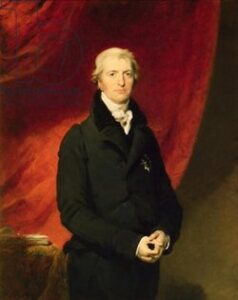
William’s daughter Amelia married Charles Jenkinson in 1769. She died, aged only 20, following the birth of her son Robert in 1770.
After a successful political career her husband, Charles Jenkinson, was created Earl of Liverpool in 1796.
Amelia’s son Robert succeeded his father as 2nd Earl of Liverpool in 1808 and was Prime Minister of the United Kingdom from 1812 – 1827.
Amelia is buried in the Watts family vault in St James’s Church, Hanslope.
2. Edward Watts 1752 – 1830
Edward inherited the manor from his father at the age of 12 and during his many years as Squire of Hanslope increased the estate by acquiring numerous other properties in the Hanslope area, including Stokes Manor, Stocking Green and Tathall End. He commissioned the 1779 Estate Survey of Hanslope, and the 1791 plans by Humphrey Repton for Hanslope Park, though they were never implemented.
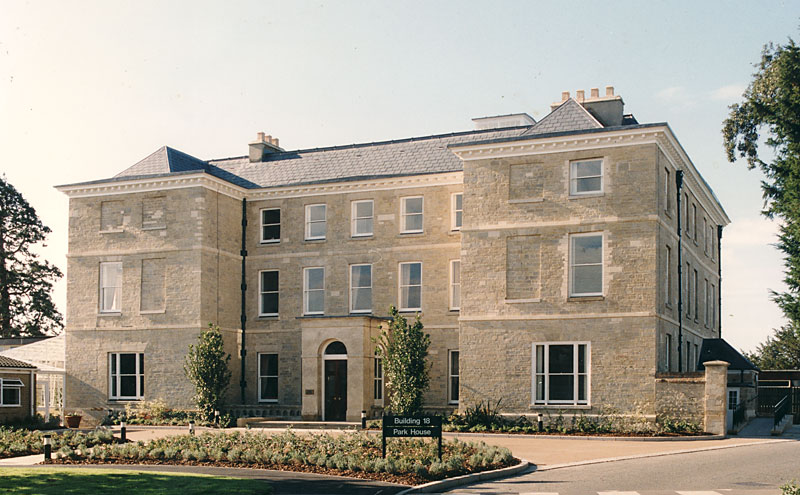
He also rebuilt the manor house in the Palladian style, as it stands today, on land south of the village, reputedly using material from the demolished Stokes Manor, which was located approximately in the area of Western Drive today. The location of the original Hanslope manor house, built by Basil Brent in the 1600s, is unknown.
Edward’s son William (1781- 1848) inherited his father’s estate in 1828. He had four children, and his only son, also William (1821 – 1853) inherited in 1848 and died a few short years later.
Edward Hanslope Watts 1845 -1912
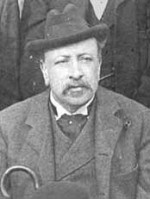
On the death of his father in 1853, 8-year old Edward Hanslope Watts, the great great grandson of William Watts of Bengal, became the last Squire of Hanslope.
He was married in 1868 to Sophia Edith Lowndes, known as one of the ‘Eight Belles of Bletchley’, the third daughter of Mr R. Selby Lowndes of Bletchley.
On 21 July, 1912, 67 year old Squire Watts was murdered by his gamekeeper, William Farrow, on his way home from St. James’ Church and is interred with other family members in the Watts family vaults in the church.
See the Murder of Squire Watts for further details of this local tragedy.
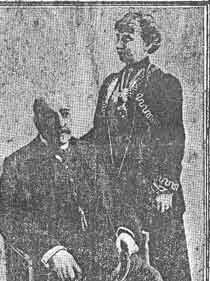
Mrs Watts lived at Hanslope Park until her death in 1930. Their daughter Irene had married Mark Saurin-Poore in 1900 and the Poores took over the property until Mark Poore’s death in 1931.
Irene remarried and made the property over to her son, Robert, who assumed the additional surname of Watts.
In 1939 Robert Saurin-Poore-Watts sold the Hanslope estate to Lord Hesketh of Easton Neston, Northamptonshire.
In 1941 Hanslope Park was requisitioned by the War Office. It was a signal station along with Bletchley Park during WWII and is still an HM Government Communications Centre. See WW II in Hanslope