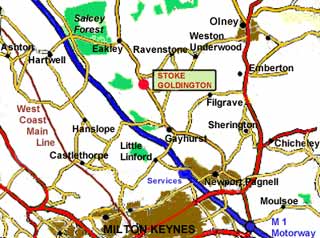
The small Parish of STOKE GOLDINGTON is situated in the northernmost tip of Bucks, 4 miles from Newport Pagnell and 10 miles from the centre of Milton Keynes.
Eakley is a detached part of the parish located to the north, near the Northamptonshire County border. It was once a separate parish with 2 manors until the mid 16th century.
The village also included a very small hamlet called Ram Alley, where only a single cottage remains.
The 2021 Census listed the population as 593
The B526 road, between Newport Pagnell & Northampton, runs along the High Street and was Turnpiked in the 18th Century. It became an important coaching route in the 19th Century.
Prior to the building of Milton Keynes, development had been strictly controlled in the area by the rules laid down in the 1950s in the North Buckinghamshire Structure Plan.
Later, the 1973 Village Plan recognised Stoke Goldington as a “Conservation Area“, which was officially designated by Bucks County Council in March 1974
This was intended to preserve its inherent character and no building could take place outside the ‘Village Envelope’ with only sympathetic in-filling allowed inside.
Currently the High Street features a number of thatched cottages and many of the buildings are Grade II listed.
Click for Local Street Names – Interactive MAP
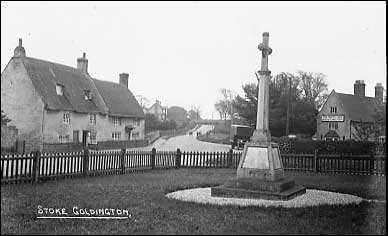
War Memorial on the Village Green
Other prominent buildings are the Primary School, the Village Hall, and the Reading Rooms
St Peter’s church, is located at a distance up the hill to the north. The Manor and village used to be clustered around the church and there is archaeological evidence of old house platforms along Dag Lane, but much has been destroyed by ploughing
The reason for the migration of the village down to the valley is not clear, nor when it occurred, although the many 16th century cottages which survive suggest the the move may not have been later than that time. The water supply from the springs and brooks may have been easier to manage for drinking purposes lower down, and certainly being nearer the road from Northampton to Newport Pagnell, became an important factor in the transport and coaching trades of the 18th &19th Centuries
The original Manor and Estate of Stoke Goldington were purchased in 1707 by the Busby Trustees. (read more )
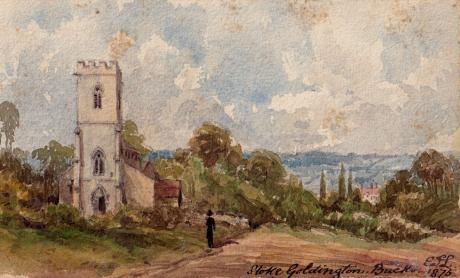
St Peters Church Stoke Goldington
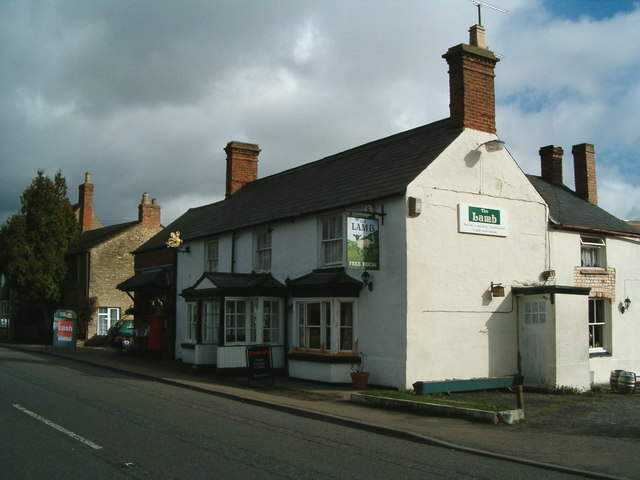
Until recently there were 2 public houses: the White Hart and the Lamb
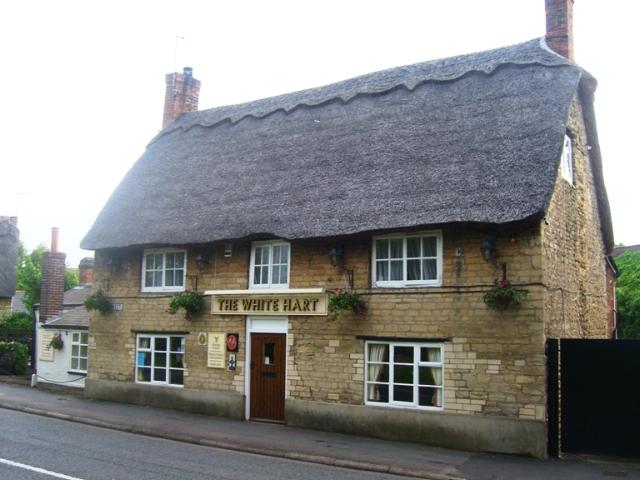
The White Hart PH
The Lamb PH
Both are unfortunately now closed, although there is now a group attempting to buy the Lamb and re-instate it as a social centre.
The building of the large new city of Milton Keynes, with its fast road and rail commuter links, has inevitably brought change to the area and to the mix of people who now live here.
Change is not a new phenomenon in this part of the world however: –
ln 1830 Stoke Goldington was an important staging post on the north/south mail routes having 7 coaching inns in the Parish
By 1845 this business had all disappeared, with the development of railways and canals; the Inns then became farms or alehouses.
In the 1841 census there were 247 lace makers recorded.
By 1891 there were only 27.
For a full History of Stoke Goldington and the surrounding North Bucks area click here…
*************
The 1930 Kitchener Collection Photographs courtesy of City Discovery Centre, Bradwell Abbey, Milton Keynes.
Back to Home Page