HISTORY OF THE
STOKE GOLDINGTON VILLAGE HALL
The Village Hall is 50 years old in 2026
The original village “Hut” was located in “Charity” off Dag Lane, but was sold in 1943 by the Rev Leachman as it was becoming too costly to run. read more…
The village then had to wait for over 30 years before it had a reasonably sized meeting place again.
The idea of a new village hall in Stoke Goldington was first muted by the Revd. Geoffrey Lovejoy, the then Rector of the Parish, in 1966.
The village then had a population of around 450 and had no place, other than the primary school, where a playgroup or other afternoon activity could take place.
In 1967 he called together interested parties to a village meeting to discuss the idea and gauge village support. In 1968 a Village Hall Committee was formed to see the project through, with the aim of using the recreation ground for its location.
The Recreation Ground, at the southern end of the village, had been donated to the village by Sir Walter Carlile in 1903, and there were several legal issues which had to be overcome before it could be used for a new purpose.
Many people also felt that if a village hall was to be built on it there would be insufficient room left for full-size football or cricket pitches.
To mitigate the space problem the committee then purchased extra farmland to the east to expand the recreation ground, so that any new building would not reduce the overall size of the facility.
The first design for a hall was very modern and was rejected by the Planning Authorities. At a later stage a second application was made for a new style building incorporating a main hall, kitchen, changing room, showers, store rooms and offices.
In the early 1970s planning permission was granted. However, despite certain grants from the Newport Pagnell Rural District Council and Bucks CC being available, the committee had insufficient money and progress was halted.
A new housing and school development was proposed in the Village Plan of 1973 which offered the possibility of a village hall being located either in the projected new school or in the existing school on the High Street. The very poor national economic conditions ultimately led to the cancellation of this development and the resurrection of the idea of a Hall being built on the recreation ground.
By 1974, the Committee had approx. £5,000 in the kitty and new plans for a cheaper pre-fabricated structure were drawn up. These plans were completely rejected, but the real need for a social centre for the village had been recognised by the planners at Milton Keynes Borough Council and a favourable view of providing further funding was agreed.
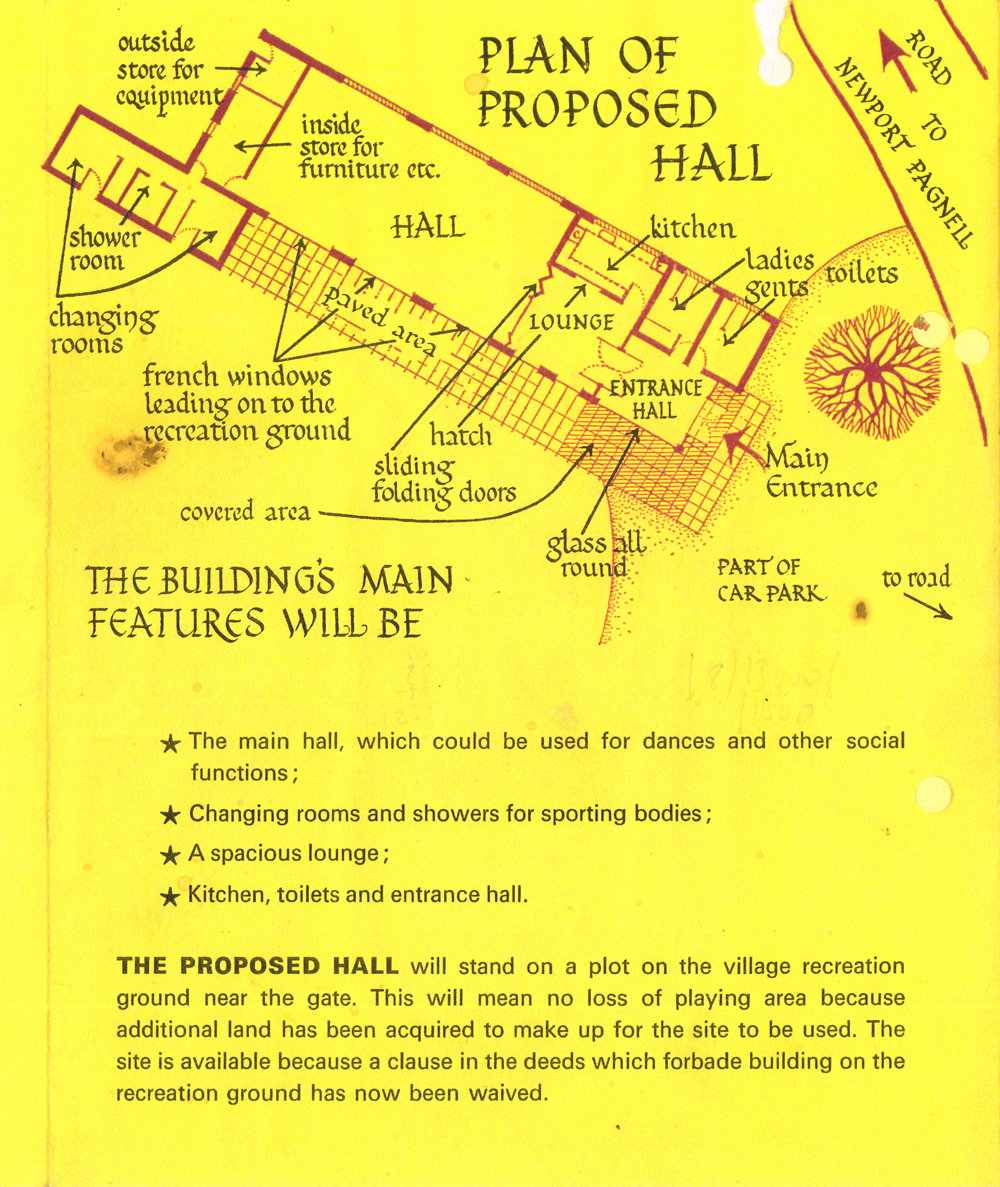
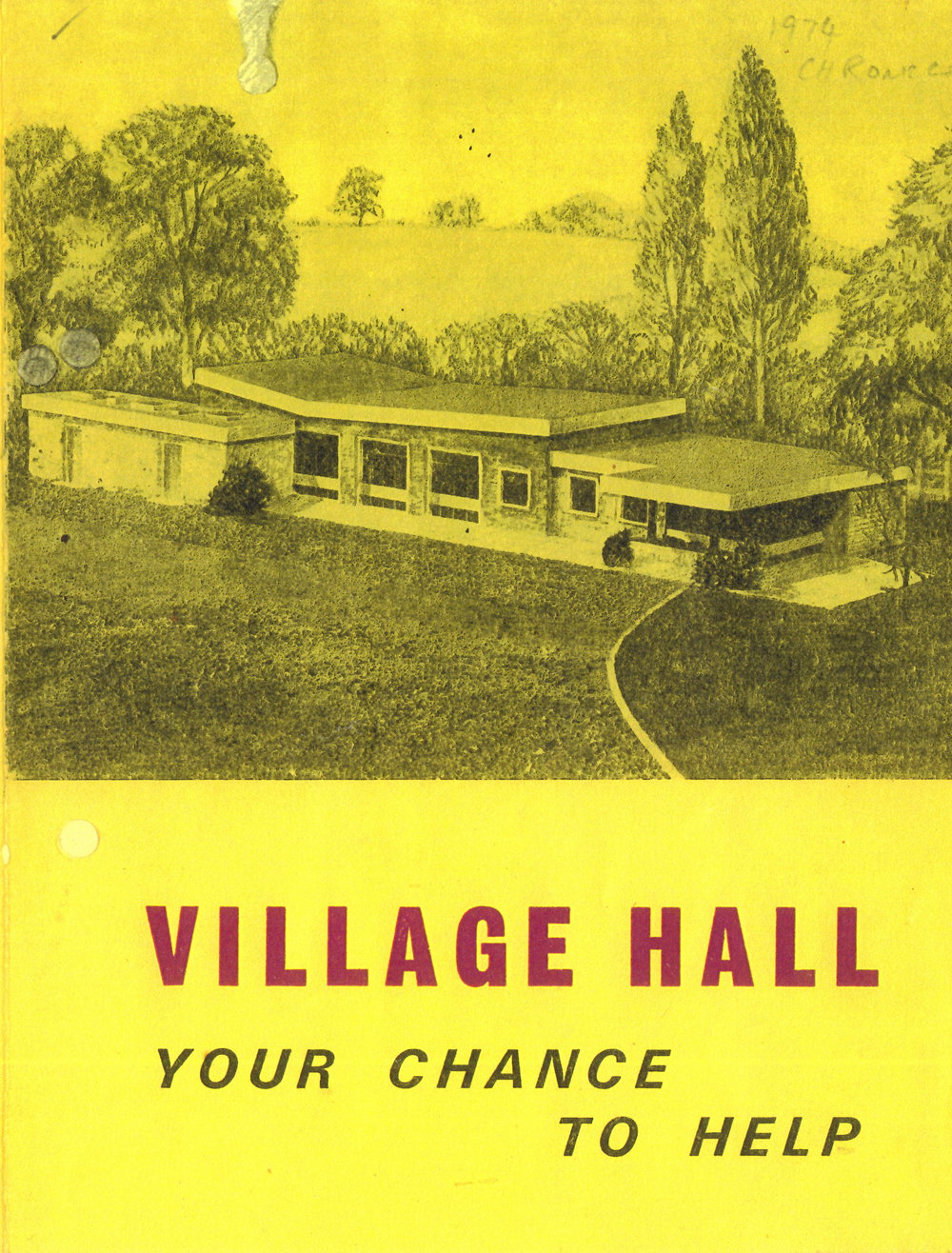
Promotional Leaflet asking for villagers’ help in 1974 (note the original exterior design)
The VH Committee then entered serious negotiations with MKBC Director of Recreation, Bucks County Council and also the UK Dept. of Education & Science, and substantial monies were promised by all 3 bodies.
Local fund-raising efforts were also necessary and numerous events were organised by the committee, raising over £2,500 by 1975.
The committee then embarked on the ambitious Steam Rallies, held on Westside farmland behind the school, which raised much needed funds and continued until 2012.
In May 1975 a contract was signed with builders, M & D Hammond of Stony Stratford, for the construction of the hall, to be completed at the end of December 1975.
The contractor successfully completed the build on time (and to budget) and the Village Hall was handed over to the Committee in early January 1976 to be officially opened on the 31st January.
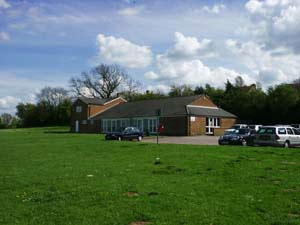
The total project, including all the interior equipment, was in the region of £30,000, of which the VH Committee raised £29,100 (from fund raising and grants). To cover the shortfall, a loan of £1,000 was obtained from the National Playing Fields Association.
The Village Hall Project was notable for the immense amount of support which was given by the villagers, many of whom participated in one way or another to help bring the project to a successful conclusion.
Since 1976 there have been 3 major extensions, mainly funded by profits from the annual Steam Rally.
[NB The correspondence and committee papers telling the story from the inception to the opening of the Village Hall, and also for the later extensions, is held in the SGA Archive].
Back to Social Life page