
In the early part of the 20th century, most social events in Stoke Goldington were held in these locations – a) the Primary School b) the Rectory Gardens and c) the Village Hut
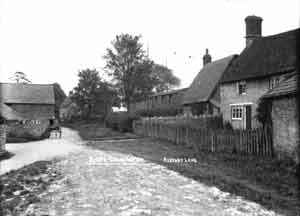
SG Village Hut (long low building on right of photo)
The Hut was a single storey wooden structure, located on Rectory Lane, near a very large Walnut Tree (reputedly cut down in 1941)
Examples of events held there were :
Mothers Union Quarterly meetings – Rummage Sales – Whist Drives/Dances
Teas were also provided for parishioners at Church meetings, Parochial elections and the Sunday school.
***************
Mentions of the Village Hut in the Newport Pagnell Deanery Parish Magazine
August 1928 – “On Saturday, 1 September, a fete will be held in the Rectory grounds…the proceeds from which will be devoted to a very worthy object , the purchase of the Hut so that it may become Parochial , not personal property”
February 1929 – “Friday January 11, the Rector and Mrs Wanstall entertained the churchwardens , members of the choir and bellringers to supper in the village Hut.
November 1929 – …On 13 November, Colonel Williams gave a lecture in the Hut, which used a Magic Lantern…
(we don’t have copies of the Magazine from the 1930s, but the Hut may have been used less and less, eventually becoming uneconomic for the Parochial Council)
In the war years, there seems to have been ongoing problems over the ownership of this building and its eventual sale/disposal, as these later excerpts from the Parish Magazines show:
February 1943 – “We are glad to hear that Chicheley will buy our Hut and use it as a Parish Hall.”
March 1943 – “The Hut has not yet been removed, though it has been paid for. Perhaps it is difficult to find a builder to do the job. (this sale apparently fell through in 1943)
May 1944 – “…At last the Hut is going. Many happy hours have been spent there at concerts and dance M.U. meetings and teas and British Legion suppers etc.
Let us hope that the Society of Brothers will also spend many happy hours in it. We no longer need it now that the Schoolroom is so well suited for meetings of all kinds.”
June 1944 – “There seems to be some misunderstanding about the Hut. The facts are simply as follows. For some years it wasn’t needed any longer and each year I paid about £1/1/- for use of it on very few wet mornings for half an hour for P. T. for my pupils.
The standard charge was 1/- an hour and I paid for more hours than we used it. There was 2/6 once a year for weights and measures testing. Total £1/3/6. Outgoings for ground rent, fire insurance and rates were £2/13/-.
The consequence was that, if I went on a few more years I should be much out of pocket, especially if repairs were needed.
As it was, I paid up some of my money at the bank to close the account, and gave up some of the Rector’s ground rent of a guinea for some years because receipts could not pay it.
A general meeting decided to sell it, if possible and appointed two or three to do the business. They did it so well that they got £60 for it – more than most of would have given. When the cheque arrived, I didn’t want to keep it, so I consulted my bank manager and he suggested my putting it in the Post Office.
The Charity Commissioners, whom I consulted said I must have one or two to act as Trustees. Of course I had to ask somebody, so I asked the Chairman of the Parish Council (whoever he might be) and the peoples churchwarden and the Rector (whoever he might be) and a good businessman viz. Mr Armstrong.
This rule of the Charity Commissioners is to safeguard the money. I daresay two trustees might have been enough, but four seemed better, in case one or two might leave.
There is, or should be, always a Rector and Chairman of the Council. Naturally it didn’t need a general meeting for such a matter, and my experience of general meetings about the Hut is that only one or two will come. No-one expects that the money will be spent until the war ends. Then the Village will meet to decide how to spend it. I have little doubt that they will use it for the Recreation Ground, so the Savings Book, which had to have a name, is Recreation Fund.”
(NB this was written by the Rector, Revd Leachman who moved away from the village later in the year with his family)
Back to Village Hall page