At long term villager Christine Longland’s recent funeral, one of her relatives Jane Chambers kindly offered to pass any interesting material, found when clearing the Town End Crescent house, to the Stoke Goldington Association Archive.
She also happened to mention that she had a connection to the village as well and kindly offered to write an account of her memories of the family, when living up at Mount Pleasant.
This what she wrote:
21 MOUNT PLEASANT
Some memories and nostalgia
from Jane Chambers
This was the home of the family of William Longland and his wife, Lily (née Wesley) from the 1920s to 1984. Their children were Helen and Harold.
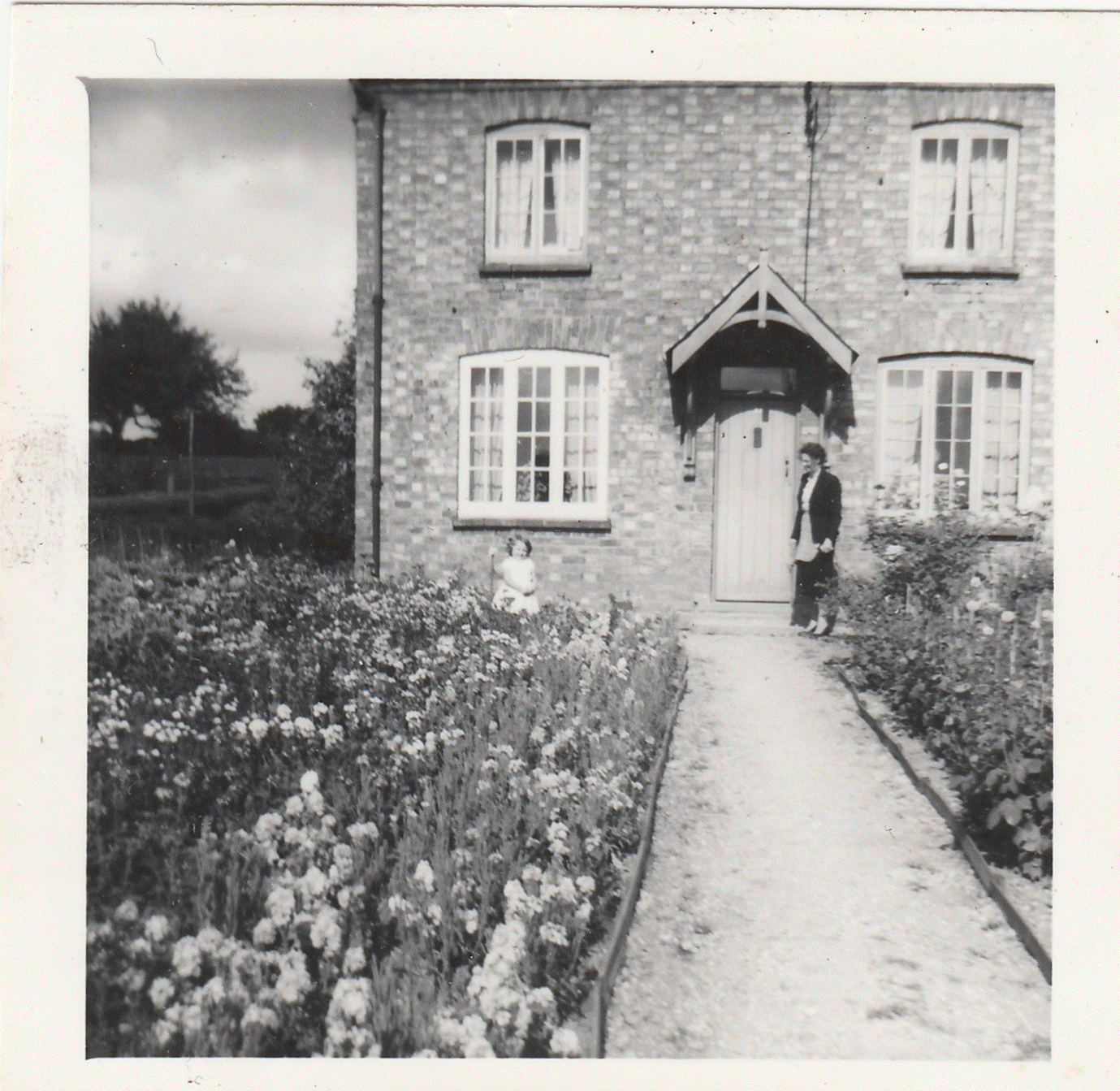
William Longland, my grandfather, had a heart condition which forced him to give up work but, (provided someone else did the digging), he was able to fill the garden with flowers sown from seed and carefully hoed and watered. He chose flowers which would be good as cut flowers, with good colour and scent: he would make bouquets for weddings or other occasions, and give bunches of flowers away to passers-by who stopped to chat to him over the front hedge.
There were roses in the garden on the right of the front path, but the whole of the left-hand side (and up the side of the house) was rows and rows of annuals – stocks, gaillardia, cornflowers, helenium, ranunculus, chrysanthemums, huge clouds of gypsophilia…they’re just the ones I remember.
There were also statice and helichrysum, ‘everlasting flowers’ which he hung upside down in the scullery to dry for winter use.
In the back garden he had an asparagus fern patch, intended for use in bouquets: my mum loved eating asparagus, so he would keep an eye on her to make sure she didn’t pinch too many of the spears when they first appeared!
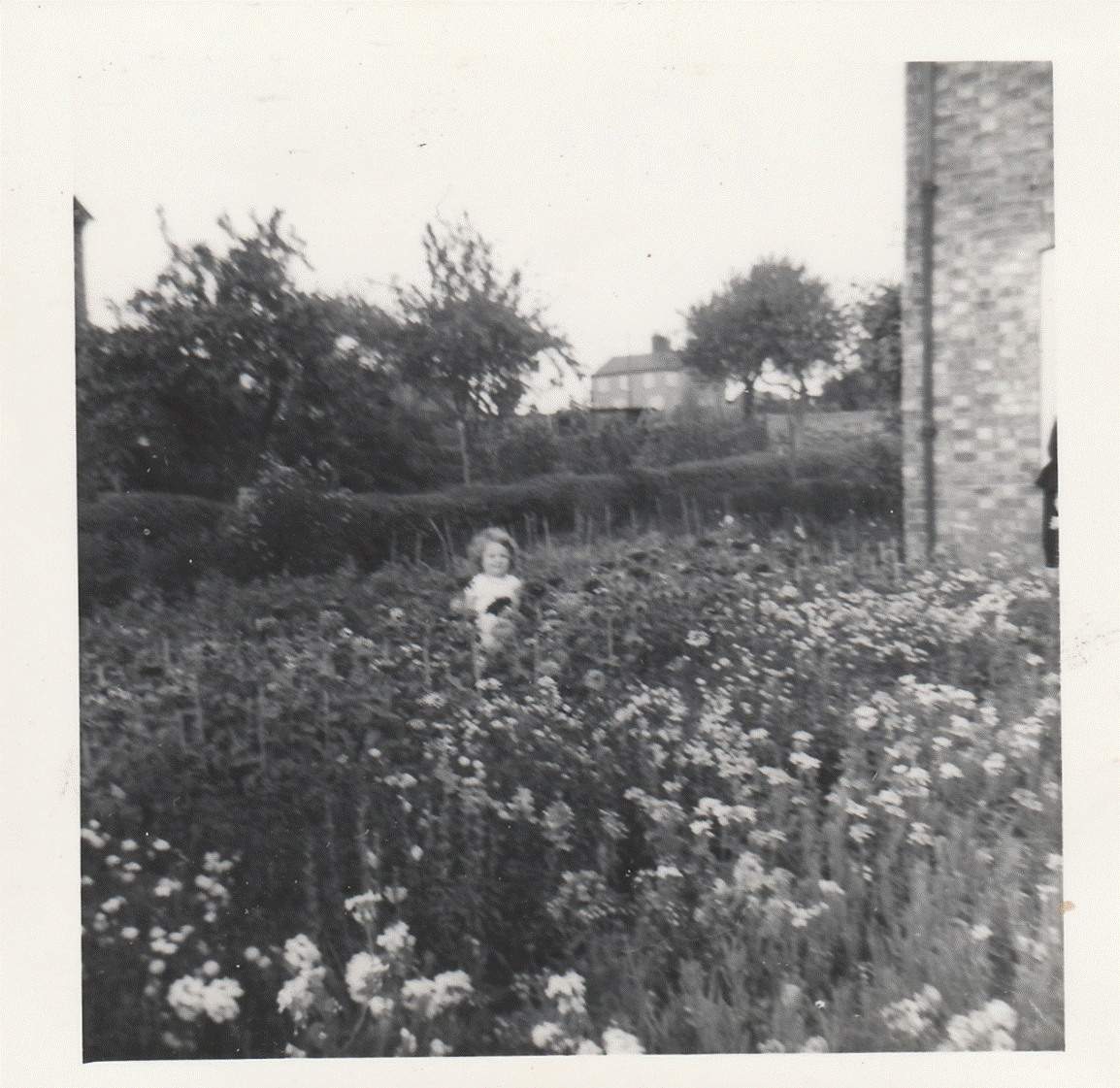
The back garden had some flowers, too, but my grandmother (Nanna) Lily insisted on having a vegetable patch where she grew a whole variety to supply all the family needs – peas, runner and broad beans, carrots, marrows, cauli …..
Next to the asparagus bed there were always grandad’s sweet peas, the old-fashioned ones that smelled divine. He taught my mum and I how to pick out side shoots for the best results, and was always giving bunches away because he said you needed to pick them regularly to keep them flowering.
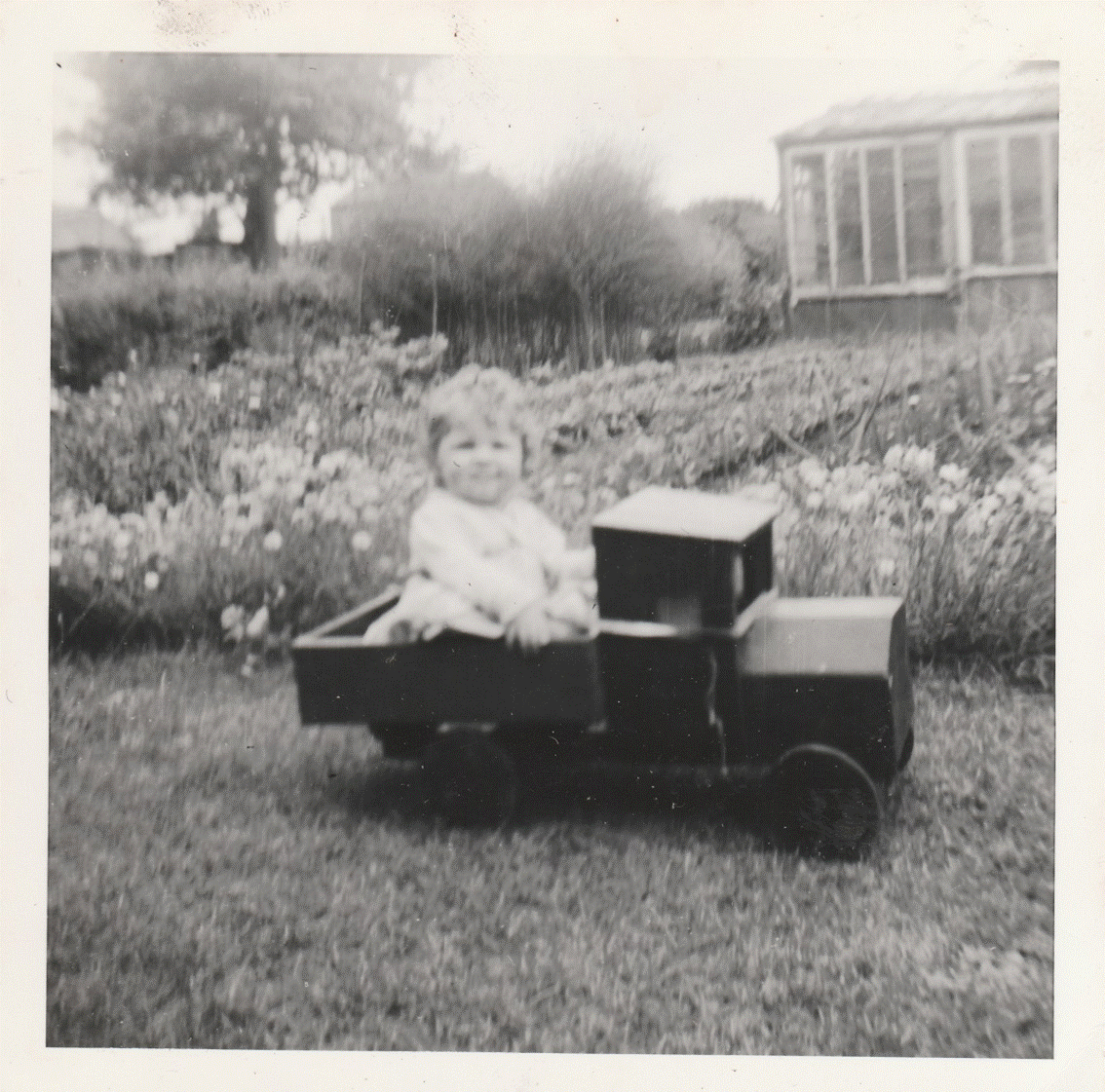
The building in the background has not survived. It was known as the greenhouse, but it was also grandad’s workshop: he had a workbench in there with all his woodworking tools – beautiful, quality tools with lovely wooden handles. He taught us all how to take care of our tools so that they would last. I still have, and use regularly, his ‘Neverbend’ spade.
He had been a wheelwright, and he still loved working with wood: he made picture frames, doll’s chairs and the little truck in the photo (above). It was made for my cousin, but I loved it and cried when they made me get out of it, so he made me one of my own. Well made: after I grew out of mine, my mum put flowers in it and it lasted another 50 years! He hated throwing wood away, so he made lovely little things from offcuts.
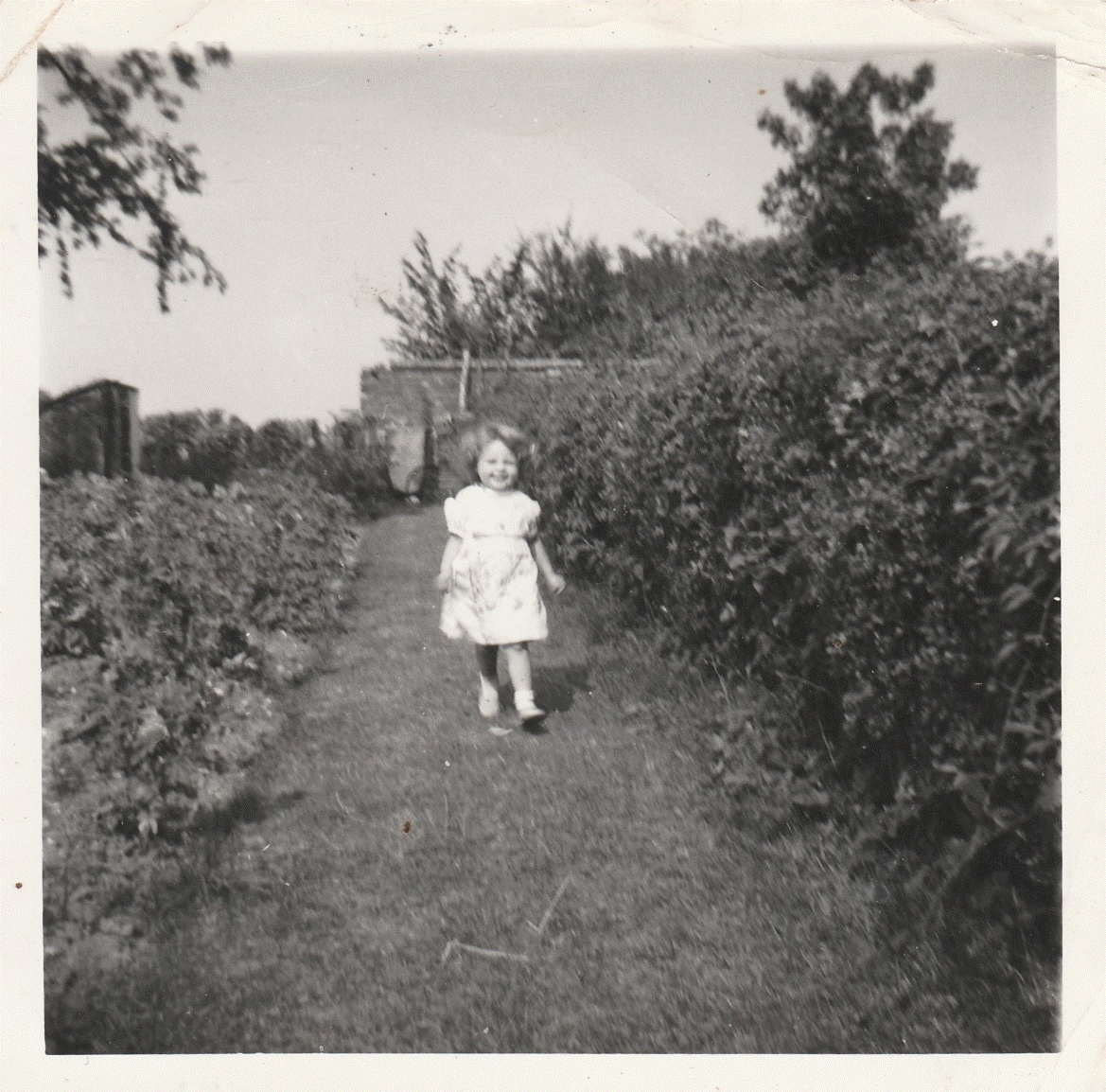
The pigsty is still there at the top of the garden. Veg patch on the left, though once she was 80-ish my Nanna let it go to grass because it was, “getting a bit too much for me”!
The tree branches you can just see top left are the apple ‘Blenheim Orange’.
The Carlile estate, I was told, planted an apple tree, a pear tree and a plum tree in the garden of each house for their workers. The pear was halfway up the side garden. The Victoria plum was trained up the side of the house and was always prolific despite its great age. The plums were absolutely gorgeous.
By the time Nanna passed away in 1984, the plum tree appeared to be holding up the side wall: there was some debate over whether it was the tree that was causing the side wall to part company with the front and back walls – eek!!! – but it was fairly obvious that if we cut it down, the wall would have no support!
The Carlile family (of Gayhurst House, I think, and quite philanthropic) had sold the estate houses to the Hesketh estate at some point.
In the seventies, Lord Hesketh was a well-known public figure because of his Formula 1 motor-racing team, with James Hunt and Alan Jones driving for him. Obviously, you can’t afford to install inside toilets, heating, bathrooms, or get the walls of your properties held up by something more substantial than a plum tree when you’ve got an F1 team to fund!!!
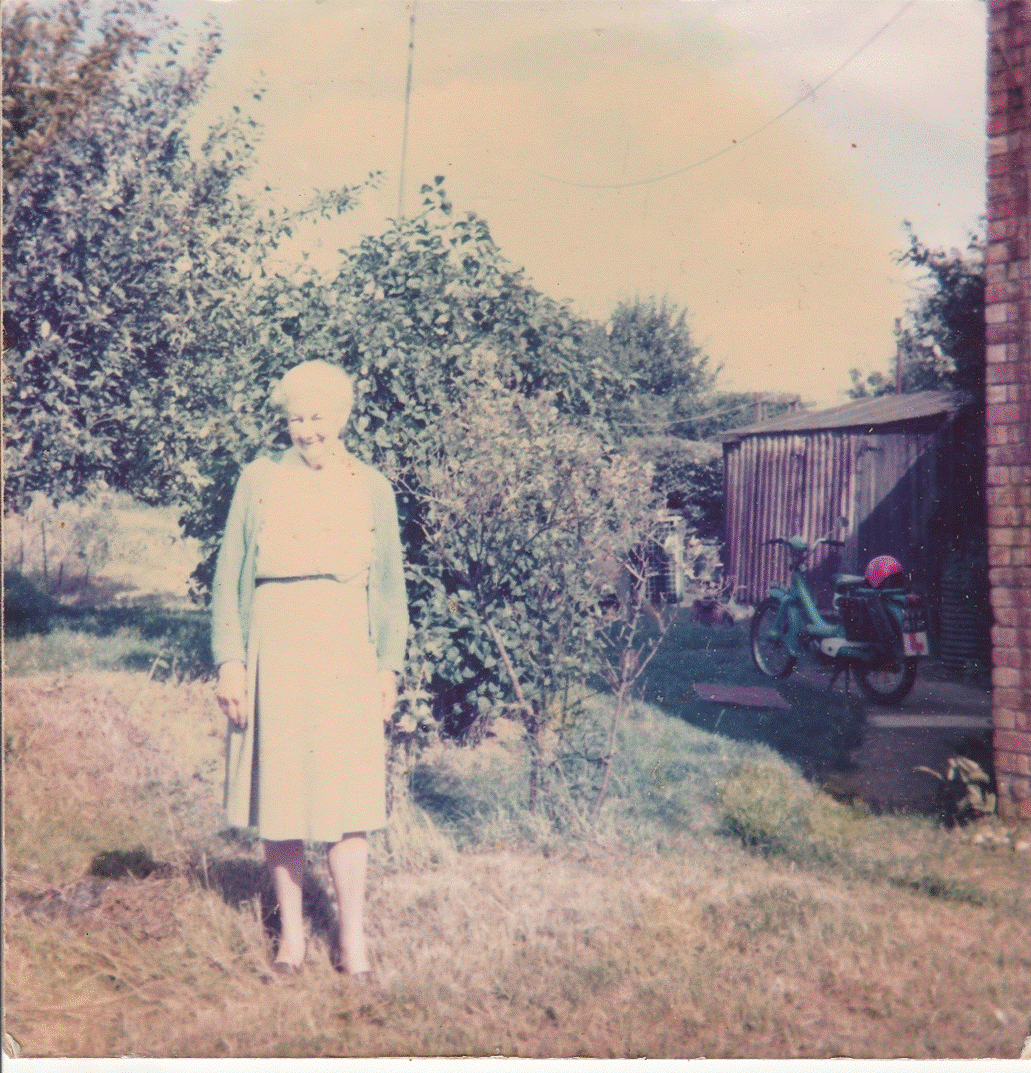
Lily Longland (née Wesley) at about 90 (1980). Pear tree and gooseberry bushes just behind her.
The shed in the background was the coal shed, though there were stairs going down just inside the back door which she called ‘the coal-hole’. Out of sight, to the right of the coal shed was the outside toilet. When I was little, this was an earth closet – a beautifully polished wooden plank with a hole above a galvanised bucket. The bucket was carried to the very top of the garden for emptying (I think into deep holes which were filled in and repositioned periodically.) By the late sixties it was a flush toilet with mains drainage, but with no lighting and still full of spiders!
Between the loo and the main house was a brick-built scullery with one cold tap – still in 1984 the only running water in the house – which was ‘Stoke Water’ from the local spring.
There was a big ‘copper’ in the corner where water (filled using buckets) was heated up by wood /coal for the weekly wash, and occasionally to fill a tin bath in front of the fire. Daily, personal washing water was from the rainwater butt by the back door, including when you had to break the ice. Lily spoilt my dad, Bill, by heating up a kettle for him to shave when we were staying there. I was just told that the cold rainwater was good for my skin, and as I worshipped my grandmother, I never complained: my mum still did, though, despite having grown up with it!
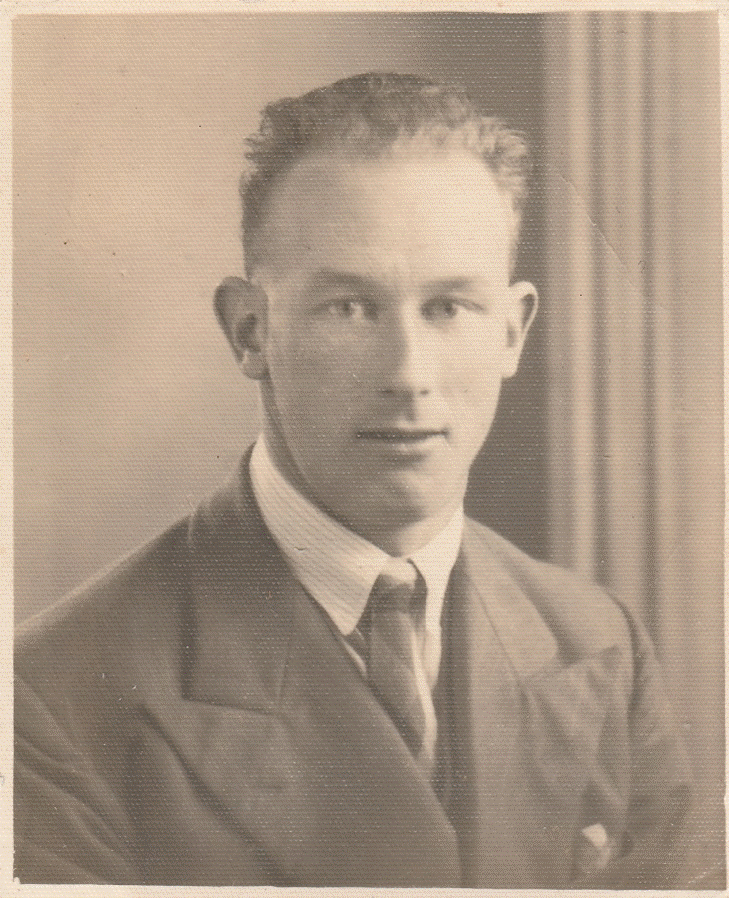
Harold Longland, Lily and William’s son.
He and Helen (my mum) grew up at No, 21. He had the small front bedroom and Helen’s was the little back one. By the time I first remember the house, the big front bedroom had become the guest room (though my parents were the only ones to use it) because my grandad couldn’t manage the steep, winding stairs.
He and Lily had a ‘bed-settee’ in ‘The Room’ – the sitting room which was on the left when you go in the front door.
‘My room’, where I stayed in my school holidays, was Uncle Harold’s bedroom, with his old iron bedstead and horsehair mattress. My mum’s room had become a lumber room, into which dealers were often led by Lily to sell the antiques piled up in there!
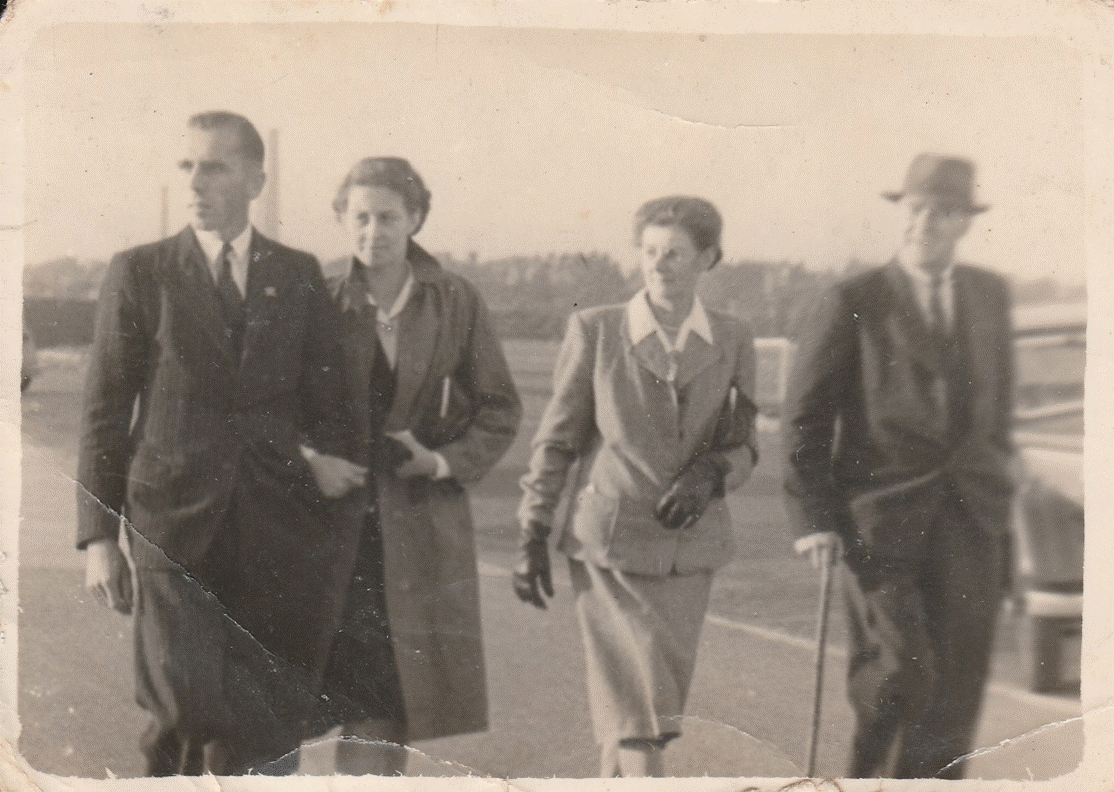
Bill (Helen’s husband, from Sussex) with Helen, Lily and William
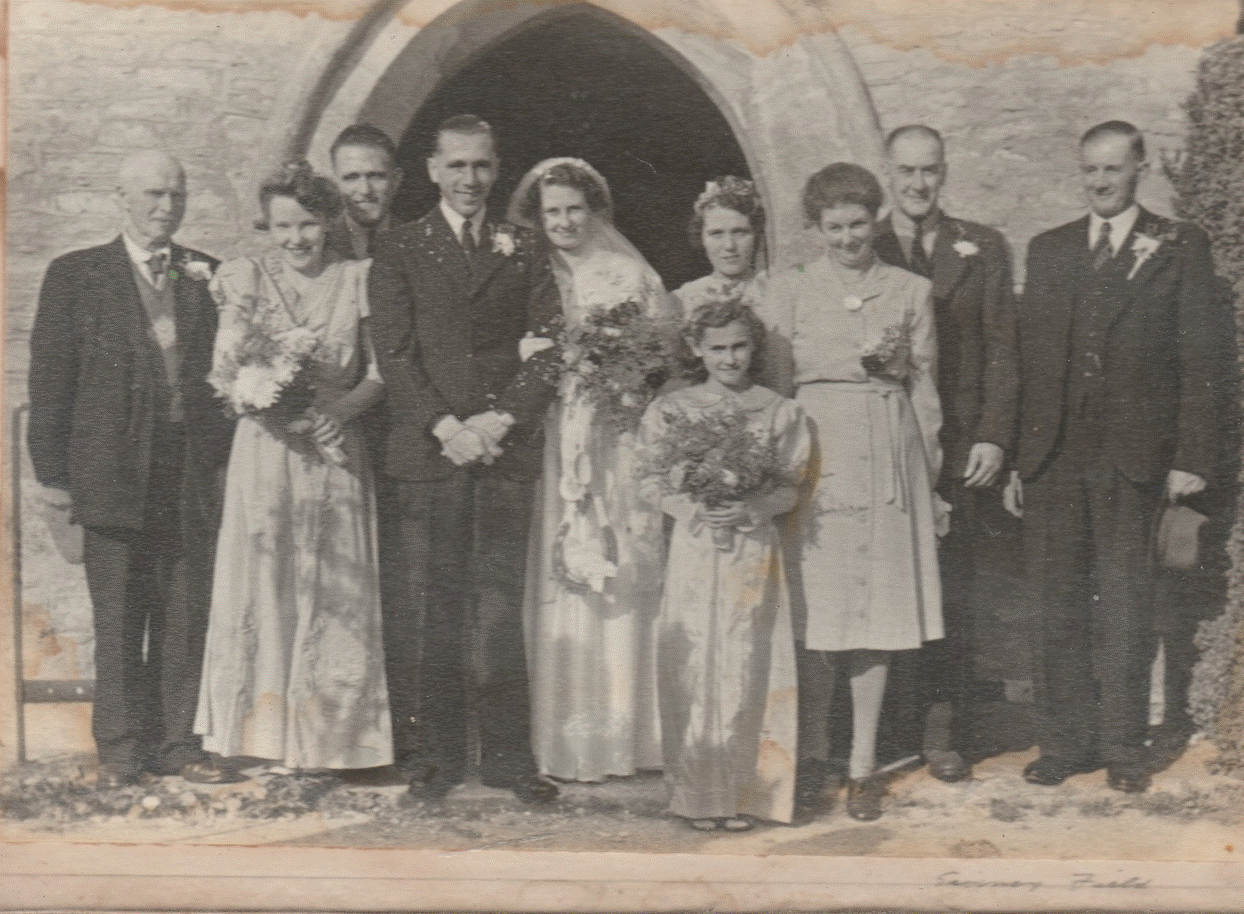 Helen’s wedding at St. Peter’s Church, showing – from the right – Will Wesley, then William and Lily Longland of 21 Mount Pleasant.
Will Wesley was Lily’s brother, who had a red-brick house and petrol station at the bottom of Mount Pleasant (now all gone and replaced with stone houses) and a farm at Eakley Lanes.
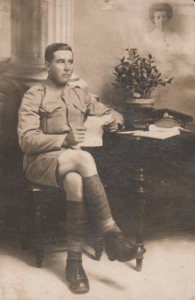
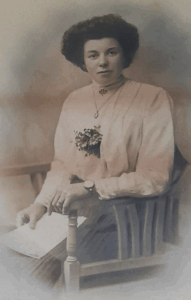
William Longland and Lily Wesley in their younger days.
(c) Jane Chambers – reproduced with her kind permission 2026